






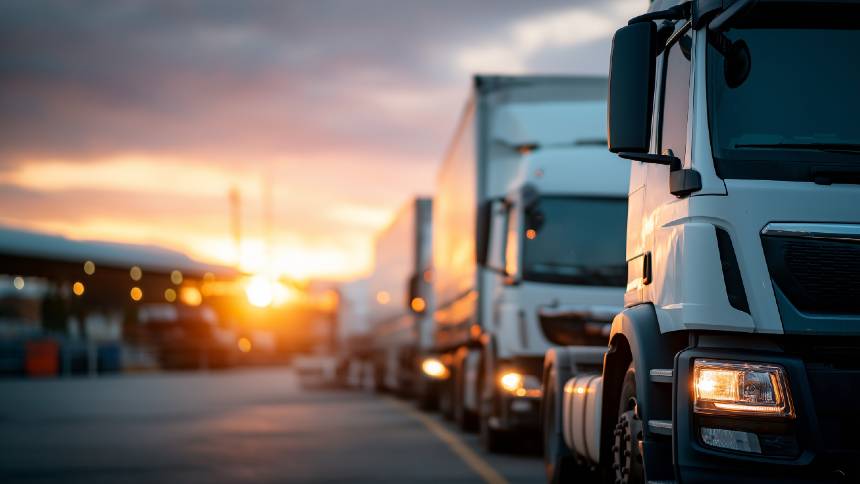
Almost all products that reach supermarkets, pharmacies, construction stores, factories, and Brazilian tables have first passed through a truck. Road freight transport is the country's main logistics mode, responsible for more than 60% of the flow of national production, in a market that moves R$ 818.6 billion per year.
The problem is that almost half of this money circulates outside the law. And the cost of this – for the state, for companies in the sector, and for the truck drivers themselves – is much higher than previously imagined.
A groundbreaking study commissioned by Ampef (Association of Electronic Freight Payment Administrators) and conducted by GO Associados revealed that informality represents 43% of the road freight transport market in the country, generating an estimated revenue loss of R$ 32.7 billion per year, including uncollected social security contributions (R$ 11.5 billion), state taxes (R$ 10.2 billion), federal taxes (R$ 7.6 billion) and municipal taxes (R$ 3.4 billion).
To get an idea of what this deficit represents, a simple exercise suffices: restoring the entire federal highway network – approximately 50,000 kilometers of roads – would require an investment of R$ 11.5 billion per year.
“The market knew about the problem, it’s visible, everyone knows,” says Raphael Rodrigues, CEO of Ampef. “But we didn’t have the data that showed the seriousness of the situation. That’s why we went looking for it.”
The freight voucher is prohibited by law. Even so, it has persisted for decades as the main payment mechanism for medium and long-distance freight. The mechanism works like this: the shipper/carrier, the owner of the cargo, issues a voucher to the independent truck driver, without any real legal value, linked to gas stations previously chosen by the driver.
“The truck driver is required to exchange this at the stations designated by the shipper,” says Rodrigues. “When he gets to the pump, he pays a premium on the value of the voucher, usually around 10%.”
According to data from the National Energy Balance cited in the study, freight transport consumes 34.6 billion liters of diesel per year. A significant portion of this volume is mandatorily sent to specific networks, with inflated prices, also distorting competition between gas stations.
But the losses go beyond fuel. Without formal registration, there are no social security contributions. The truck driver finishes the trip without social protection, without proof of income, and without access to credit.
“The market knew about the problem, it’s visible, everyone knows,” says Raphael Rodrigues, CEO of Ampef. “But we didn’t have the data that showed the seriousness of the situation. That’s why we went looking for it.”
The study estimated that, adding the payment below the minimum wage to the premium charged at gas stations, truck drivers operating in the informal sector receive 34% less than they would earn in the formal market.
Those who operate legally, therefore, pay twice: they collect the taxes that their competitors ignore and still have to compete with cheaper freight – not because the rival is more efficient, but simply because they don't comply with the rules. "When a competitor has a huge advantage by paying much less, they end up attracting others to the informal market," says Rodrigues.
If the numbers are so alarming, why does the freight bill system survive? Rodrigues points to a structural problem that fuels the cycle: the payment deadlines imposed by large shippers on carriers.
“We are talking about deadlines that can extend up to 180 days,” says the executive. “This generates a need for cash flow that the carrier cannot meet in any other way.” In other words: without cash, the carrier resorts to informal payments, such as freight bills.
Some recent initiatives are beginning to change this situation. Provisional Measure 1343, issued in 2026, represented an important step forward by reforming the CIOT (Transport Operation Identification Code), a document that records all the data for each operation involving independent carriers, and by toughening the penalties for those who fail to comply with the minimum freight rate, with fines ranging from R$ 1 million to R$ 10 million.
For Ampef, the most important step is missing. The CIOT registers the transaction, but does not confirm whether the payment was made, nor whether it was for the correct amount. This link between document and money is what the association wants to make mandatory.
The association is advocating for IPEFs (Electronic Freight Payment Institutions), regulated by the Central Bank and approved by ANTT, to become the mandatory link between the transport document and the actual payment.
“The only way for a freight payment to be 100% legal and respecting the minimum rate is if you have traceability of the entire process,” says Rodrigues. Ampef has already sent official letters to ANTT and is working with parliamentarians on an amendment to transform this model into legislation, with a defined implementation deadline.
In this context, tax reform emerges as an opportunity to address the high level of informality in road freight transport. Under the new model, when a transaction is not formalized, the next link in the chain loses the right to tax credits, creating an economic disincentive to irregularity. Even so, this mechanism alone is not sufficient to solve the serious problem in the sector.
Rodrigues points out that tax reform tends to significantly reduce informality, provided there is effective integration between electronic transport documents and payment methods. To achieve this, it is essential to guarantee clear and verifiable records of freight payments, linking the use of tax credits to complete proof of transactions, with consistent documentation verified against the amounts paid.
It is also necessary to ensure integration between these systems and promote coordinated action between tax authorities and regulatory bodies, with alignment of records, subcontracting rules, and control mechanisms. In this model, taxes are collected automatically at the time of freight payment, reducing the need for subsequent declarations.
With financial flows properly recorded, the scope for tax evasion decreases, allowing up to R$ 32.7 billion per year currently lost to return to public coffers.