






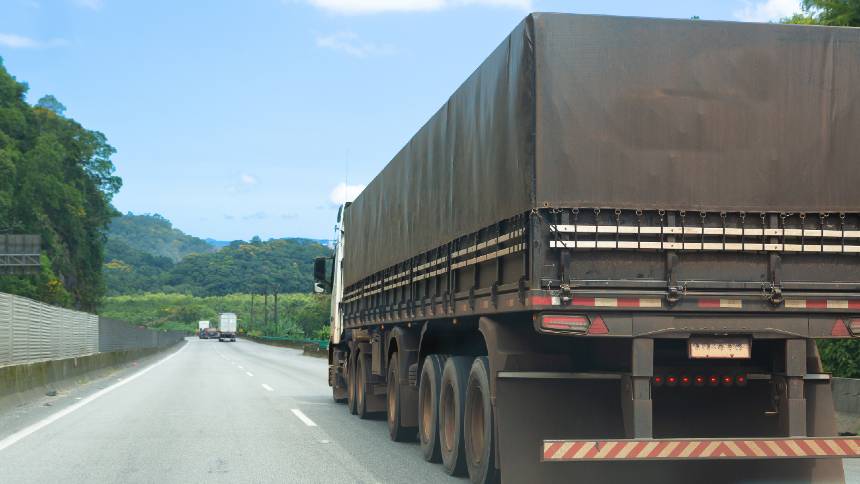
Non-compliance with the minimum freight rate policy has become one of the biggest bottlenecks in national logistics. Between 2018 and the beginning of 2026, the National Land Transport Agency (ANTT) recorded almost 140,000 infraction notices. The volume of fines has recently skyrocketed: there were 3,507 in 2022, 4,778 in 2023, and 4,689 in 2024. The most drastic jump occurred in 2025, with 66,698 records. This year, the government has already counted more than 40,000 new fines.
Despite the surge in fines, the practical effectiveness of these penalties is minimal, given that only 14% of the fines issued in 2025 were paid. This low revenue reflects enforcement difficulties that allow the market to continue operating at economically unviable levels. The federal government's signal to intensify enforcement against those who ignore the freight rate table emerges as an urgent measure to interrupt this cycle and protect the sector.
“The increased enforcement announced by the Ministry of Transport is an urgent step to protect lives and the economy. The State needs to ensure that non-compliance with the minimum freight rate ceases to be a competitive advantage for those operating illegally,” reinforces Luis Claudio Santana Montenegro, Master in Transportation Engineering from the Military Engineering Institute (IME) and specialist in Land Transport Regulation from the Polytechnic School of UFRJ.
And he reinforces: "This is a structural market failure, in which prices do not reflect the real cost of the activity. It is not enough to generate fines that are not paid; it is necessary to make non-compliance unfeasible, in order to ensure the sustainability of the entire national transport system and road safety."
Estimates from 2023 show that the sector generated around R$ 818.6 billion, but approximately 43% of that total — R$ 351.8 billion — occurred in the informal sector.
This fiscal and operational disarray sustains a vicious structural cycle in road freight transport. Estimates from 2023 show that the sector moved around R$ 818.6 billion, but approximately 43% of that total — R$ 351.8 billion — occurred informally. This lack of registration generates an average loss of public revenue of R$ 32.7 billion, compromising the financing of social security and the balance of public accounts.
The oversupply of transport and the underpricing of freight push the costs of the activity directly onto workers and society. In 2023, road freight transport consumed approximately 34.6 billion liters of diesel, resulting in an expense of R$ 200.8 billion on fuel. Without prices that cover these basic operating costs, the weakest link breaks: the driver's workday.
The constant pressure to reduce costs encourages life-threatening practices, such as intensified working hours and neglect of maintenance. When the market operates with artificially low freight rates, road safety and the health of truck drivers are the first to be sacrificed.
"What we see today is an institutionalization of illegality in the road transport sector. The underpricing of freight is not just an accounting issue, but something made possible by the externalization of social risks. When the price doesn't cover rest and maintenance, the adjustment is made in the safety of those behind the wheel. Operating with high levels of informality means that almost half of our logistics ignores basic protection mechanisms," says Montenegro.
Data from the Federal Highway Police (PRF) and analyses from the sector confirm that this fiscal negligence translates into direct tragedies on the highways, where driver fatigue or drowsiness is present in approximately 21% of serious accidents involving trucks. This reality is fueled by grueling work schedules; research from the CNT indicates that 61.1% of truck drivers drive more than 9 hours a day and 71% exceed 10 hours daily.
The result of this scenario of rest deprivation and pressure to meet deadlines is alarming. According to a survey by the Federal Highway Police (PRF) and an analysis by the consulting firm ILOS, Brazil recorded 19,000 accidents involving trucks on federal highways, with 12% resulting in deaths and 69% in injuries.
Road transport is essential for territorial integration and the functioning of production chains. However, maintaining the system operating under distortions that generate inefficiency and high risks is no longer sustainable. Correcting these flaws is vital for the competitiveness of the Brazilian economy and to ensure that national logistics ceases to be a burden and becomes an engine of safe and balanced development.