






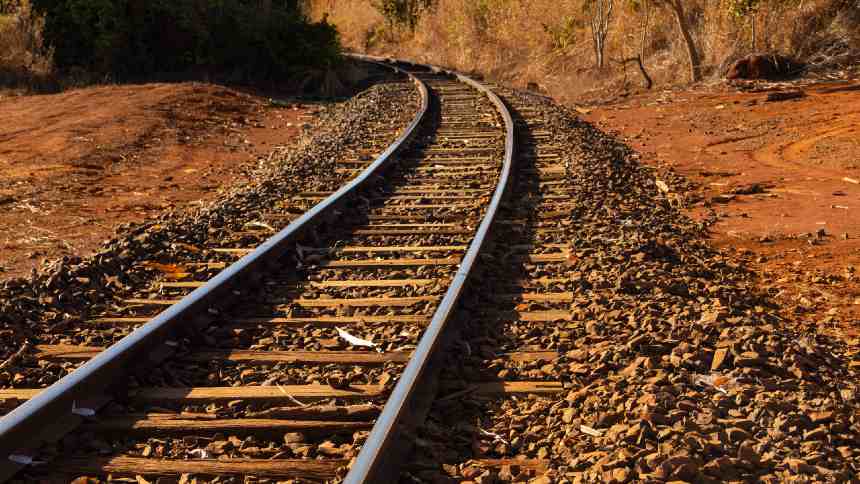
In Brazil, building one kilometer of highway costs around 8 million reais, while a railway requires, on average, 27 million reais. In the case of Ferrogrão, which aims to connect Sinop (MT) to Miritituba (PA) over almost a thousand kilometers, this cost is even higher and more uncertain.
Infrastructure planning in the country is going through a period of crucial choices that could dictate the logistical efficiency of the coming decades or condemn the public treasury to billions in expenses. The Ferrogrão railway is a project that has already been the subject of intense debate for over 10 years, having passed through the hands of different governments.
Even after a decade of discussions, the project remains a burden without a clear technical or financial solution, surrounded by controversies ranging from underestimated costs to legal and environmental risks.
According to Claudio Frischtak, former senior economist at the World Bank and founding partner of Inter.B Consultoria, the parameters submitted to the Federal Court of Accounts (TCU) in 2020 are completely disconnected from the current economic reality.
One alarming point is that, even in the updated studies conducted by the government in 2024, the investment costs were not revised or presented in a transparent manner.
The initial project projected a capital expenditure (Capex) of R$ 11.45 billion. However, analyses based on real-world experience with similar projects, such as FICO 1, indicate that this figure could jump to R$ 36.86 billion.
"The original project drastically underestimates the engineering challenge and input inflation, resulting in numbers that simply don't add up. It's unreasonable to plan a project of this magnitude with outdated data, ignoring the fact that the real implementation cost and logistical complexity in the Amazon make official estimates obsolete and dangerous for public finances," says Frischtak.
Furthermore, Frischtak warns that the BR-163 highway is not currently prepared to be used as a service road for the construction of the railway. "Using the BR-163 itself will cause a collapse in a national export corridor that already suffers from truck queues and recurring accidents," he warns.
According to the economist's studies, the project could generate a 218% increase in daily traffic on the highway, receiving 12.5 million truck trips just for the earthmoving work during construction.
According to studies by Inter.B, the project's effective rate of return, in a realistic scenario, is only 1.6%, far from the 11.04% presented in the government's official model.
Without a massive public investment of at least R$ 32.5 billion, the project will not attract private investors.
Without a massive public investment of at least R$ 32.5 billion, the project will not attract private investors. This means that the State would have to bear approximately 90% of the total cost to make viable a deal that should be a balanced public-private partnership.
Recent studies by the Socio-Environmental Institute (ISA) also point to serious errors in the cost-benefit analysis carried out by the government. The ISA report reveals that the official methodology reversed basic concepts by treating investment and operating costs as if they were benefits for society.
This flaw distorts the perception of public utility and hides the true burden the project will place on taxpayers. Furthermore, the government ignored the so-called social price, which should consider tax distortions and the real opportunity cost for the country. This technical weakness created an illusion of viability that does not withstand more rigorous economic scrutiny.
The most recent technical report from the TCU (Brazilian Federal Court of Accounts) corroborated these concerns. The technical oversight unit demanded clarifications from the Ministry of Transport regarding the financial viability of a new concession, especially given the government's intention to auction the project later this year.
The government plan foresees a public investment of R$ 3.5 billion between 2028 and 2030, but auditors have identified that the actual sources of funding — coming from cross-investments by Rumo, MRS, and Vale — total only R$ 2.25 billion.
In addition to insufficient funding, the analysis points to a lack of legal clarity and a potential mismatch in deadlines, which prevents the validation of the project's fiscal risks at its current stage.
The TCU (Brazilian Federal Court of Accounts) also warned of the explosion in socio-environmental costs, which jumped from R$ 42 million to R$ 799 million in the 2024 update.
The TCU (Brazilian Federal Court of Accounts) also warned of the explosion in socio-environmental costs, which jumped from R$ 42 million to R$ 799 million in the 2024 update. More than just numbers, the project ignores the human reality of the Amazon. Indigenous leaders and oversight bodies emphasize that the route directly impacts protected lands, requiring prior and free consultations that have never been carried out.
"Insisting on a project with a low rate of social return, ignoring the TCU's technical opinion and socio-environmental warnings, is a strategic error. Brazil needs solutions that recognize the Amazon as a living territory, and not as a cartographic void to be crossed at any cost," emphasizes Edilson Clemente de Souza, president of the Sustainable BR-163 Movement.
In the final analysis, Ferrogrão presents itself as a choice that lacks economic rationality and jeopardizes the preservation of the biome. The modernization of Brazilian logistics requires projects that combine efficiency, sustainability and, above all, fiscal responsibility. Under the current premises, Ferrogrão is a path that Brazil cannot afford to follow.