






Anyone who has recently passed through the Pinheiros or Faria Lima stations on Line 4-Yellow of the São Paulo metro has noticed a major transformation. The walls are cleaner, the lighting is more uniform, and the station names now occupy a large portion of the wall, in larger and more visible letters. On the platform, even the door closing notice has changed.
Motiva is redesigning Line 4–Yellow on several fronts simultaneously. The project includes the initial modernization of two stations, the replacement of the ViaQuatro brand with Motiva's visual identity, and the implementation of a brand-new musical signaling system, created to make the experience more pleasant and safe for those who use the metro every day.
Before the retrofit, the Line 4 platforms were littered with advertising panels and vending machines. With the redesign, these items were removed and the walls were covered with metallic gray panels, creating a more neutral environment. The station's name now appears more prominently, in an easier-to-read typeface.
The lighting system was also replaced with a smarter model that illuminates the boarding and disembarking routes more intensely, making orientation more intuitive, while the information screens received more modern equipment, repositioned to improve the field of vision. In addition, the monitors for the "Next Train" service were redesigned to display, in real time, the direction of travel and the occupancy of the carriages.
At Pinheiros station, the different floors feature a color gradient on the walls, based on the identity of the system lines that integrate at the location. The walls closest to Line 9–Esmeralda have a greenish hue, which gradually gives way to yellow as the passenger approaches the Line 4 platform.
“Over the next few years, the retrofit project should consolidate a new standard of experience for the millions of customers who use Motiva's train and metro services daily, starting with Line 4-Yellow,” says Maurício Tortosa, the company's Customer Experience Director.
The renovation didn't stop at the platforms. The commercial areas of the stations were also reorganized, with standardization of facades, signs, and space sizes. In some stations, a new slab was built over old openings to expand the free circulation space.
Before restructuring its retail operations at the stations, Motiva listened to the people who use the line. Qualitative research mapped which products and services are most in demand. Based on this data, Motiva's commercial area has been prospecting new partners that fit the profile desired by the public.
At Pinheiros station, the renovation also includes work on the exterior. Outside, a new space inspired by the Atlantic Forest biome is being built, transforming the station entrance into a meeting point. The restrooms have been renovated, with more stalls and improved accessibility. And the platforms have gained new benches.
In addition to the retrofit, Line 4 is also changing its visual identity. The ViaQuatro brand is being replaced by the Motiva visual identity.
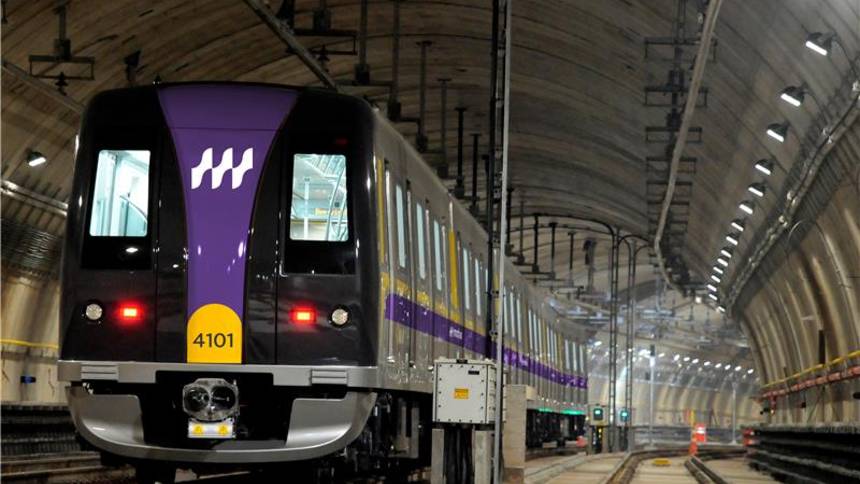
The changes are already visible in stations such as Vila Sônia, São Paulo-Morumbi, Pinheiros, and Faria Lima-Pagbank: trihedrals, portals, barrier lines, glass railings, and platform doors have already begun to display the three waves of the Motiva logo. Staircases and facades of some stations will also receive the new look.
Trains, support and rescue vehicles, and the uniforms of the entire operational team – from customer service and security agents to maintenance professionals and the Operational Control Center – are also receiving the new visual identity. The expectation is that the rebranding of Line 4 – Yellow will be completed by the end of June.
“By unifying our brand and visual identity across our rail and highway operations, we hope to accompany our customers throughout their journey, with an increasingly integrated and standardized brand experience,” says Vanessa Vieira, Brand and Communications Director at Motiva.
The rebranding of Line 4 is part of the rebranding project announced in April 2025 by the former CCR Group, when it adopted the name Motiva. The change in visual identity is also happening on the company's highways. The Motiva Pantanal (BR-163, in Mato Grosso do Sul) and Motiva Autoban (Anhanguera-Bandeirantes System) concessionaires were the first to receive the new brand, replacing the CCR logo and colors. The change is also already underway at Motiva Paraná (Lot 3 of Paraná Highways) and Motiva Minas_SP, responsible for the Fernão Dias highway since April.
Of all the changes on Line 4, the least visible is perhaps the most original. Motiva is implementing a Musical Signal in the stations, a pioneering project in Brazilian public transport whose main objective is to help passengers have predictability about the time available to enter and exit the trains until the doors close, increasing safety at the time of boarding. The concept is simple: while the music plays, it is possible to enter or exit. When the music ends, the door closes. The goal is to avoid rushing, giving passengers clarity about the time available for boarding.
To achieve this, the project team mapped the actual door opening and closing times at each station. Based on this analysis, three standard intervals were defined – 11, 16, and 22 seconds – with exceptions for stations such as Luz, República, Paulista, and Pinheiros. From there, the musical creation process began.
Each station received its own musical signal. The system also changes according to the time of day. In the morning and afternoon, the sounds are more dynamic and energetic. From 7:30 pm onwards, acoustic instruments and human voices come into play, creating a more welcoming atmosphere.
Since the start of the concession, Motiva has invested over R$ 1.5 billion in Line 4 – Yellow, which is now the most technologically advanced line in Brazil and the first 100% automated line in the country. It is also the best-rated line in the São Paulo metro-rail system, with a satisfaction rate exceeding 90%.
The future is also mapped out. Motiva and the São Paulo state government signed a contract addendum for the expansion of Line 4 to Taboão da Serra, taking the São Paulo metro outside the city limits for the first time. More than R$ 4 billion will be invested in the construction of two new stations and 3.3 kilometers of track, in addition to the purchase of six new trains, with the potential to benefit more than 50,000 people per day.


