


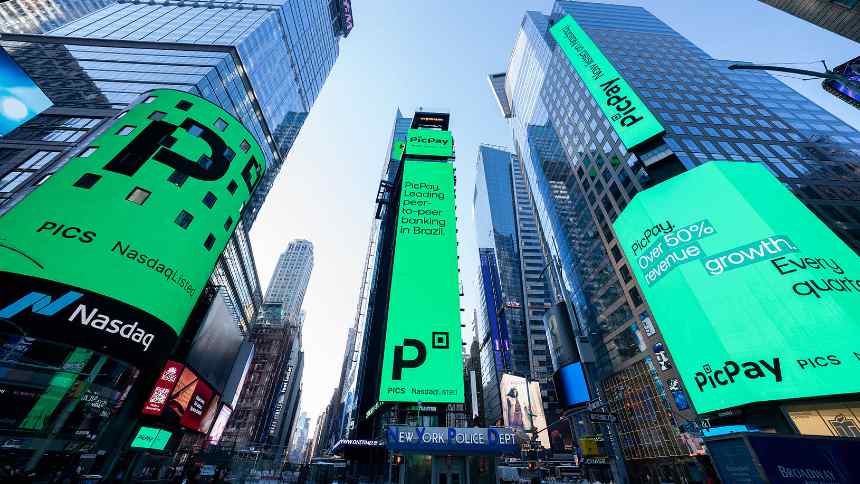
In 2025, PicPay ended the year with numbers that few Brazilian digital businesses have managed to achieve. Revenue reached R$ 10.3 billion, an 85% increase over the previous year, while adjusted net profit doubled to R$ 502 million. Financial margin totaled R$ 4.9 billion, representing an 87% year-on-year increase.
The digital wallet remains the main driver of the business, but the company's next leap lies in another territory: the convergence of finance and retail.
Without abandoning its financial core, PicPay has incorporated new features into its app, such as travel, delivery, shopping, and entertainment, among others. The goal is not only to be present at the time of payment, but also when choosing what to buy, where to eat, or the destination to travel to.
“Our mission is to develop non-financial initiatives to increase engagement and revenue generated per customer,” says Alexandre Moshe, Executive Vice President of Audiences and Ecosystem, a vertical created precisely to accelerate this strategy.
It's easy to understand how consumption and financial services are interconnected. When shopping within the app, customers can pay in installments with credit, use the store's card, or purchase insurance linked to the purchase.
In other words, one thing leads to another. "Engagement is this: the customer starts using PicPay more from the moment they purchase products and services here," says Moshe. In practice, it's an attempt to capture the user not only during the transaction, but also beforehand – at the point of the purchase decision, where there's still room to influence the choice.
Behind this strategy is what the company calls PicPay Shop, an area that divides the app into two fronts. The first brings together everyday services, such as mobile phone top-ups, public transport in several capital cities, and fuel purchases. The second is an e-commerce platform with over 300 partners and nearly 50,000 items for sale, from electronics to clothing.
According to Moshe, the key difference lies in keeping the user within the same digital environment from the beginning to the end of the journey. They research, choose, pay for, and track the delivery of the product or service without needing to open another app or access another website.
The same logic is repeated in other business areas. In the travel segment, the partnership with CVC, finalized in 2025, allows users to buy airline tickets, book hotels, rent cars, and purchase packages in installments of up to 12 interest-free payments, all within PicPay Viagens.
Integration with ClickBus extends the offering to road transport. The agreement with Rappi brings restaurant delivery and, in some cities, supermarket deliveries in just a few minutes. There is also ticket sales for movies and events.
“We seek benchmark partners to focus energy on integration and offer a simple customer journey,” says Moshe. “The difference isn’t the product itself, but the experience and the offers the customer finds within the app.”
Alexandre Moshe, Executive Vice President of Audiences and Ecosystem at PicPay
iGaming completes PicPay's consumer portfolio. With it, users can bet on Mega-Sena, Quina, and other lottery products, as well as track results and access capitalization solutions – all without leaving the app.
Significant audience
The increasing number of accesses to the app opens the way for another important area: advertising. By applying intelligence to transactional and behavioral data, PicPay has created its own advertising platform.
“We know our customers very well, with precise information about their transaction history,” says the executive. “So why not use this expertise to develop an advertising platform?” That’s what PicPay did – and it worked.
In 2025, PicPay will have run over 300 campaigns in partnership with more than 100 advertisers, including streaming, telecom, retail, and food companies. The portfolio includes Retail Media, In-App Display, and CRM, and also allows brands to reach PicPay users on other digital channels.
None of this would have been possible without the effective use of technology. It is technology, for example, that automates mobile phone top-ups for those who already have a registered number and ensures that each user sees a different version of the app, shaped by their own consumption history. "We customize our customers' experience," says Moshe.
During peak demand periods, such as the World Cup, this model becomes even more necessary. Before the tournament, offers for TVs and travel packages are added to the app for those who intend to follow the games in person.
During the World Cup, restaurant delivery, mobility offers, and lottery platform group bets gain traction. The same logic applies to Black Friday and other events on the Brazilian promotional calendar.
But the model doesn't depend solely on major events. The company cross-references behavioral data with features like piggy banks, where users set aside money for specific goals. Those saving for travel can receive, at the right time, an offer for a flight or accommodation within the app itself.
With 67 million users, PicPay has an advantage that few players in the market have managed to build: a base large enough that each new service launched finds a significant audience from day one. It is this robust base that allows PicPay to expand the reach of its app and increasingly accelerate the integration between finance and consumption.