






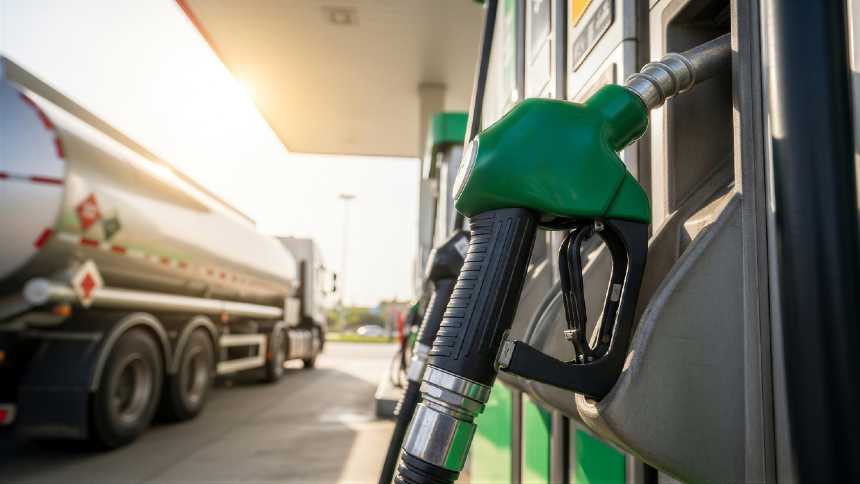
A truck loaded with soybeans leaves the interior of Mato Grosso heading towards the port. In São Paulo, buses leave the garages before dawn. In Rio de Janeiro, drivers navigate through traffic jams to arrive on time for their appointments.
Scenes like this are repeated every day and require a gigantic operation, spread throughout the entire country, to ensure that the product needed to power these vehicles is available without interruption, both in urban centers and in the most isolated regions, reinforcing its essential role in the functioning of the economy by enabling the transportation of people, the movement of cargo and food logistics, as well as supporting industrial activities and the functioning of the production chain as a whole.
In public debate, the discussion about fuels almost always concerns only the price charged at gas stations. This is understandable: the price of gasoline and diesel, after all, affects family budgets, freight costs, impacts inflation, and changes the general perception of the economy.
Despite this, discussions rarely advance to other topics related to this supply chain. This is where Sindicom (National Union of Fuel and Lubricant Distribution Companies) comes in, demonstrating the operations necessary to keep the country supplied.
“The price at the pump is just the tip of the iceberg, and public debate often ignores the complexity of the supply chain that sustains the country,” says David Zylbersztajn, chairman of the board of directors of Sindicom and former director-general of ANP. “Behind the final price, there is a robust structure involving the stages of production, import, taxes, biofuels, and a monumental logistics operation that connects Brazil from end to end.”
The numbers demonstrate the importance of the activity for the country. According to data from a survey by LCA, one of the most prestigious economic consultancies in the country, the fuel distribution sector connects refineries, terminals and importers to more than 45,000 gas stations spread across Brazil, accounts for 7.3% of the Brazilian commerce GDP, generates R$ 881 billion in revenue per year, creates 447,000 direct and indirect jobs – with a total payroll of R$ 18.6 billion – and collects R$ 232 billion per year, according to 2025 data.
Even so, there is little understanding of how the price at the fuel pumps is formed. In the case of diesel, production and import costs account for 61% of the final price. Taxes make up 16%. The mandatory blending of biofuels adds another 10%. Distribution and resale together account for 13%.
"The data shows that taxes and acquisition costs represent the largest portion of the price paid at the pump, while distribution and resale account for a smaller share, mainly related to logistics, security of supply, and the capillarity of the operation," says Gustavo Madi Rezende, economist and director of LCA Consultoria Econômica.
Although small, the participation of distributors carries a disproportionate weight. Behind this operation are highways, railways, pipelines and coastal shipping, inventory management, laboratory control, continuous monitoring and the ability to react quickly to international crises, weather events or any other market shock.
To give you an idea, by 2025, the distribution operation will have covered more than 1 billion kilometers to serve a country that makes 200,000 fuel deliveries per hour, reaching all Brazilian municipalities.
In practice, this is a critical infrastructure for the functioning of the Brazilian economy. Distributors ensure that 137 billion liters of fuel reach their final destination each year, with predictability, quality, and widespread distribution – from gas stations in downtown São Paulo to refueling points in the interior of Amazonas.
“In a country of continental dimensions, distribution is not just a flow of cargo transportation, but involves an operation of logistical intelligence and regulatory compliance,” says Marcio Lago Couto, research superintendent at FGV Energia. “It ensures the continuity of the flow of energy inputs for agribusiness to public transportation, mitigating the risks of interruption that could paralyze entire production chains and compromise the stability of the economy.”
Supplying Brazil is no simple task, as it requires integrating different modes of transport with bottlenecks, costs, and regulations. The country combines high-consumption regions with expanding agricultural frontiers, each demanding distinct logistical solutions. It is this diversity that places the Brazilian distribution chain among the most complex in the world.
As if that weren't enough, about 30% of the diesel consumed in Brazil comes from abroad – Petrobras is responsible for almost all of the domestic supply, but since the beginning of the international crisis, marked by conflicts in the Middle East, it has not been participating in the import effort. In other words, the supply chain is exposed to geopolitical fluctuations, exchange rate variations, and changes in global market supply. Distributors are left to deal with this scenario daily, negotiating imports, building inventories, and guaranteeing supply even during periods of international turbulence.
“Society is unaware that distributors are the true guarantors of energy security,” says Zylbersztajn. “It is crucial to emphasize that when Petrobras does not import, the importers and distributors that import diesel in Brazil assume, alone, all the commercial and exchange rate risks arising from this operation.”
"The role of distributors is fundamental to guaranteeing continuous supply, logistical coordination, and inventory building, especially during times of greater international volatility or supply restrictions in the foreign market," adds Madi Rezende.
A practical example demonstrates the sector's relevance. In recent years, wars, geopolitical crises, and logistical disruptions have put pressure on the global energy market. Even so, Brazil weathered this period without experiencing any shortages.
This was only possible because distributors reorganized routes, expanded imports, and reinforced stocks to ensure that fuel continued to reach its destination. "The distribution sector has ceased to be a simple transporter of derivatives and has become a sophisticated integrator of energy and logistics," says Zylbersztajn.
The fuel that powers the country every day is the result of an operation that takes place far from the eyes of those who stop at the gas station. It is a silent operation – and one that, to continue functioning effectively, depends on a public debate that reflects its complexity.


