

Giving up a career at its peak to start over from scratch in another country is not a common decision. That's exactly what Marcello Serpa, one of the most awarded Brazilian creatives in history, decided to do when he left his position at AlmapBBDO and moved to Hawaii with his family.
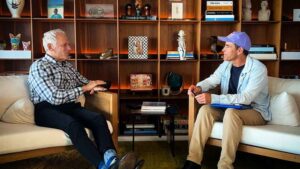
In an interview with Bravamente , a program hosted by big wave surfer Carlos Burle and supported by NeoFeed , Serpa explained that the decision stemmed from a discomfort with the comfort his professional career had achieved.
After decades of accumulating award-winning campaigns and international recognition, he realized he could continue living off his reputation, something that, for him, was beginning to lose its meaning. "That started to irritate me a little. What's the fun in that?" he said.
The possibility of spending years simply managing his own name, without necessarily creating something new, was what motivated him to leave the corporate world and move to Hawaii, where he could test his limits again. The idea was to put himself in an environment of discomfort, both in surfing, facing bigger waves, and in art, dedicating himself to painting more intensely.
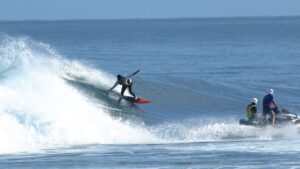
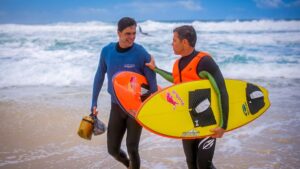
Serpa lived in the Pacific archipelago for a few years and returned to live in São Paulo about three years ago. The Bravamente episode was filmed in Hawaii, and before the interview, Serpa and Burle spent the morning surfing together with friends and family.
The advertising executive explained that he always sought to pursue what sparked genuine enthusiasm. For him, the key to professional and personal choices lies in the passion for what one does, and the worst mistake is letting opportunities pass by out of fear or by following external expectations. "It doesn't matter if it went wrong. I tried what made sense to me," he said.
Serpa also recalled his long-standing relationship with surfing, which began in his childhood in Rio de Janeiro, when he and his brother would cross the city by bicycle to catch waves at Arpoador.
Contact with the sea and nature has always served as a form of personal balance, which, in a way, has also influenced his thinking about creativity and career. For him, remaining for too long in predictable environments can reduce curiosity and the willingness to experiment.