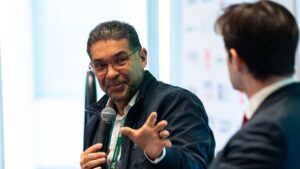


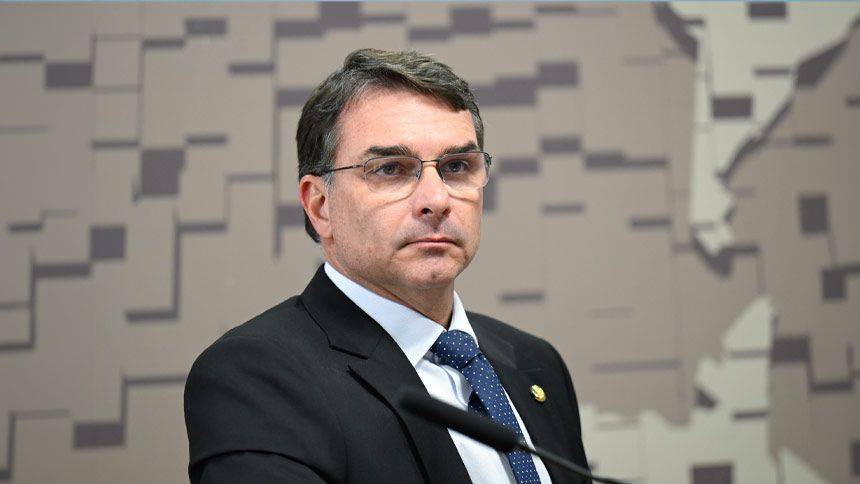
Invited as a potential presidential candidate to the CEO Conference, an annual event hosted by BTG Pactual, Senator Flávio Bolsonaro sought to position himself as the right-wing's main choice to challenge Luiz Inácio Lula da Silva's reelection bid.
Flávio, the eldest son of former president Jair Bolsonaro, received his father's blessing to run for governor, frustrating those who expected support for the governor of São Paulo, Tarcísio de Freitas, in the presidential elections.
The result has been a fragmented right wing so far, even though Flávio has been gaining strength in the polls. In the Quaest poll, released this Wednesday, February 11th, the difference between Flávio Bolsonaro and Lula fell from 10 percentage points in December of last year to five, in a possible second round.
“Everyone was betting that Tarcísio would be the candidate chosen by President Bolsonaro, because he was the one who was performing best in the polls. But, in these two months, several polls have already shown that I have managed to reduce some of that distrust, that concern that everyone had about losing to the PT,” said Flávio Bolsonaro.
Addressing an audience of investors, the PL's pre-candidate repeated promises of a pro-market candidate, including spending and tax cuts. Bolsonaro, however, did not detail where he would start or which sectors would be targeted by the proposed "cuts."
The plans, he stated, include reducing the tax burden, bureaucracy, appointed positions, and what he described as "excessive spending in various areas, such as advertising."
"But most importantly: I'm not going to give details of what I'm going to propose or where I'm going to cut, for example, because this is a house of cards. You can't remove a card. I'll say that I'm going to reduce the tax here, but you have to know what the impact of that will be on a particular segment."
According to the pre-candidate, these more technical details are being analyzed by a "team" that is helping to formulate the proposal. "The most important thing we need to get back in Brazil is predictability," he added.
Flávio Bolsonaro also did not go into detail about the names behind his economic plan and refused to give a timeline for announcing the chosen name for the Ministry of Finance, limiting himself to saying that it will be an economist and that it will be "much better" than the current minister, Fernando Haddad.
"You can be sure that it will be someone who will bring predictability to our country and who will make Brazil once again an attractive environment for those who want to do business." According to him, "it has to be, at the very least, equal to Paulo Guedes [former Finance Minister under Jair Bolsonaro]."
The senator also tried to avoid being questioned about the continuation of the privatization plans initiated by his father. He said that he intends to privatize 95% of state-owned companies, but that he will maintain state participation in areas considered strategic.
"It's not possible to privatize everything," he said. "But, obviously, wherever we can privatize, we will privatize."
One of the areas that Flávio Bolsonaro does not want to fully hand over to the private sector is that of rare earth elements, used in the manufacture of chips and batteries, which, according to him, "are all the rage now."
“We need public investment here. I'm not saying I'm going to create a state-owned company for this. Obviously not. But it's a strategic issue that demands a public-private partnership, because we don't have the technology to properly explore, refine, and transform this into consumable fuel.”
The senator said he will seek help on the topic to define the details of the project, but that the matter will be treated with "care" by his eventual government, given its geopolitical importance.