

The president of the Central Bank, Gabriel Galípolo , stated on Monday morning, February 9th, that he has faced difficulties in explaining to foreign executives and investors how the Banco Master episode, which caused one of the biggest financial losses in the recent history of Brazil's financial system, has generated so much repercussion outside the banking sector bubble.
Using an analogy with the world of football, the president of the Central Bank said that the bank was far from occupying a relevant role among the elite of the country's main institutions, as it accounted for less than 0.5% of the assets of the National Financial System (SFN).
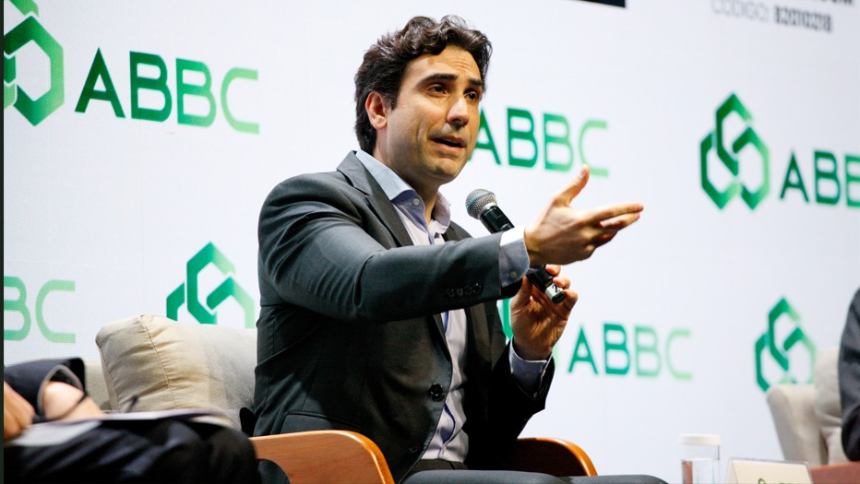
“It’s like a third-division team. It was even harder for those who had to liquidate Bamerindus, Econômico, and Nacional, which were banks with systemic relevance,” said Galípolo, at an event promoted by the Brazilian Association of Banks (ABBC) in São Paulo.
"When we understand that this is an issue that transcends the regulation and stability of the financial system, and that's what's drawing the attention of society, the Central Bank must do what the law mandates, which is to collaborate with the Federal Police and the Public Prosecutor's Office," he explained.
According to the president of the monetary authority, the Central Bank identified difficulties in raising funds and liquidity problems at the bank in November 2024. To address this, it summoned the institution and granted it six months to present the necessary corrections.
“The oversight board, which issued this sort of 'yellow card' to Master, began raising doubts in January about portfolio movements. It would be normal for there to be sales of assets, but this happened as a result of the formation of new portfolios,” he stated.
From there, a working group created by the BC's board found no evidence that these portfolios actually existed. Following this, a document called a 'report of facts' was issued to the market. "The Central Bank does not report crimes, but rather facts that need to be investigated by the Justice system and the Public Prosecutor's Office," it stated.
This action by the Central Bank occurred amidst the investigation into a possible acquisition of Master by Banco de Brasília (BRB). In September, the Brazilian monetary authority vetoed the operation. The following month, the liquidation was decreed, one day after the announcement that the Fictor group would buy the institution from Daniel Vorcaro .
"Thanks to the work done in conjunction with the Credit Guarantee Fund ( FGC ), it was possible to establish a well-founded process for rejecting the purchase by BRB and for voting in favor of Master's liquidation," he explained.
According to Galípolo, Vorcaro even proposed, in September, a kind of "organized exit," in the form of a self-liquidation, with the initiative of selling to Arab funds, which did not materialize.
“That didn’t happen, and it was found that in November the bank only had R$ 4 million in cash, with commitments to pay R$ 120 million in CDBs (Certificates of Deposit) in that week alone. There had already been a sanctioning process since the first quarter of 2025 because the bank was not complying with the compulsory deposit,” the executive said.
In defending the liquidation process, the president of the Central Bank says that the technicians' job is to preserve the institutions as much as possible and assign responsibility to the people who were on the front lines. "It's not appropriate to penalize the institution. It is a victim of a potential problem committed by those who made decisions. The investigation of the Banco Master case concerns the individuals involved."
According to Galípolo, it's important to understand that the problem with Master wasn't offering returns well above the CDI (Brazilian interbank deposit rate), but rather guaranteeing that those payments would be honored.
Also at the ABBC event, Galípolo thanked the Minister of Finance, Fernando Haddad, who has made public statements of support for the monetary authority's handling of the Master Plan episode.
He also cited President Luiz Inácio Lula da Silva, who nominated him to head the Central Bank back in August 2024. He took over from Roberto Campos Neto , who left the post on December 31 of that year.
"I thank God for going through a process like this with President Lula in charge. Not only for the way he reinforced the autonomy of the Central Bank and the Federal Police, but also for the peace of mind that no one is asking us what is being discovered," he stated.
"His experience, having already weathered many crises during his governments, is very important," Galípolo added. Unlike other moments in his speech, when he received enthusiastic applause, the applause after his remarks about Lula was more subdued by the audience at the event.