

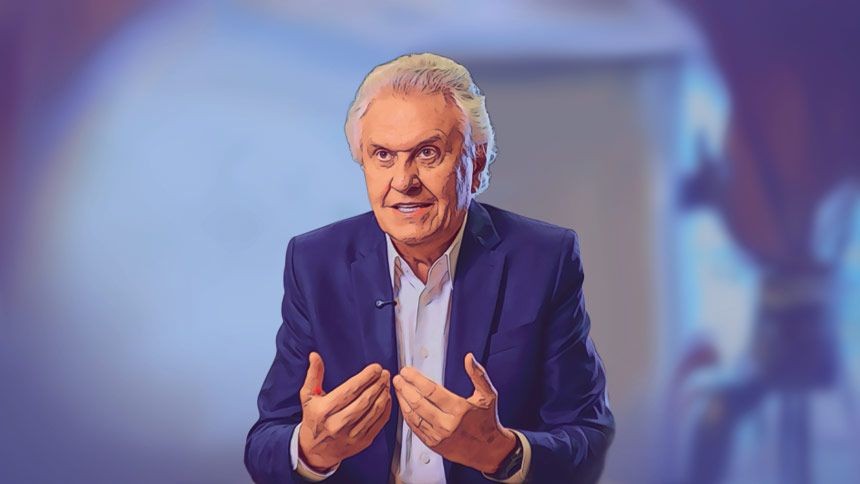
With one week left before leaving office, the governor of Goiás, Ronaldo Caiado (PSD), has been working to win the trust of Faria Lima (the financial district of São Paulo), focusing on economic issues, with the main objective of positioning himself as the party's candidate for the presidency of the Republic.
Caiado will resign on March 31st, after seven years and three months in office. He is internally competing for the nomination with fellow governors Ratinho Júnior (Paraná) and Eduardo Leite (Rio Grande do Sul). The decision, which will be made by the national president of the PSD party, Gilberto Kassab, will be announced at the end of March.
In this regard, he has harshly criticized the impact of the "Brazil cost" on companies and the absence of an adequate policy, on the part of the federal government, to guarantee the growth of companies in the country.
In an exclusive interview with NeoFeed shortly after the inauguration of the Barro Alto solar park , by Newave Energia (a joint venture between Newave Capital and Gerdau), Caiado stated that bureaucracy and environmental obstacles generate a 23% burden on Brazilian businesses.
"These are major obstacles to the survival of companies. That's without even mentioning corruption and bribery. And I won't even include the issue of interest rates, which is another problem altogether."
According to him, the approval of the economic freedom law in the state in 2024 ensured faster business openings for nearly a thousand activities classified as low-risk in Goiás.
"It won't be environmental obstacles or any other bureaucracy that will prevent companies from moving forward in Goiás," the governor states. In practice, what he means is that he has eliminated the "Goiás cost" for businesses.
In an effort to present counterpoints to the actions of the Lula government, Caiado signed a memorandum of understanding with the United States government on Wednesday, March 18, in São Paulo, for cooperation on critical minerals and rare earth elements.
“The intention is to transform these minerals, which are currently exported in their raw form, mainly to China, in order to advance the process of separating these critical minerals. The goal is not just to be a supplier of raw materials.”
In this regard, he criticizes the federal government for the lack of a clear national policy for the exploitation of critical minerals in the country. "The federal government has never paid attention to mining. If I were president, I would have already prioritized this issue."
Since 2024, the mining company Serra Verde has been exploring for rare earth elements in Minaçu, a city located about 500 kilometers from Goiânia. It is the only producer of critical rare earth minerals outside of Asia.
The project received US$565 million in funding from the United States International Development Finance Corporation (DFC). This funding guarantees the U.S. government the right to acquire a minority stake in Serra Verde.
Another ongoing project in Goiás is located in the city of Nova Roma. The multinational company Aclara Resources, headquartered in Canada, has a R$ 2.8 billion investment plan for the exploration of ionic clay. Currently, it is in the testing phase.
Ionic clay is used in the manufacture of high-power magnets for electric cars, wind turbines, electronics, and other motors. The minerals mined in Minaçu also serve the defense, aerospace, and energy transition industries.
According to the Ministry of Mines and Energy, Brazil has the second largest reserve of rare earth elements in the world, with 22 million tons. China leads, with 44 million tons.
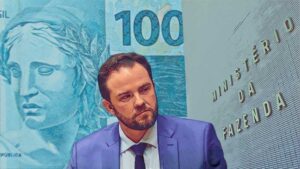
Caiado also spoke about Fernando Haddad's management of the Ministry of Finance, who left the government last Thursday, March 19, to run for governor of São Paulo.
According to the governor, Haddad's time at the economic ministry was marked by increased debt and a lack of fiscal control. He describes the now former minister as "wasteful" and "incompetent."
“The fiscal framework was a complete collapse. Haddad simply increased the country's public debt as a percentage of GDP. Without any crisis, Brazil went from 72% to almost 80%. He indebted the country by more than R$ 1 trillion. He is a man who has shown that, in reality, he was a political protégé, not a Minister of Finance,” he states.
Below are the main excerpts from Caiado's interview with NeoFeed :
You have mentioned that the "Brazil cost" generates a 23% impact on businesses, mainly due to bureaucracy. What is the path to changing this scenario?
This work isn't mine. It was started many years ago by Jorge Gerdau [controlling shareholder of Gerdau], who has been demonstrating how much bureaucracy and the number of obstacles created affect Brazilian businesses. These are major obstacles to the survival of companies. That's without even mentioning corruption and bribery. And I won't even include the issue of interest rates, which is another problem. But here in Goiás it's different.
How does the state of Goiás ensure a better environment for businesses?
Under the Economic Freedom Law, which I signed in 2024 [establishing that 962 activities classified as low-risk are exempt from public acts to begin their operations], we have one of the largest numbers of CNAEs (National Classification of Economic Activities) in Brazil, allowing for rapid approval of company installations. Environmental obstacles or any other bureaucratic hurdles will not prevent companies from advancing in Goiás.
You recently signed a memorandum with the U.S. government for studies on critical minerals in the state. What is the plan following the signing?
The intention is to transform these minerals, which are currently exported in their raw form, mainly to China, in order to advance the process of separating these critical minerals. The goal is not just to be a supplier of raw materials. I am the first governor in the history of Goiás to sign a memorandum with the American government. We need to do what, in Brazil, is currently stalled.
What else does the letter of intent include?
This agreement will give us a partnership for investment in research and will also allow us to create a true overview of the Brazilian subsoil. We will map the mineral resources of the state of Goiás. The state currently has niobium, heavy rare earth elements, copper, nickel, and cassiterite. It's a very rich soil. And we will take advantage of that.
What has been the role of the state government in the exploration of rare earth elements in the state?
In the first year of my administration [the environmental license was issued in 2019], I authorized the exploration of heavy rare earth elements in the municipality of Minaçu [operated by the mining company Serra Verde since 2024]. And now we have also authorized it in the municipality of Nova Roma. We are the only state in the Western world that produces heavy rare earth elements.
In your opinion, is there a lack of a national plan to discuss this issue?
The federal government has never paid much attention to mining. I'm still governor. If I were president, I would have already prioritized this issue. They don't have much of an idea. The ministries aren't concerned about it at all.
What is your assessment of Fernando Haddad's management at the Ministry of Finance?
The fiscal framework was a complete collapse. He achieved nothing. Haddad simply increased the public debt as a percentage of GDP. Without any crisis, Brazil went from 72% to almost 80% [78.7% in January 2026]. He indebted the country by more than R$ 1 trillion. He is a man who has shown that, in reality, he was a political protégé, not a Finance Minister. Lula always liked him, and Haddad visited him in prison. That's what led him to the ministry. But he lacks the competence for the job.
Still, do you think there was any public policy that stood out?
No. He didn't implement any policies that would have earned Brazil recognition for this. In the fiscal field, he did absolutely nothing. Wasteful, excessively extravagant, and with populist policies. The fiscal policy was a disaster. Haddad caused Brazil to end up paying the second highest interest rate in the world. That was the policy he adopted. But it's the PT's policy. I hope Brazil doesn't make that mistake again.