


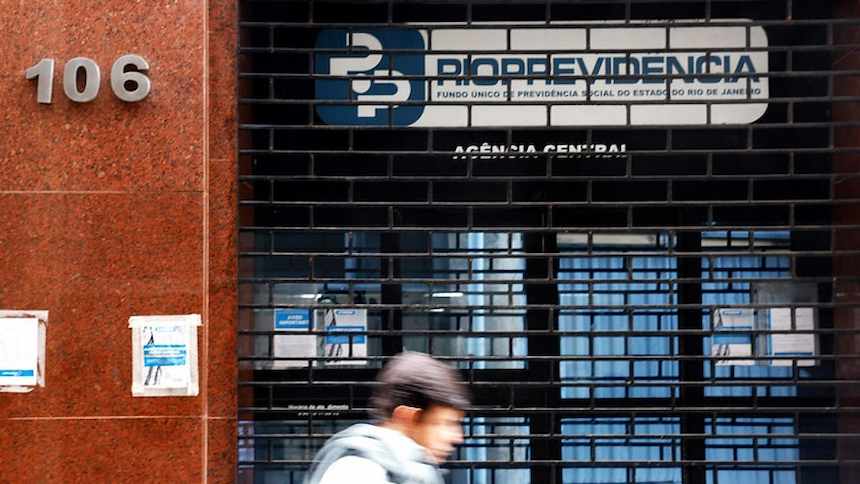
RioPrevidência , which is being investigated for investments made in Banco Master, lost money with the Arena fund, intended for investments in government bonds. Of the four Master funds in which the Rio de Janeiro state pension fund invested between 2024 and 2025, this one received the largest volume of contributions.
According to data from Cadprev obtained by NeoFeed via the Access to Information Law, RioPrevidência invested R$ 1.371 billion, divided into 16 contributions. RioPrevidência acted practically as the sole shareholder of the fund until the cancellation of its registration on December 11, 2025, almost a year after the first contribution, made on December 19, 2024.
Until October of last year, the investment had been yielding a negative return of R$ 12.87 million for the institution's main pension plan.
According to NeoFeed 's investigation, the date and value of the contributions coincide with all the fundraisings registered by the fund with the Securities and Exchange Commission ( CVM ). The exception is a contribution of R$ 100.283 million that RioPrevidência reported making on May 2, 2025.
On that day, no new contributions were registered to the fund, but on April 28 – a day on which RioPrevidência did not register any contributions to the fund – an inflow of R$ 100 million was recorded, R$ 283,000 less than what RioPrevidência reported having invested.
Since inception, the fund has yielded 6.97%, equivalent to 50.50% of the CDI (Brazilian interbank deposit rate) for the period, according to data from Mais Retorno. The fund's accumulated return in 2025 was 9.19%, equivalent to 68.4% of the CDI. Itaú Soberano RF Simples, another fund invested in by RioPrevidência with a similar purpose, yielded 99.45% of the CDI.
Part of the difference in profitability is due to the fact that, although permitted, Arena's management did not hedge the IPCA-indexed positions, absorbing the volatility of the portfolio's NTN-Bs. Until July, 96% of the portfolio consisted of inflation-linked government bonds and 4% in Selic Treasury bonds.
Another determining factor in RioPrevidência losing money in a government bond fund was the costs. Although it had a single investor who, in total contributions, put in more than R$ 1 billion, the fund charged a 0.35% annual management fee and a 0.15% custody fee, which went to the Master. Between December 2024 and July 2025, these expenses totaled R$ 526,000.
But these weren't the only costs of the fund. A management fee of 0.25% per year was also set, plus a 10% performance fee on anything exceeding 10% of the Selic rate, destined for Arena Capital, a Rio de Janeiro-based asset manager that managed the fund. The fund was the largest in Arena Capital's portfolio, which, according to Anbima data, ended 2025 with R$ 678.45 million under management.
As a result, up to July of last year, expenses for management fees totaled R$ 697,000 and for performance fees, R$ 1,271,000 – even with performance falling short of expectations.
Charging performance fees is not common in funds exclusively dedicated to investments in government bonds. Even when a fee is charged, the standard is to use 100% of the CDI (Brazilian interbank deposit rate) as a benchmark, not 10% of the Selic (Brazilian benchmark interest rate). The Itaú Soberano fund, for example, charges only a 0.15% management fee.
According to daily data from the Arena fund, approximately half of the fund's assets were withdrawn in October 2025. The final redemption occurred on December 10th, with a withdrawal of R$ 582.509 million. The fund's closure, according to the CVM (Brazilian Securities and Exchange Commission), was due to a decision by the shareholders.
The investment in the Arena fund had been questioned by the Court of Auditors of the State of Rio de Janeiro. On October 29th, less than two months before the fund's closure, the RioPrevidência Investment Committee recorded in its minutes that, despite the questions, the fund had been "paying a large part of this month's payroll, which has been of great value to RP at this time when royalties have ceased to be fully transferred."
“The Arena fund, for example, is managed by Master and has performed very well,” says the minutes of the Investment Committee, then headed by acting investment director Pedro Pinheiro Guerra Leal. Guerra Leal was dismissed in December – the same month the fund was canceled – for maintaining investments in Master's products.
Contacted for comment, RioPrevidência and Arena Capital had not responded by the time this report was published.
After the report was published, Master stated that "it was not the administrator of this fund and that the administration fee is charged by the manager, who makes the fund's decisions and charges the client. In this case, Arena Capital."
NeoFeed maintains the published information based on the documents. They show that in the period from November 18, 2024 to July 31, 2025, RioPrevidência's administration and custody fees were paid to Master, which was the fund's administrator. And management and performance fees were paid to Arena Capital. The expenses were R$ 516,000 and R$ 1.97 million, respectively, totaling R$ 2.48 million.
Also after the publication of the report, Arena Capital sent a statement to NeoFeed , which is reproduced in full below.
Before proceeding, however, it is important to clarify that the asset manager denies that the benchmark used for charging the performance fee was 10% of the Selic rate, although the fund's financial statements contain this information.
The same document projected an expense of R$ 1.271 million to be paid to the manager as a performance fee for the period from December 2024 to July 2025. Between the fund's opening on December 11, 2024, and July 31, 2025, the fund yielded approximately 3.6%, compared to an accumulated Selic rate return of 8.4% during the same period.
In addition to this contradiction with the documents, Arena Capital claims that Arena FI RF Título Público RL was an open fund for different types of investors, although it only had RioPrevidência as a shareholder and was closed after a cancellation request was made following the dismissal of the former investment director of RPPS, Guerra Leal.
Read Arena's letter below:
"Initially, it is important to clarify that the claim that there was a loss in the investment made with the Fund is unfounded. From a technical-financial point of view, the characterization of a loss presupposes that the amount actually redeemed by the shareholder is less than the amount originally invested, which is not the case here. In fact, Rio Previdência has already redeemed all of the invested resources, having received, as a redemption, an amount greater than the capital it contributed, therefore there is no patrimonial or financial loss to be recognized. It should also be noted that since 2025 Rio Previdência has not maintained any contractual link or investment relationship with Arena, and is no longer a shareholder in funds under its management."
Furthermore, the use of the term "loss" to describe the aforementioned investment is technically imprecise and potentially likely to mislead the reader by suggesting a non-existent economic loss. This characterization, besides not reflecting the reality of the facts, lacks objective basis and may compromise the proper understanding of the result actually obtained by the shareholder.
"The Fund's management is proactive, so the buying and selling of securities aims at dynamically adjusting the portfolio's duration, seeking to mitigate part of the carrying cost of the positions, especially in a scenario where the premiums offered at the shorter ends of the yield curve are higher than those associated with the naturally longer positions already held by the Fund. This is a rational strategy for appropriating the high premiums currently offered by National Treasury bonds, which largely stem from the perception of fiscal risk and the uncertainty of economic agents regarding the sustainability of the current fiscal regime."
"This perception of uncertainty translates into the need for the National Treasury to finance public debt at rates that are among the highest in recent years, creating a unique opportunity for investors with a long-term investment horizon and the ability to absorb short-term volatility."
"It should also be noted that the Fund is not exclusively intended for institutional investors, being accessible to different investor profiles, subject to applicable regulatory criteria. Nevertheless, it is undeniable that the institutional investor class finds in this investment vehicle a product particularly suited to its allocation needs, with attractive long-term return prospects, especially given the current scenario of high long-term interest rates, compatible with longer investment horizons."
"It is worth highlighting that this is a strategy naturally subject to short-term volatility, especially during periods of yield curve adjustment. Thus, analyses restricted to short time windows may show occasional negative variations, resulting exclusively from mark-to-market effects, which do not constitute an actual economic loss."
"In this context, it is important to note that, in the period between 01/01/2025 and 10/12/2025, the Fund presented an accumulated return of 9.19%. Although this performance did not exceed the adopted benchmark (Selic), it is a consistent result when analyzed from a comparative perspective, having been at a higher level than that observed in several other actively managed funds with similar strategies, especially considering the environment of high volatility and the relevant adjustments observed along the yield curve during the period."
"Finally, the Manager's compensation structure is in line with industry standards for asset management and includes adequate incentives for the Fund to seek to outperform its benchmark (Selic rate) in the long term, which represents the opportunity cost available to investors. It is necessary to clarify the understanding expressed, as the performance fee is 10% (ten percent) on the amount exceeding the benchmark (Selic rate), that is, it applies exclusively to the excess return calculated above the Selic rate in the reference period. Therefore, it is not a charge of 10% on the amount exceeding 10% of the Selic rate, nor is it a mechanism equivalent to '110% of the Selic rate'."
"The Management Company understands that both the strategy and the concept of the Fund are fully suited to the current context of the Brazilian economy, with the vehicle structured in a way that ensures proper alignment of interests between managers and investors, through correctly designed incentives."