

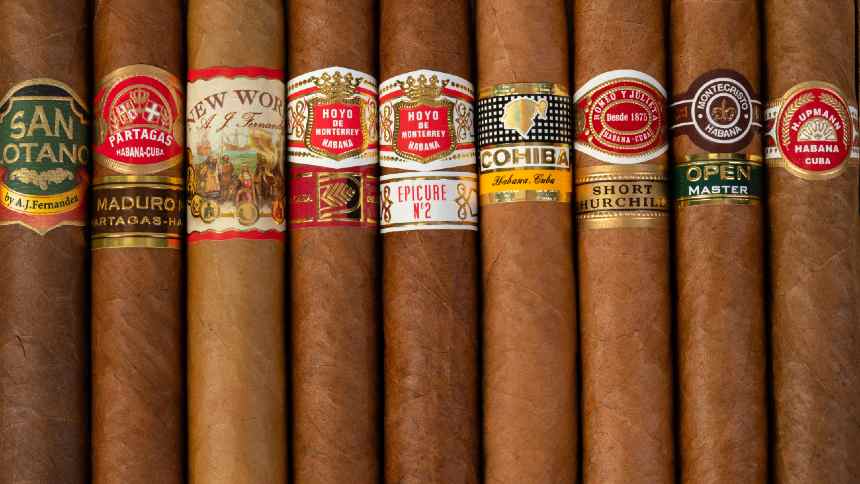
The oil blockade against Cuba , imposed by the United States government since the American intervention in Venezuela earlier this year, has severely impacted the island's largest export sector, along with nickel extraction: the traditional Cuban cigars, a symbol of the communist regime and immortalized for decades by dictator Fidel Castro (1926-2016).
In a statement that exposed the island's biggest economic crisis since the collapse of the Soviet Union in 1991, Habanos SA – the state-owned entity that holds the monopoly on global sales of Cuban cigars – announced the suspension of the annual festival of the traditional tobacco product in the Cuban capital, Havana, which was scheduled to take place over five days at the end of February.
The indefinite suspension of the event was justified by the festival's management "to preserve the highest standards of quality, excellence and experience that characterize this international event."
The festival typically attracts over 1,000 visitors from around 80 countries, offering foreign tourists the opportunity to participate in auctions and visit tobacco plantations. Habanos SA recorded record sales of US$827 million in 2024, the last year with available data, representing a 16% increase compared to the previous year.
The company operates with 27 premium brands, all handmade and protected by Designations of Origin. In 2024, 33 new products were launched. The global network includes 159 Casas del Habano stores and 17 Cohiba Atmosphere lounges.
The postponement of the event reflects the isolation of Cuba, whose economy has been strangled by the oil blockade decreed by the Donald Trump administration at the end of January.
With more than 4,000 Russian tourists in Cuba – a traditional destination during Russia's harsh winter – the Moscow-backed state airline Aeroflot said it was restricting its services and using an empty plane to pick up the tourists.
Air Canada, which stated it has 3,000 customers in Cuba, said it was suspending service to the country due to fuel shortages. The two countries, along with visits from Cubans living abroad, top the ranking of foreign tourism to the island. Other airlines said they would refuel in neighboring countries for the time being.
The crisis, however, is going beyond the tourism sector – essential for the survival of Cubans. Communist authorities are rationing fuel supplies, causing increasingly longer blackouts on the Caribbean island. Other cascading effects generated by the shortage of gasoline and diesel are paralyzing daily life.
Public transportation has also been reduced, and as a result, the government has suspended employment contracts. Children are being dismissed from school early, and Cubans are struggling to afford basic food items like milk and chicken, in addition to facing long lines at gas stations.
"Unusual threat"
In a maneuver aimed at forcing the fall of the communist regime, Trump decreed a naval blockade of oil tankers destined for the island shortly after the intervention in Venezuela, classifying the Cuban government as "an unusual and extraordinary threat." To discourage shipments, which had previously been made by the Venezuelan Chavista regime, Trump threatened to impose tariffs on any country that supplies oil to Cuba.
Even Mexico, which last year surpassed Venezuela as the island's largest supplier, has stopped sending tankers, although its president, Claudia Sheinbaum, sent 800 tons of humanitarian aid. "No one can ignore the situation that the Cuban people are currently experiencing because of the sanctions that the United States is imposing in a very unfair way," she said last week.
The dwindling oil reserves in Cuba led the United Nations to warn earlier this month of a potential humanitarian collapse. "Secretary-General António Guterres is extremely concerned about the humanitarian situation in Cuba, which will worsen if its oil needs are not met," said UN spokesman Stéphane Dujarric.
Already shaken by an economic recession that has dragged on since the pandemic, aggravated by hyperinflation and the emigration of almost 20% of the population, the communist government, in power for 67 years, promises to resist.
“Surrender is not an option,” said Cuban President Miguel Díaz-Canel . He has already stated that the government is prepared to dialogue with the White House, although “without pressure or preconditions.”
Diplomats in Havana hope that the speculated high-level discussions in Mexico between the Cuban government – represented by General Alejandro Castro Espín, the 94-year-old son of former Cuban president Raúl Castro – and American officials could result in an agreement, but so far there are no signs of progress.
Comments made over the weekend in Munich by US Secretary of State Marco Rubio indicate that the US does not wish to lead a regime change. Rubio – the son of Cuban parents and one of the Trump administration members most committed to the fall of the island's regime – stated that giving the Cuban people "more freedom, not just political freedom, but also economic freedom" would be a "possible path forward."
For diplomats from other countries on the island, however, Trump's strategy is to leave Cuba without resources until the population takes to the streets and the US can intervene. The speed at which conditions on the island have deteriorated has surprised analysts.
Jorge Piñón, a Cuban energy expert at the University of Texas who monitors oil shipments to the island, believes a collapse is imminent, as oil will be completely depleted by April at the latest. "In Cuba, the biggest blackout will happen sooner than you think," he said.
Betting against Trump
According to diplomats and analysts, the Cuban government should hope for a possible defeat of Trump in the midterm elections in October, so that a renewed Congress can neutralize the White House's fuel blockade.
The biggest challenge is preventing a total collapse of the Cuban economy by then. To achieve this, the long-standing resilience of the island's communist regime is considered its greatest asset. Since the end of the Soviet Union in 1991 – which, according to the CIA, the American secret service, provided Cuba with US$3.5 billion in aid annually, approximately US$8.6 billion in today's values – the Caribbean nation has lived through successive waves of scarcity, but few have been as profound as the one currently unfolding.
Over the past three decades, Cuba has experienced at least three major national energy crises — in the 1990s, in 2021, and again between 2024 and 2025 — all marked by systemic failures in older thermal power plants, fuel shortages, and an inability to import parts.
The current situation, however, combines unprecedented factors: financial collapse, high annual inflation (12.52% in January), population exodus, and increasing diplomatic isolation. Cuba's GDP, currently estimated at around US$110 billion, is equivalent to that of a Brazilian state like Bahia, but with a much more fragile productive structure and dependence on basic imports.
The already chronic shortage of food and medicine is exacerbated by the disruption of supply chains and the government's inability to stabilize the currency. Despite the grim scenario, experts warn that the US should not underestimate the regime's capacity for resistance.
“The current situation in Cuba is as serious as it has been since the 1990s,” said Par Kumaraswami, professor of Latin American Studies at the University of Nottingham in the United Kingdom. “Of course there is frustration with the difficulties of daily life, but many Cubans are determined to resist threats to their national sovereignty, and it is possible to detect the emergence of a new wave of patriotism.”