

With a crushing defeat at the polls in the weekend's elections, the far-right populist regime with a nationalist-Christian leaning that prevailed for 16 years in Hungary under Prime Minister Viktor Orbán has come to an end.
The election result, which gave opposition candidate Péter Magyar around 54% of the vote, compared to 37.8% for Orbán's party – the largest difference in Hungary's 37-year post-communist era – will have a double effect on global geopolitics.
The first, and most immediate, goal is to break the deadlock in the European Union (EU), which has been prevented from releasing a €90 billion loan to Ukraine and approving the next round of sanctions against Russia because of Orbán's veto power – a restriction that Magyar is expected to overturn.
The second effect is the negative impact that Orbán's humiliating defeat is expected to have on his populist model, which had been praised as a symbol of the " illiberal democracy " of the new era by far-right leaders from various countries – from US President Donald Trump to Italian Prime Minister Giorgia Meloni, including Argentine President Javier Milei and even Russian leader Vladimir Putin, among others.
Trump not only endorsed Orbán but also sent Vice President JD Vance to Budapest to campaign alongside him last week. The result represents a defeat not only for Trump but also for Putin, who loses the only support he had from a European bloc country in the war against Ukraine.
The European Union's reaction to the Hungarian election results ranged from initial relief to a sort of ultimatum for the new Magyar government, which is due to take office in 30 days.
A day after European Commission President Ursula von der Leyen published in X that "the heart of Europe beats stronger in Hungary tonight," a spokesperson for the European Commission revealed to the British newspaper Financial Times , on Monday, April 13, a list of 27 demands from the European bloc to the new Magyar government in order to release approximately €35 billion in EU funds destined for Hungary.
The transfer of funds was frozen due to a series of disputes with the EU and Orbán's refusal to implement the required reforms.
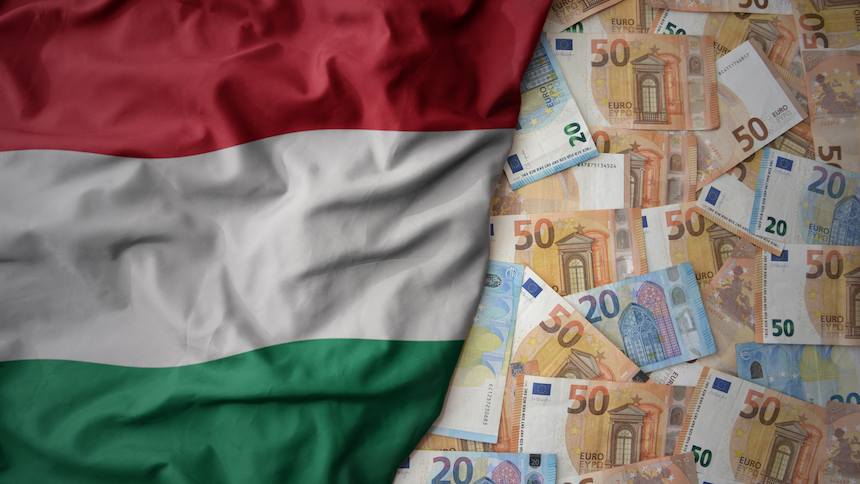
This includes nearly €18 billion of the EU budget tied up due to rule of law violations in Hungary under Orbán, increased corruption risks, and weakened judicial independence. Over €17 billion in low-interest loans for defense have also been delayed.
The message was delivered because Magyar, who pledged to bring the country closer to the European bloc, is considered a conservative and right-wing politician – he supported the Orbán government until 2024, and only broke with the populist leader due to a political dispute.
At 45, Magyar transformed Tisza into a political force in just a few months, exploiting Orbán's waning popularity amid the deteriorating Hungarian economy and corruption scandals involving relatives and allies.
On Sunday, April 12, Magyar vowed to restore democratic mechanisms of checks and balances, stating that the public media – whose news service has been transformed into a propaganda machine for Orbán – will be suspended until its neutrality can be guaranteed again.
Magyar, however, stated that his first trip abroad will be to Warsaw and Vienna — both governed by pro-EU conservative governments — before heading to Brussels, where he intends to repair the deeply damaged relations with the bloc even before taking office.
Ruin of the regime
As with other recent populist governments, Orbán used his three previous election victories to weaken independent institutions—the media, the central bank, and the judiciary—co-opting them to benefit the economic and political elite that gravitates around him.
The self-proclaimed "illiberal" model implemented by the prime minister worked well at first, until 2014, a period of stable economic growth. Cheap Russian energy, foreign capital flows, and EU disbursement funds soon dried up and "drastically exposed pre-existing structural weaknesses," according to the Center for Oriental Studies.
The main effect of his governing style has been the centralization of economic power and decision-making. Rampant corruption, Orbán's confrontational policies against the European Union, especially on immigration, and his rapprochement with Putin – positioning the country alongside Russia in the war against Ukraine – have undermined his popularity.
The main factor explaining Orbán's resounding defeat at the polls, however, is the failure of his economic policy – something that should draw the attention of voters in other countries who had been celebrating Orbán as a role model.
Over the course of 16 years, Orbán has managed the feat of transforming an economy considered among the most advanced of the former communist countries in Eastern Europe into the poorest in the EU. Hungary has been registering the highest accumulated inflation among the countries of the bloc since the end of the pandemic. Overall, prices have risen 57% in the period, almost double the rate for the EU as a whole (28%).
Hungary's experience as an atypical case in terms of inflation stems from domestic policy. Before the April 2022 elections, the government introduced additional stimulus measures, a move that some analysts interpreted as an attempt to "buy" votes. It repeated the same tactic before these elections, offering subsidies equivalent to 2.2% of GDP. However, the temporary price ceilings imposed by the government proved largely ineffective.
In keeping with the populist playbook, the government progressively reduced the independence of the country's central bank, leading to persistently higher inflation in the period leading up to the Covid-19 pandemic and Russia's large-scale invasion of Ukraine. Annual inflation rates peaked above 25%.
Furthermore, policies aimed at increasing fertility—a central point of Orbán's nationalist agenda, which includes tax breaks and interest-free loans and is estimated to cost around 5% of GDP—have so far failed.
The low birth rate, combined with a strict anti-immigration stance, results in a declining population. Hungary has lost 500,000 inhabitants since 2011, which equates to a 4.5% drop.
The country also faces labor shortages in key sectors, such as healthcare, with thousands of doctors emigrating in search of better salaries. The education sector also suffers from a lack of personnel.
With low growth and a relatively high budget deficit, the prospects for remedying some of these problems are bleak. Its debt service obligations are the highest in Europe, as creditors demand an "Orbán premium".
The release of frozen EU funds should alleviate the economic crisis. For Hungary, however, the departure from power of the populist leader who plagued the European bloc should return the country to political and economic insignificance – with only 10 million inhabitants, Hungary accounts for just 1.1% of the European Gross Domestic Product (GDP).
Conversely, the humiliating way in which Orbán was defeated suggests a much greater negative impact abroad, which should leave populist leaders who have always praised him, such as Trump and Milei, with few arguments to defend Hungarian 'illiberal democracy'.