

Mexico risks further irritating US President Donald Trump , who has already criticized the lack of action by Claudia Sheinbaum's government against drug cartels.
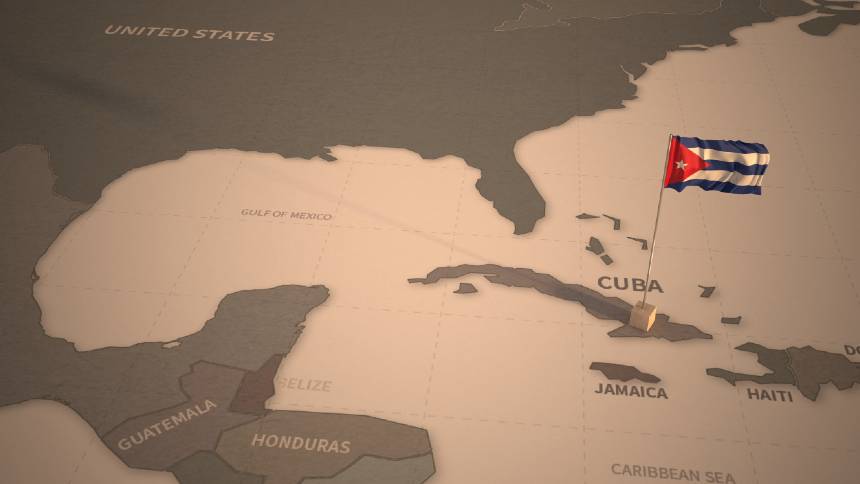
The risk stems from the fact that Mexicans have taken the place of Venezuelans as the largest suppliers of oil to Cuba in 2025, a country that Trump said was in his sights after the fall of Nicolás Maduro .
According to data from the consulting firm Kpler, obtained by the Financial Times (FT) , Mexico exported an average of 12,284 barrels of oil per day (bpd) to Cuba last year.
The volume represents about 44% of the island's crude oil imports and a 56% increase compared to Mexican shipments in 2024, offsetting the drop in sales from Venezuela – which remained stable in 2024, after a 63% decline in 2023.
Since reassuming the White House, Trump has been pressuring Mexico on issues such as trade and border security, claiming that the country allows the passage of drugs and illegal immigrants.
In December, new criticism emerged: the American government publicly reprimanded Mexico for not playing a "constructive regional role aligned with the objectives of United States foreign policy."
Mexico has maintained strong ties with Cuba since Fidel Castro's revolution in 1959. In addition to oil shipments, it employs numerous Cuban doctors in a program criticized by the United States as a "coercive labor export scheme" that enriches the communist regime.
The president of Mexico has been managing relations with the United States in a way that has inspired the Brazilian government to negotiate the tariff increase .
To that end, it seeks to meet Trump's main demands. Among them are the deportation of cartel leaders for trial in the US and the intensification of border patrols to curb the entry of illegal immigrants.
Nevertheless, he criticized the action in Venezuela. On January 5, Sheinbaum stated that " unilateral actions and invasions cannot be the basis of international relations in the 21st century."
Regarding the oil exported to Cuba, he had already stated in December that the sales "were carried out within a legal framework as a sovereign country." "Everything is legal," he added.
With Mexico accounting for a significant share of Cuba's imported oil and Trump feeling "empowered" after Maduro's capture, the expectation is that Sheinbaum will face even more pressure regarding the relationship between Mexico and Cuba.
Assistant Assistant Secretary for Western Hemisphere Affairs Katherine Dueholm attacked Mexico last month, declaring to a congressional subcommittee that the Sheinbaum administration “frequently acted in ways that contradict the objectives of the United States.”
With the United States-Mexico-Canada Free Trade Agreement (USMCA) under review, she urged Mexico to "reconsider" its position regarding Cuba, warning of "serious consequences for trade between our countries" should Sheinbaum "continue to undermine U.S. policy by sending oil to the murderous dictatorship in Cuba."
US pressure on Mexico is expected to have short- and medium-term effects on the economy. A UBS report warns that the Mexican peso is about 7% above its fair value and may experience greater volatility with the review of the agreement between the United States, Mexico, and Canada, scheduled to take place by July.