

The recent rise in international oil prices is expected to put significant pressure on Brazilian inflation in the coming quarters, adding further complexity to the Central Bank 's monetary policy. This is the conclusion of a study by Banco Daycoval , which NeoFeed had first-hand access to.
Authored by Rafael Cardoso, the bank's chief economist, and economists Julio Cesar Barros and Antonio Ricciardi, the study indicates that the oil price shock could raise inflation, putting greater pressure on administered prices in the short term and on service prices in the medium term.
Analysts, however, emphasize that the determining factor for inflation is not only the size of the current shock, but also what the new equilibrium level for oil will be after the conflict. Until this is defined, the inflationary risk remains high and requires increased attention from the Central Bank in guiding the trajectory of the Selic rate.
At the Central Bank's (Copom) last monetary policy meeting, the committee's assessment was that, although there are challenges to inflation convergence—such as the tight labor market—current inflation has presented benign surprises and, therefore, the degree of tightening could begin to be reduced at the March meeting, scheduled for next week, signaling the start of interest rate cuts.
It is important to emphasize that the Daycoval study focuses on the potential impact of the oil shock on the inflation trajectory, leaving aside projections of how much the oil shock would affect the Selic rate cut cycle.
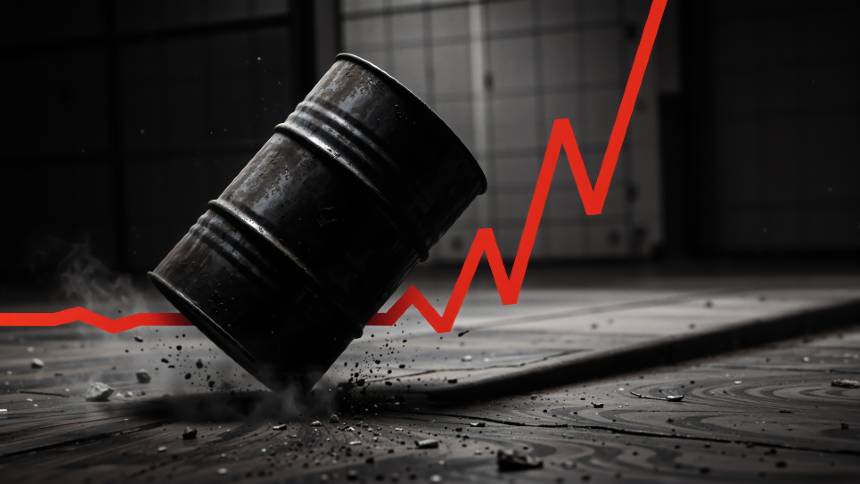
The report highlights that the current shock, caused by the conflict in the Middle East, has raised the price of a barrel of oil from around US$60 in early January to over US$100 in March. Although there are signs of a possible pause in the escalation of the price of oil, the market remains unclear about the duration of the conflict and the speed at which prices will normalize.
“If the price of oil stabilizes around US$80 a barrel, the inflation projection for 2026 could rise from 3.4% to 5.0%, while the estimate for the relevant monetary policy horizon—the third quarter of 2027—would advance from 3.2% to 3.7%,” the report points out. The relevant horizon is the future inflation period that the Central Bank uses as a reference for making interest rate decisions today.
In the short term, the main transmission channel for the IPCA (Brazilian Consumer Price Index) is the group of administered prices, especially fuels. The study highlights that, assuming full pass-through of international prices, the potential impact on gasoline and derivatives could be significant in 2026. In the medium term, the focus shifts to the services group, whose inflation tends to react to the inertia generated by the increase in headline inflation.
The analysis also notes that food tends to suffer a more moderate impact than in previous shocks, such as the war in Ukraine, since the global grain supply is not directly compromised. Still, fertilizer and freight costs could put pressure on prices along the supply chain.
In the case of industrial goods, Daycoval points out that the greater dependence on energy makes the sector sensitive to rising oil prices, reversing some of the benign behavior observed since last year.
The study reinforces that the scenario brings new concerns to the conduct of monetary policy by the Central Bank. "Even if the impact on core inflation is limited, higher inflation occurs in an environment of heated activity, unanchored expectations, and exchange rate volatility typical of an election year," the report warns.
Nevertheless, Daycoval believes that oil shocks tend to dissipate after the end of the event that caused them. "If the price of a barrel returns to pre-conflict levels within six months, the effects on projected inflation for the third quarter of 2027 may be smaller—and even lower—due to the so-called 'rebound effect'," the study points out.
The term "rebound effect" refers to the economic movement in which a price rises due to a shock, but then falls rapidly. In this case, inflation tends to slow down further down the line, possibly stabilizing below normal levels.
Daycoval is today one of the largest medium-sized banks in Brazil, with a strong presence in corporate lending, payroll loans, vehicle financing, foreign exchange, and investments. It has over 1.87 million clients, total assets of R$ 81.7 billion, and a national presence with 53 branches.
High tension
The projected increase in the price of oil per barrel, as outlined in the Daycoval study, is even timid considering the scenario on Thursday, March 12th, in the international market.
The record release of strategic oil reserves, announced in recent days, failed to prevent the rise in oil prices, and Brent crude futures contracts were once again approaching $100 a barrel.
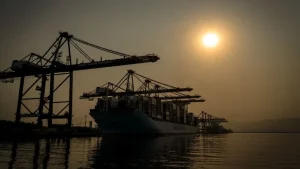
A series of attacks across the Middle East has heightened concerns about potential prolonged disruptions to energy markets. Seven ships have been hit in waters near Iran since yesterday, including two foreign oil tankers carrying fuel oil that caught fire and leaked oil into Iraqi waters.
US stock futures retreated, mirroring the trends of Asian and European stock indices.
Tensions rose with the announcement by the International Energy Agency (IEA) that it expects oil supply growth of only 1.1 million barrels per day this year, down from its previous forecast of 2.4 million barrels. "The war in the Middle East is creating the biggest supply disruption in the history of the global oil market," the agency warned.
One risk not yet fully reflected in oil prices is the possibility that Gulf producers will begin to shut down production at their wells by the end of March, should disruptions in the region persist.
Perhaps for this reason, commodity strategists at Goldman Sachs have revised previous estimates, indicating that Brent crude oil futures will average $98 per barrel in March and April, an increase of about 40% compared to the average price in 2025.
Goldman expects prices to fall to $71 in the fourth quarter — still above the approximately $60 at which Brent closed last year.