

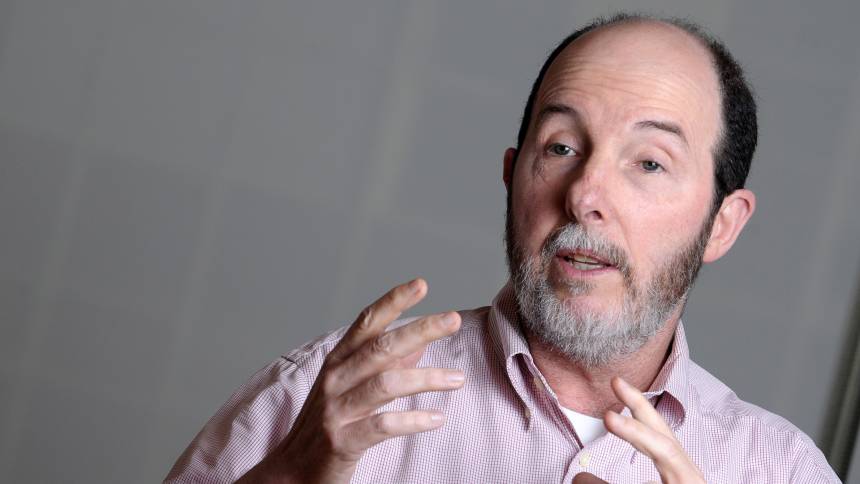
Brazil is suffering from a serious illness: a fiscal crisis . This condition is exacerbated by a profound institutional crisis affecting all three levels of government. This diagnosis comes from the former president of the Central Bank, Armínio Fraga , who emphasizes that the situation weakens the country, which may face new economic crises and is unable to prepare for growth.
"Brazil has many opportunities to grow, but they are routinely wasted," he said on Thursday, March 26, during his participation in the South Summit Brazil , an event for which NeoFeed is a media partner.
From an economic standpoint, he said the situation is peculiar. While the country is experiencing a period of "reasonable growth," around 3%, and unemployment is low, public finances are in disarray, resulting in very high interest rates. "The numbers don't add up," he stated.
Fraga, who is also the founder and chairman of Gávea Investimentos , said that the situation demands strong and immediate measures, something that the government of President Luiz Inácio Lula da Silva does not admit, speaking only of punctual adjustments.
Among the necessary measures are a new Social Security Reform, which "needs to be thorough," as well as an administrative reform, especially in the states. According to Fraga, these two accounts represent almost 80% of primary spending and need to be adjusted.
He emphasized that this agenda does not replace the need to address the situation of the institutions. Amid the Banco Master scandal, whose name was not mentioned in the presentation, Fraga stated that the Brazilian state has been captured by certain actors with particular and un-republican agendas, with disastrous consequences.
"Much of Brazil's immense inequality stems from this, from the failure of the State," he stated. "It is undoubtedly a situation of impaired resource allocation, because spending decisions are influenced by motives that are not in the best interest of Brazil's development."
According to him, the situation also highlighted the institutional uncertainty that the country faces at all levels, with strange decisions at various times. "The system protects itself, the parliamentary commissions of inquiry don't move forward, and cases stop progressing in the various courts," he said.
These crises are exacerbated by the fact that Brazil has experienced little growth since the Real Plan, with an average GDP per capita growth rate of 1.3%, below the 3.1% recorded in the nearly 50 years leading up to the lost decade of the 1980s, and that there have been no significant advances in the rate of investment and the quality of education.
"There was a complete lack of focus on education; Brazil continued with a closed economic model, failing to update itself and remaining subject to global pressures and opportunities," Fraga stated. "Brazil missed the boat."
Although he acknowledged the complexity of the situation, Fraga said that Brazil's problems are solvable. But for that to happen, he stated that political polarization needs to end. "I don't believe that the polarized situation will provide an answer," he said.
He then amended his presentation by simply stating his preference for the 2026 elections: the governor of Rio Grande do Sul, Eduardo Leite , much to the delight of the audience.