

The announcement of the start of sanitation works by the concessionaire Águas do Rio in the Complexo da Maré, in Rio de Janeiro – a group of 16 favelas where about 200,000 people live, currently with precarious water supply and no sewage collection – draws attention to the economic and social effects of universal sanitation by 2033, as required by the sector's legal framework, which has been in effect for five years.
On one hand, the contract model foreseen by the framework, with long-term investments and legal security to obtain returns, guarantees attractiveness for the auctions. For the concessionaire, this model encourages them to bring sanitation to areas without coverage and, with that, expand their customer base and increase their revenue, as is the expectation of Águas do Rio with its works in the Complexo da Maré, which will continue until the end of 2027.
Created by Aegea , one of the giants in the sector, to manage two of the four concession blocks acquired in the 2021 auction of the state sanitation company Cedae , Águas do Rio will invest R$ 120 million to universalize sanitation in Maré and, as a bonus, prevent Guanabara Bay from receiving approximately 1.3 billion liters of raw sewage from the complex every month, the equivalent of 577 Olympic swimming pools.
In a year in which seven major sanitation auctions are planned, four of which are in states with low coverage – Rio Grande do Norte, Rondônia, Alagoas and Ceará, in addition to a Public-Private Partnership (PPP) in Paraíba – the example of Maré gains relevance.
The question is whether there will be enough interest in these regions with a large number of families benefiting from social tariffs, which in theory would restrict revenue. In the North Region, for example, the level of sewage collection and treatment is only 22.8%, and access to water is 60.9%.
The expectation, however, is that the bidding processes will remain competitive, as has been the case since the legal framework came into effect – there have been 64 auctions in five years, with more than R$ 200 billion contracted for the 31 projects underway in 603 municipalities.
Aegea is a strong contender to participate in auctions in these regions. Operating concessions in 13 states, including five in the North and Northeast, with a large proportion of the population lacking access to water and sewage – such as Amazonas, Pará, Rondônia, Piauí, and Ceará – the company hopes to replicate the lessons learned in sanitation management in these regions in new concessions.
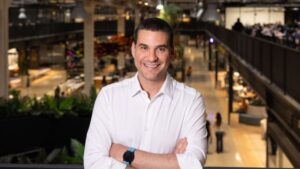
According to Radamés Casseb , CEO of Aegea, in areas with greater social vulnerability it is essential to structure projects that expand access to the service while ensuring the economic sustainability of the concession.
“This involves engineering solutions suited to local urban conditions, reducing water losses, digitizing operational management, and implementing tariff mechanisms that allow for the inclusion of low-income populations,” Casseb told NeoFeed .
The executive avoids saying where the company intends to bid for the concession in the 2026 auctions. "Generally speaking, both full concessions and PPP models are part of the universe of projects we analyze," he adds.
Social impact
Águas do Rio is an example of how bringing sanitation to vulnerable regions not only balances the concession's budget but also helps increase revenue over time.
Its two concession blocks serve 27 municipalities in the state of Rio de Janeiro and 124 neighborhoods in the capital. Of the 10 million people in its coverage area, 1.8 million live in 700 communities - 525 in the municipality of Rio, of which 347 are non-urbanized.
Anselmo Leal, president of Águas do Rio, reveals that of the approximately R$ 40 billion in investments for the concession, Águas do Rio has already contributed R$ 5.1 billion, is mobilizing R$ 16.6 billion, and projects to inject another R$ 18 billion by 2033.
“The concessionaire’s plan was divided into stages, first recovering the infrastructure inherited from Cedae and then expanding the capacity of the WWTPs, the sewage treatment plants, in order to receive sewage from uncovered areas and direct it to treatment,” says Leal.
The initial strategy adopted included cleaning the ocean interceptor and revitalizing stations near Guanabara Bay, such as the one on Ilha do Governador, leading to the depollution, for the first time in decades, of beaches like Flamengo, Botafogo, and Ilha de Paquetá, as well as the Rodrigo de Freitas Lagoon.
Leal explains that the concession model adopted by Cedae – in which the state-owned company maintained water production – requires strong coordination from Águas do Rio to balance revenue. "About 34% of the tariff comes from costs related to Cedae," he says, adding that efficiency gains and professionalization of the state-owned company could reduce tariffs for users.
According to him, about 10% of Águas do Rio's customers – from urban areas with good universal access rates – account for 60% of tariff revenue, with an average ticket price in the range of R$ 70. The concession contract formalizes the cross-subsidy for social tariffs in the contractual review, distributing costs to industries, commerce, and large buildings.
“The social tariff alone does not sustain revenue,” says Leal. Therefore, the company adopts a social impact policy in populous and vulnerable regions where it is expanding coverage, such as in Maré.
The territorial approach was implemented through NGOs and residents' associations, without contact with the different factions operating in the complex. The hiring of labor for the works prioritized residents of Maré, and the concessionaire's communication emphasized two objectives: to offer a quality service and an affordable price.
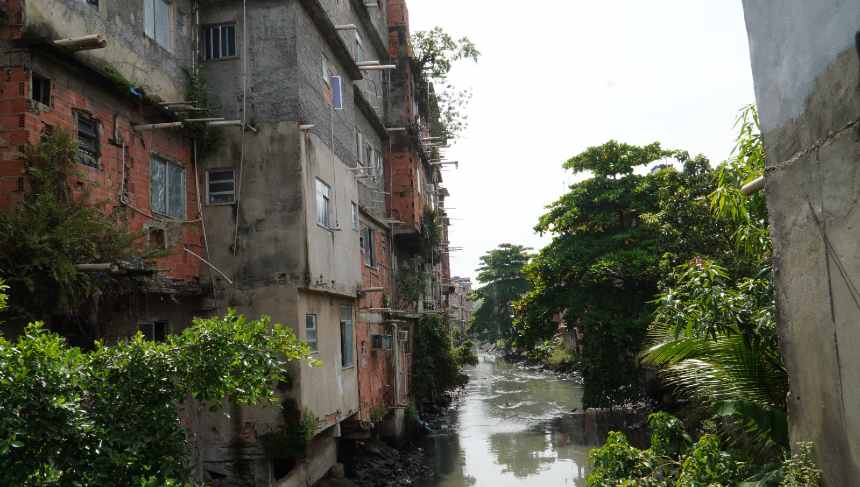
In Maré – which gets its name from the variations in the water level of Guanabara Bay, which still affect part of its territory – universal access to sanitation promises to end the open sewers and the unbearable smell of sewage, a consequence of drainage backing up into homes during rainy seasons. This problem has never been solved by previous urbanization plans in Maré, which is why the majority of the project's resources (85%) will be allocated to sewage services.
On the other hand, the promise of an affordable tariff aims to avoid the "pay or cut off" logic, since residents will have to assume a monthly water bill for the first time. "In the initial phase, we set a monthly tariff of R$ 5 - different from the standard social tariff of R$ 28 - to encourage payment," says Leal.
The package includes other benefits for those who pay on time, such as discounts at pharmacies in Maré. By focusing on inclusion, customer education, and converting non-customers, the concessionaire hopes to increase its customer base by 60,000, the number of water meters planned to be installed in the complex.
“The most important thing is that, upon receiving their water bill, residents of the complex indirectly acquire proof of residence to seek credit at the bank, for example, without having to pay the residents' association R$ 10 every time to receive a document stating that the family lives in Maré,” Leal adds.
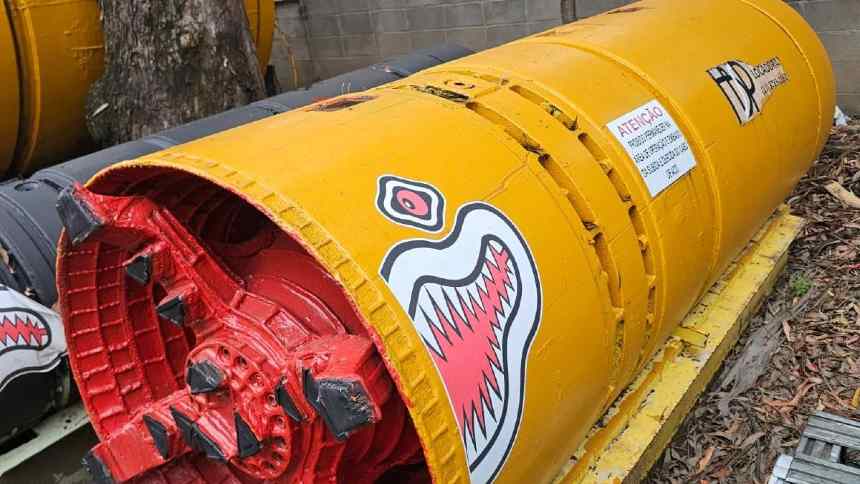
The project includes the installation of 18 km of new sewage networks. A key feature is the use of six tunnel boring machines, nicknamed "moles," which will install a 1.5 m diameter collector trunk extending 4.6 km at a depth of six meters to connect to the network – as the mole advances, it installs the pipes, minimizing traffic disruptions in the Maré region, located between Avenida Brasil and the Linha Vermelha and Linha Amarela highways.
With these works, Águas do Rio intends to solve another problem in Maré – water waste. According to Leal, the volume of water that reaches the area would be enough for twice the population, but it ends up being lost due to illegal connections and the precarious water supply infrastructure inherited from Cedae.
“By regulating the infrastructure in Maré, we can use this surplus water to take it elsewhere or simply stop buying it from Cedae, improving revenue,” says Leal.
Balanced model
For Thaís Mallmann, regulatory director of Abcon – the association of private sanitation concessionaires – the legal certainty of the regulatory framework is crucial for attracting capital. She cites as an example the inclusion of cross-subsidies in the contract model, which combines less profitable areas with more attractive regions and different user profiles in the tariff matrix.
“Thus, the social tariff ceases to be a loss and becomes part of a balanced model, enabling projects in regions with low sanitation coverage, such as in Maré,” says Mallmann, who also emphasizes the quality of the economic and financial studies that precede the auctions, which are superior to those in other infrastructure areas.
Recent research by EY Parthenon shows that sanitation leads the intention to invest in infrastructure over the next three years. In total, 49.2% of respondents cited the sector, followed by highways (47.8%), electricity (38.5%), railways (32.8%), urban mobility (30.4%) and oil (25.8%).
Roberto Marinho, founding partner of Yards Estruturados , an investment banking company operating in infrastructure, points to the business model offered by sanitation concessions as the reason for the sector's prominence.
According to him, 30-year contracts with legal security attract investors with a more mature profile. The macroeconomic environment reinforces this trend. "The biggest driver of infrastructure investment in the country today is the cost of capital, with high demand and low supply of tax-exempt securities," he says.
Marinho notes that BNDES and Caixa have competitive lines of credit aimed at projects with social returns, such as sanitation. "These funding lines are very helpful for this type of capital expenditure; the investor stops competing with the CDI (interbank deposit rate) and starts competing with the IPCA (inflation index)," he says, adding that the prospect of the Selic rate falling to single digits in a few years improves the viability of the projects.