


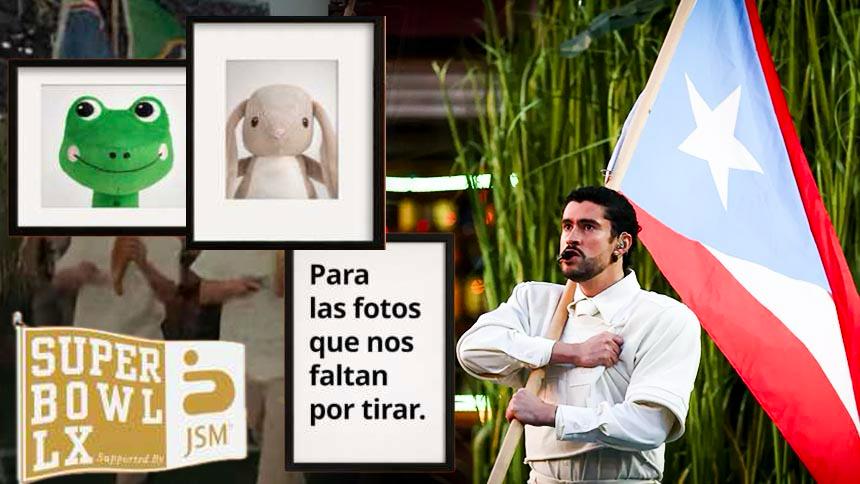
New York — Just days before the Super Bowl, the final of the American football championship, IKEA, the Swedish multinational furniture company specializing in affordable furniture, came up with something new: accustomed to popping up Swedish words in its communication, the brand dedicated two Instagram posts to fans of Puerto Rican singer Bad Bunny, in homage to the game's halftime show.
Following the brand's visual language, one of the posts shows three frames on the wall, each for US$9.99: a photo of a plush rabbit, another of a plush frog, and a poster that says, in Spanish: "For the photos we're still going to take." The frog is a reference to the concho , an endangered animal in Puerto Rico, which has become the singer's mascot. And the phrase refers to the song "Deví Tirar Más Fotos ," whose album won a Grammy a few weeks ago.
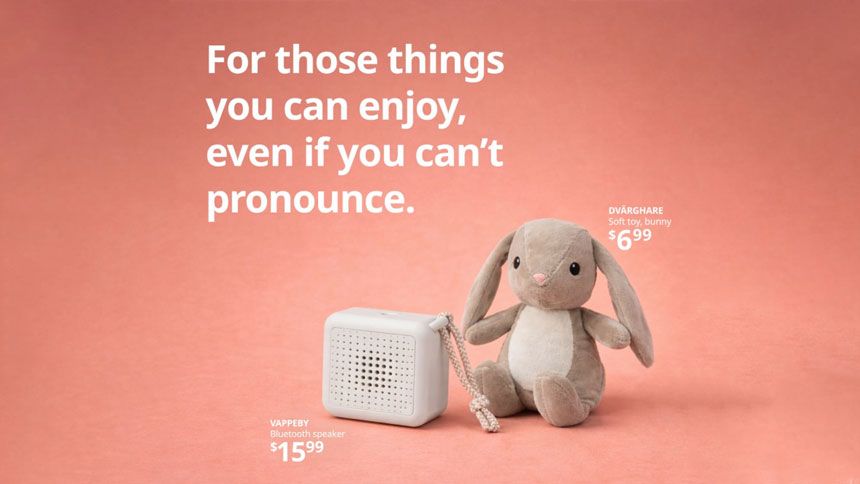
The second post shows a plush bunny, priced at $6.99, next to a mini music box, priced at $15.99, with the caption: “For the things you appreciate, even if you can’t pronounce them.”
“We managed to insert our brand into the conversation in a joyful way, which resonated with our audience,” Jessica Byrd, senior multicultural marketing manager at IKEA, tells NeoFeed . “The response from consumers and other brands has been incredible, reinforcing how essential the Hispanic market is to both our growth and our cultural relevance.”
The posts were created by Alma Agency, based in Miami, which specializes in the Hispanic market in the United States, a demographic group that holds $2 trillion in annual purchasing power. The latest US population census, conducted in 2020, indicates that 62 million (18.6%) of the country's 333 million inhabitants are of Latino origin. Between 2010 and 2020, 51% of population growth came from Hispanics, while the Anglo-Caucasian population dwindled.
Alma, which brings together a team of more than 35 nationalities, works with brands such as Netflix , McDonald's and Pepsi , all in search of the ideal language to communicate with the new reality of the country.
“I offer a pragmatic view of this universe to American professionals and corporations, emphasizing that the Hispanic-American market is different from the Latin American market,” Isaac Mizrahi, CEO of Alma and author of the book Hispanic Market, released two years ago (only in English), tells NeoFeed .
“The descendants of Mexicans living in the United States, for example, have different behaviors from those living in Mexico. Although they carry cultural references from their parents and grandparents, this group is embedded in American values, consumption habits, and economic, political, and social contexts, which shapes a distinct identity,” he explains.
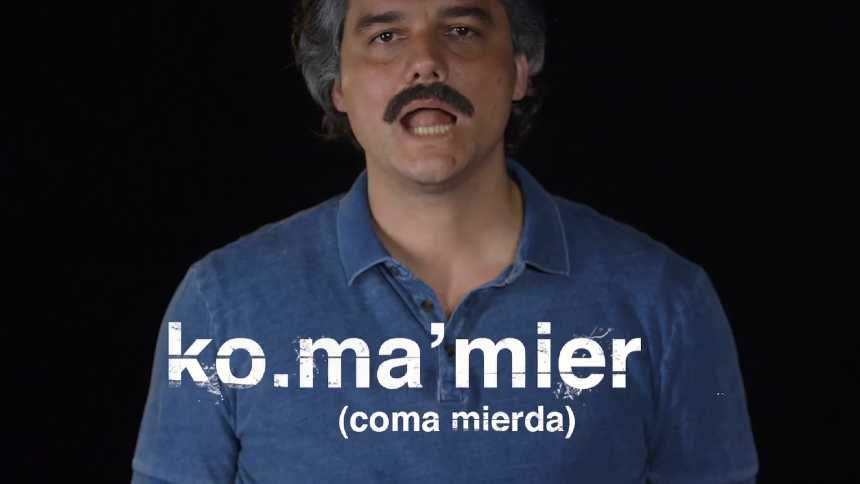
Among the memorable campaigns is Netflix's, in which actor Wagner Moura teaches the public how to use not-so-delicate words in Spanish, based on his performance in Narcos .
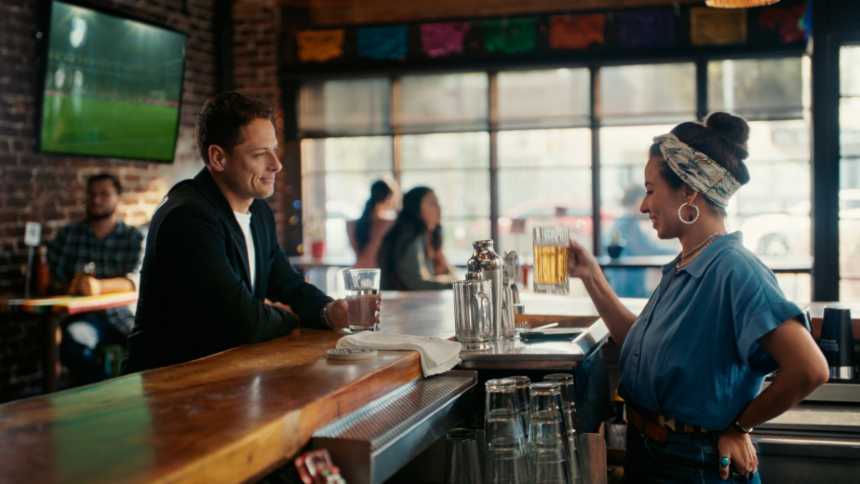
Another successful initiative for the Intuit QuickBooks accounting software was to bring in Mexican soccer player Chicharito, highlighting that, despite the Latin culture of using diminutive nouns (like his name, which means "little pea"), "your little business can turn into a big business if you don't leave your accounting in the hands of your little cousin."


Mizrahi adds that major brands began discovering this market about 20 years ago, when the Latino population numerically surpassed the African American population. “Until the 1940s and 1950s, Latinos had a discreet presence in the country, concentrated in a few cities. And, unlike the demographic explosion among Latinos, the African American population remained around 13% of the national population,” notes Isaac.
He notes that, over the past two decades, household income and purchasing power among Hispanic Americans have increased as a result of greater access to education and the completion of high school and college.
Culturally, the transformation has also been profound. “In the past, Latino immigrants primarily consumed media, food, music, and entertainment in Spanish, linked to their country of origin—especially Mexico, Cuba, and Puerto Rico,” notes the executive. “Today, although they maintain ties to their roots, a unique, hybrid Latino culture has formed in the United States, absorbing influences from Latin America, Asia, and the Anglo-Saxon environment,” he says.
This cultural shift also reflects a transformation in migration patterns. Mizrahi explains that, in the 20th century, especially after theFirst and Second World Wars , immigration to the United States was marked by a desire for complete assimilation.
Today, the country functions more like a "salad," where different groups coexist without losing their own characteristics, experiencing a comfortable bicultural coexistence.
"Contemporary Latinos move naturally between diverse cultural references, circulating between bilingual media, American football, South American and European football, listening to artists like Jay-Z and Taylor Swift , while also consuming J Balvin, Rosalía, Peso Pluma or Bad Bunny," he observes.
Mizrahi further states that there are points of connection between different nationalities that allow for the construction of advertising messages: everyone appreciates strong family ties, a sense of community, spirituality, a passion for certain sports and music. These are values that, according to the executive, differentiate Latinos from more individualistic cultures, such as the Anglo-Saxon one. "These are references that transcend national borders," he concludes.