


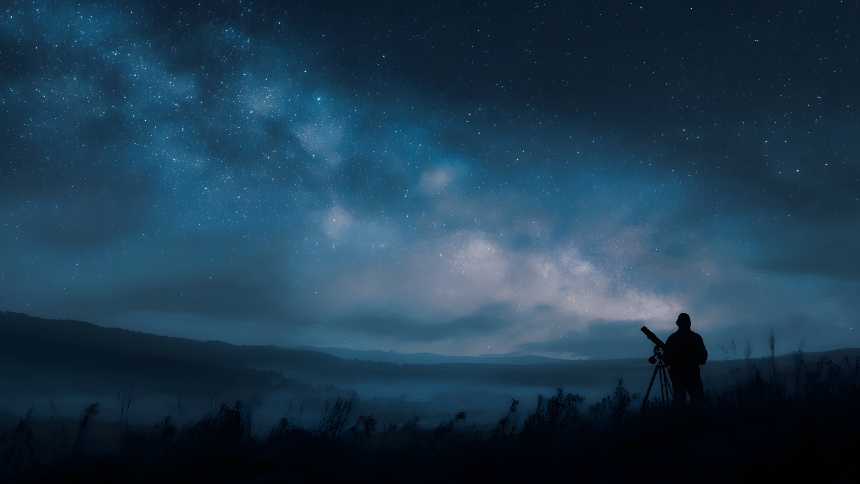
As children, perhaps our first curiosity is to look up and ask what is above the clouds. Someone then answers that it is the sky. Later, some religions teach that heaven is a sacred place where the good and the righteous go. The teacher delves deeper into the subject and says that there are other planets, stars, and the Sun there. The poet concludes: the stars we see at night are us, who begin to shine after we die.
Science, in turn, usually responds, roughly speaking, that we know almost nothing about what lies beyond the clouds—in fact, the stratosphere. On an Earth saturated with environmental abuses and where almost nothing else remains to be discovered, scientists and physicists are left to turn to what exists in so-called outer space to keep human interest in new discoveries alive. And, when they do so, they also seek a greater meaning for life on this planet.
Professor Neil deGrasse Tyson and journalist Lindsey Nyx Walker, both experts in cosmology, have found a way to make the subject even more captivating and accessible with their book To Infinity and Beyond — A Journey of Cosmic Discovery , now being released in Brazil by Record.
It's one of those books with best-seller potential that sheds light on the secrets of science, a publishing segment that has grown considerably in recent decades and placed many titles among the best-sellers.
Tyson is an astrophysicist and director of the Hayden Planetarium at the Rose Center for Earth and Space at the American Museum of Natural History in New York. Author of more than a dozen books and host of the acclaimed National Geographic podcast StarTalk , nominated four times for an Emmy, and the Emmy-winning television documentary series Cosmos , he has received 21 honorary doctorates as well as NASA's Medal of Distinguished Public Service. Walker is the senior producer and head writer for StarTalk .
As they explain, we still know practically nothing about what exists out there, since we haven't physically gone beyond the Moon and there are enormous technological limitations to going any further.
Except for what can be perceived through giant telescopes, space probes, and physics and mathematics calculations.
The conclusion is that the observable universe is about 13.8 billion years old and approximately 93 billion light-years in diameter. It is estimated that there are between 100 billion and 2 trillion galaxies, each with hundreds of billions of stars.
It's so impressive that our Milky Way galaxy alone may contain between 100 billion and 400 billion stars. Observations from the Kepler telescope indicate that there is at least one planet per star. In other words, there would be hundreds of billions of planets in the galaxy where we live alone.
To date, more than 5,000 exoplanets have been confirmed, and that's almost nothing. In terms of composition, the cosmos is made up of about 5% ordinary matter, 27% dark matter, and 68% dark energy, according to data from NASA and the European Space Agency (ESA).
But what lies behind all this? Are we "close" to discovering sister planets even in our own galaxy? And when will that happen?
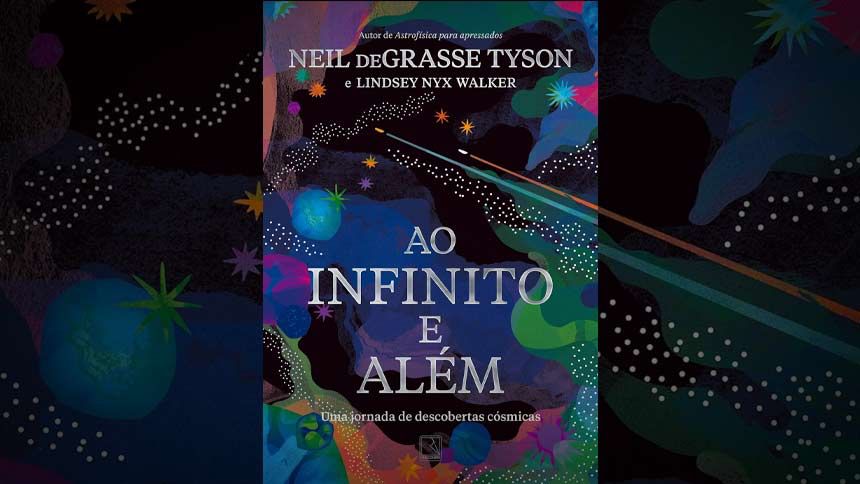
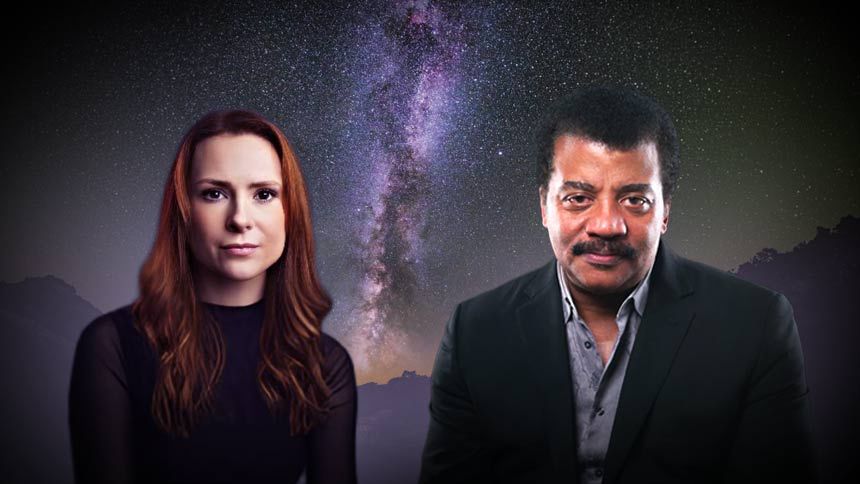

At the beginning of the book, Tyson and Walker seek to answer the question of what exists beyond Earth, with explanations ranging from mythical to modern science. They highlight how ancient civilizations looked to the sky and created stories about stars and comets, and how the invention of telescopes and scientific methods revolutionized this view.
Therefore, the search for the cosmos is a constant for humankind, and science has gradually replaced mythological explanations with concrete observational evidence.
According to the authors, space exploration with rockets and probes began with the basic challenge of escaping Earth's gravity: from early experiments with balloons to masters of aerodynamics, culminating in rockets that carried probes and humans beyond the atmosphere.
The story of the Voyager probes, for example, launched in the 1970s and currently venturing beyond the limits of the Solar System, is used to illustrate technological and scientific advancement and how these instruments represent Earth's hopes and dreams of reaching the stars.
A significant portion of the book provides a "guided tour" of the Solar System. It begins with the central star itself: the Sun. The authors explain the nature of the solar wind, the extent of solar influence, and what the inner planets are like, such as Mercury, a difficult place to explore because of its fast orbit, and Venus, with its toxic atmosphere and extreme greenhouse effect.
All of this was revealed by probes, calculations, and observations. "This story helps to show that each planet has a unique character and teaches how science has confronted and corrected old ideas about the cosmos," they state.
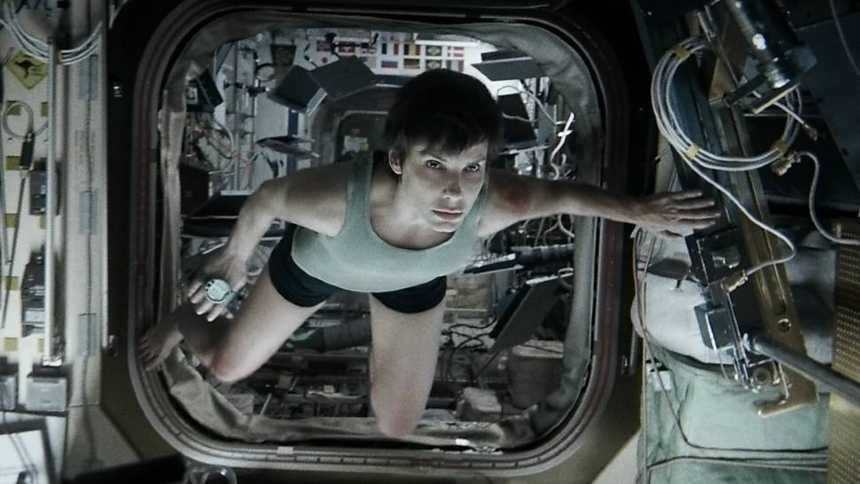
Less dry and more fun is when the authors explore how Hollywood films portray space, with their successes and failures, and use this to teach real physics. Tyson, with his characteristic humor, comments on scenes from films like Gravity (2013) and Interstellar (2014), contemporary science fiction classics, to separate what is " sci " from " fi ".
He uses these cultural references to explain concepts such as black holes, the distortion of time and space, and how current science views these cosmic entities, making their complexity accessible even to those without a scientific background.
Tyson and Walker also present the "wildest" frontiers of astrophysics, such as parallel universes, the large-scale structure of the cosmos, supermassive black holes, the nature of empty space, and the limits of what current technology can observe.
They emphasize that, although we have discovered much, most of the universe is still uncharted territory, with theories that continue to challenge human understanding. For how long? Will we live to have any answers?