

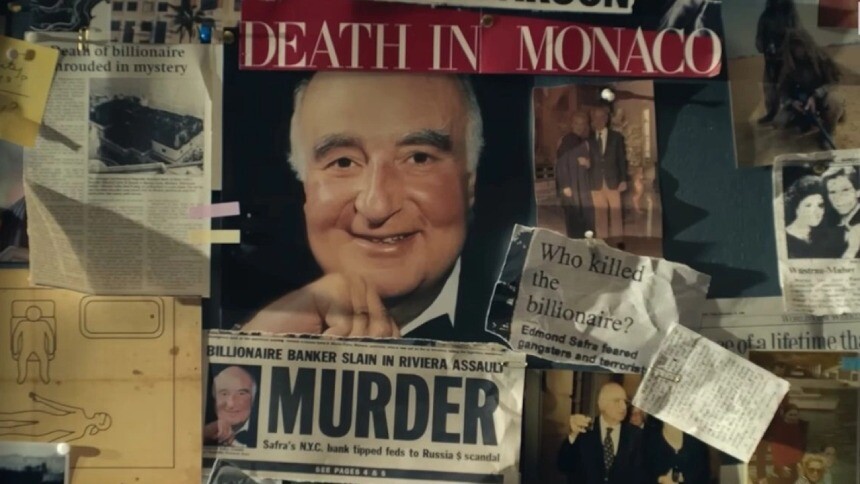
Recently released by Netflix, the documentary Murder in Monaco is filmmaker Hodges Usry's retelling of the death of Edmond J. Safra on December 3, 1999 — shortly after the legendary banker and philanthropist sold his stake in his two financial institutions to HSBC for US$10.3 billion in cash , a landmark deal at the time.
Suffering from Parkinson's disease, Edmond died at age 67, asphyxiated alongside Vivian Torrente, one of his nurses, in the fire that engulfed the penthouse of La Leopolda, the mansion he owned in the European principality. The succession of unthinkable errors that occurred in the three hours between the start of the fire (around 4:30 in the morning) and the arrival of the police, firefighters, and the head of security raised all sorts of suspicions. Edmond was found dead sitting in an armchair, and Vivian was lying on the floor beside him.
How could such carelessness occur in the safest piece of land in the world, an oasis for billionaires ? Attempting to answer this question, the murder shook the international media, gaining space in TV programs and investigative reports that twisted the story from all sides, creating outlandish versions and conspiracies.
Some pointed to the Russian mafia, after Safra turned over to the FBI information about money laundering that passed through his bank. There were also those who firmly believed that the murder had been ordered by his wife, Lily Safra, who was in the mansion on the night of the crime and was rescued through the window.
Among those who supported this version were the (now deceased) high-society columnist Dominick Dunne, author of a nine-page piece in Vanity Fair magazine; Edmond's brothers, Joseph and Moïse; and investigative reporter Isabel Vincent of The New York Post , who even moved to Rio de Janeiro to delve into the widow's life.
The accused was American Ted Maher, one of eight private nurses who took turns caring for Edmond in Monaco. Maher left his wife and three children in New York to earn $600 a day, in addition to having all living expenses paid.
The official version maintains that the head nurse, Sonia Herkrath, did not appreciate Maher's behavior. Feeling threatened, he devised a scene that, in his imagination, would make him a hero: one night, Maher turned off the mansion's security cameras, cut himself with a knife on his arm and on a part of his abdomen that (as a nurse) he knew would not hit a vital organ, and set fire to a trash can to trigger the fire alarm.
The idea was to tell Edmond that there were masked intruders in the house (a great fear of the banker), and that he, "even if attacked with knives by the intruders," would save his boss.
But the ending was different: Edmond locked himself in the bathroom with Vivian, a Filipina mother of two. As the fire spread through the La Leopolda penthouse, the banker was instructed, via the internal phone, to leave. But he refused.
In 2002, Maher was tried in a small Monaco court, where reporters jostled for space, including Reuters and the Associated Press, who spread the news to newspapers around the world. Even before the social media era, the event generated more than 400 daily clippings. Maher was sentenced to ten years in prison.
This is where the Netflix documentary brings new information. Usry interviewed many people involved in the case, including lawyers, the head nurse, the reporter from the New York newspaper, and Maher himself, now 67 years old, who has returned to the United States.
Lily Safra passed away in 2022 at the age of 87. She did not speak to the press and, in the last years of her life, dedicated herself to the philanthropic foundation that bears her husband's name.
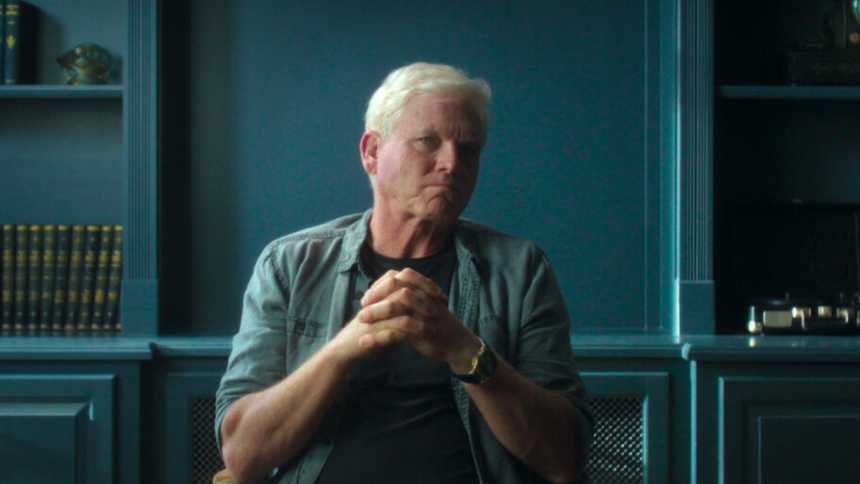
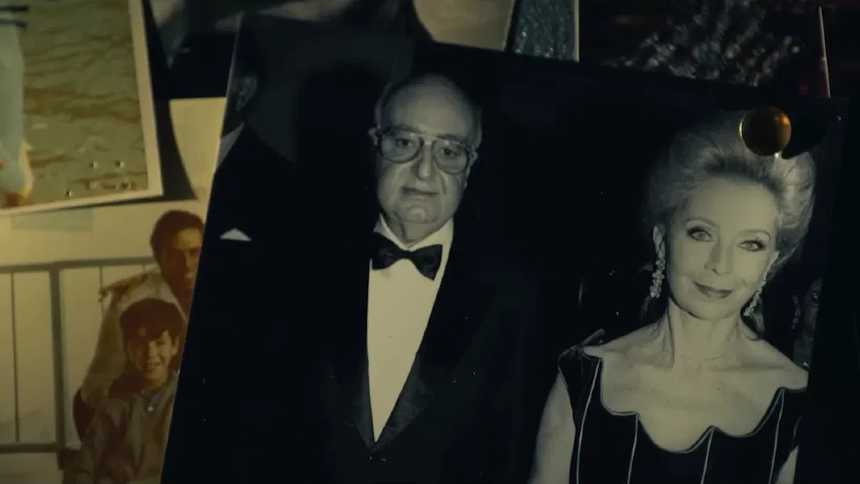
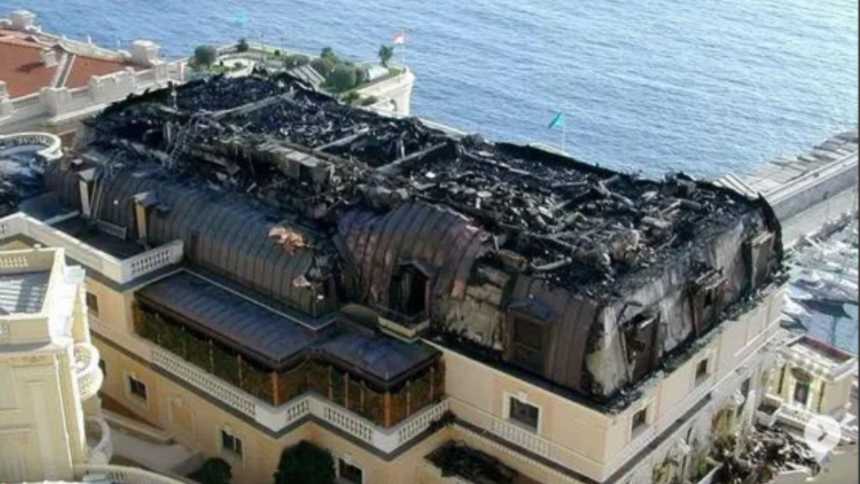
The documentary trailer leads the viewer to believe the nurse is innocent, with precise cuts from various interviews, including one featuring a caricatured Italian criminal with whom the American shared a cell. In fact, it was this man who orchestrated Maher's escape from prison, a freedom that lasted only a few days before his capture.
But what actually happened to Ted Maher since then? Did he really serve as a scapegoat, as those who never believed the official version maintain?
Before giving away any spoilers , let's remember who Edmond Safra was.
Born in Beirut to a Syrian Jewish family originally from Aleppo, he was the great-great-grandson of a renowned banker from the Ottoman Empire era. His parents had four sons and four daughters.
His father owned a small bank, and his mother died young. Edmond got terrible grades in school and dropped out at 14. But in 1947, when he turned 15, his father sent him to Milan to find clients, a time when Europe was facing the post-war period. His journey began there.
Edmond founded four financial institutions on three continents: the Republic Bank of New York, the Trade Development Bank (TDB) in Geneva; Safra Republic Holdings in Luxembourg; and Banco Safra in São Paulo. The latter came to be led by his younger brothers, Joseph and Moïse.
Averse to interviews and testimonials, he lived between the Middle East , Europe , and Latin America , and donated money with the same voracity with which he earned it. He spoke seven languages, married Lily Safra at age 43, but had no children. Or rather, he said his banks were his children. For years, he lived in the penthouse of the Republic Bank, on the corner of 40th Street and Fifth Avenue in Manhattan.
Banco Safra is privately held, but Edmond's banks in Switzerland and New York were publicly traded. Edmond owned 30%. But the remaining shares were held by the public; anyone could buy shares.
According to Daniel Gross, author of the authorized biography *A Banker's Journey *, despite his bank being publicly traded, Edmond viewed it as a family business, reluctant to select CEOs and transfer control of the banks. He worked all day: in the morning he was on the phone with Asia, then with Europe, and at night with the United States.
But in the late 1990s, when he was diagnosed with Parkinson's disease, he announced his retirement, hoping his brothers would take over, especially Joseph, his great advisor. However, they couldn't reach an agreement, leading Edmond to make the painful decision to sell the banks so he wouldn't have to worry about succession.
In 1999, the banker sold all his banks for cash so that he would not own any shares in any of them.
The documentary doesn't tell this story, limiting itself to the murder. And the surprise comes at the end. Even before the nurse returned to the United States, his wife divorced him.
Upon restarting his life in the country, Maher changed his name to Jon Green. He remarried, committed a series of crimes, the last of which culminated in another sentence, under which he is incarcerated in the state of New Mexico until 2031: he ordered the murder of his last wife, a crime that ultimately did not happen.
This cascade of lies caused Director Usry to wake up and, disappointed, visit the nurse in prison: “You lied to me this whole time?” Maher, or rather, Green, continues to insist that he didn't. But that also seems to be a big lie.