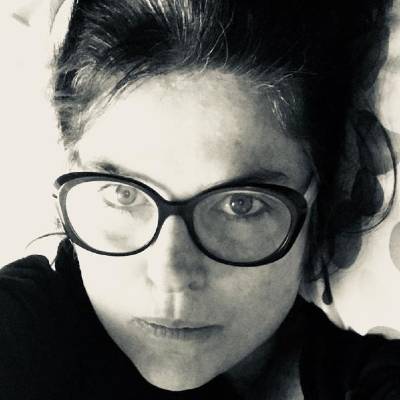


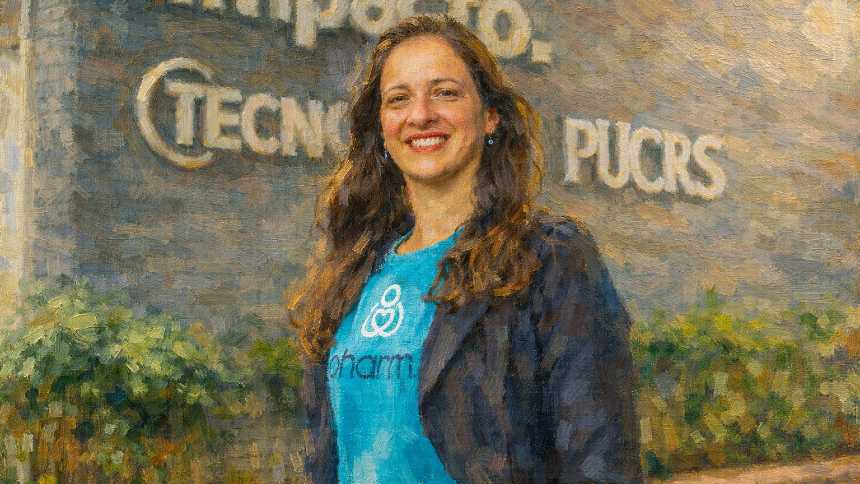
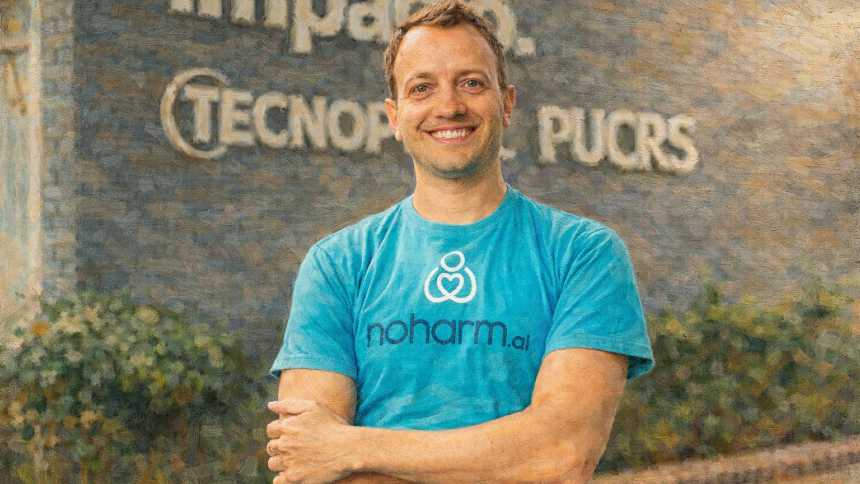
Conversations about work were common during family lunches in the city of Capão da Canoa, on the coast of Rio Grande do Sul. But, on a Sunday in 2017, the subject took a different turn—a more serious one. Ana Helena Ulbrich told her brother Henrique Dias about her frustration as a pharmacist at Grupo Hospitalar Conceição, the largest public hospital network in the southern region of the country.
Every day, she had to analyze about two hundred prescriptions, some with more than 20 medications, in a matter of minutes — the time needed to decide, but not always to be sure.
“I felt insecure, thinking I might miss some mistake,” recalls Ana Helena, 44, in a conversation with NeoFeed .
Henrique, a computer scientist and doctoral candidate at PUC in Rio Grande do Sul, was involved in developing artificial intelligence for outlier detection. Why not train a specific algorithm to find outliers in medical prescriptions?
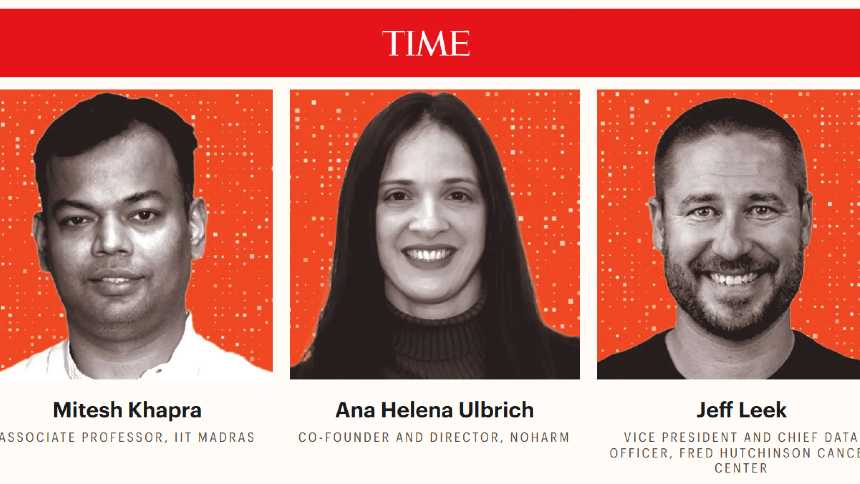
The idea for NoHarm was born there. Eight years later, Ana Helena would be included in Time magazine's list of the 100 most influential people in the world in AI.
Released in September 2025, the ranking features powerful names in global artificial intelligence. Besides her, only one other Brazilian, Cristiano Amon, CEO and president of Qualcomm, appears on Time 's list. But, unlike him, Elon Musk, Mark Zuckerberg, Sam Altman, Liang Wenfeng, or Jensen Huang, Ana Helena and Henrique did not become millionaires. In fact, that was never their ambition.
The brothers refer to NoHarm not as a traditional startup, but as a non-profit institute. From the beginning, the choice was clear: to provide the technology 100% free of charge to the Brazilian public health system (SUS).
They even received private funding offers — one of them for R$10 million. However, they never accepted. “Our purpose doesn’t align with the purpose of profit,” says Henrique, 43, in an interview with NeoFeed . And they don’t regret it. With social investments, they have already raised R$6 million.
NoHarm was selected, for example, in a BNDES (Brazilian Development Bank) call for proposals linked to Juntos pela Saúde ( Together for Health), a federal government initiative to strengthen the public health system. It has also received awards and support from programs such as the Latin America Research Awards (LARA) from Google; the Grand Challenges from the Bill & Melinda Gates Foundation (now renamed the Gates Foundation); and the AWS Health Equity Initiative from Amazon Web Services.
“The social investment we receive increases by about 60% per year,” says the computer scientist. “In other words, we will achieve much more than the 10 million reais that we refused.”
NoHarm also operates in private hospitals. In this case, the service is charged. The prices per bed range from R$ 42 to R$ 52.50, depending on the institution's occupancy capacity, with a minimum contract of R$ 4,000. "Our revenue grows by about 50% per year," says Henrique.
Open source
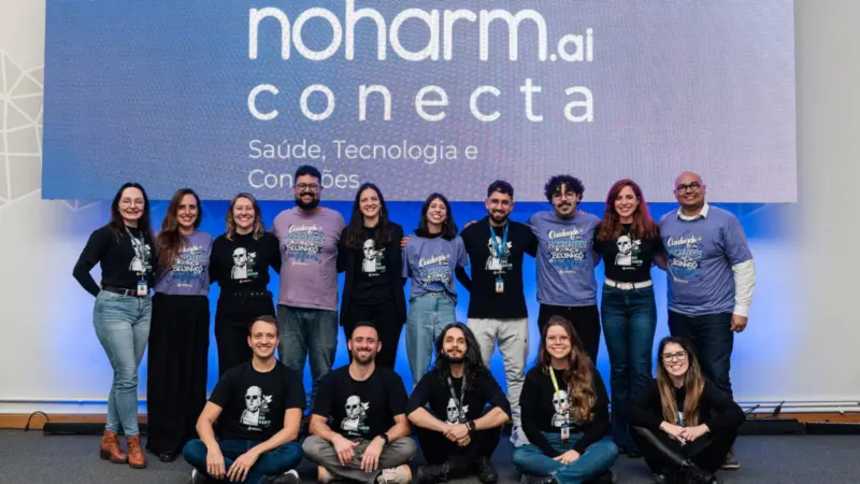
The platform became operational on April 1, 2020, when the first prescription was evaluated at Santa Casa de Porto Alegre. Since then, it has been adopted by approximately 200 hospitals throughout the country. Most of them are public. "We try to maintain roughly the same ratio as Brazilian hospital care: 70% is through the SUS (Unified Health System)," explains Ana Helena.
Offered as open source so that others can create similar platforms, NoHarm currently analyzes around 5 million prescriptions per month, benefiting more than 2.5 million patients. The pharmaceutical company categorically reminds us that AI does not replace professional judgment. The algorithm exists to support decisions—which, ultimately, are always human.
A study published in the Journal of Hospital Pharmacy and Health Services helps to illustrate the impact of the technology. In a public hospital in Minas Gerais, the adoption of NoHarm caused the rate of prescriptions analyzed to jump from 0.6% to 49%, while the error rate fell from 13% to 0.3%. With the support of artificial intelligence, pharmacists were able to see previously invisible risks.
By preventing unnecessary or inappropriate medications from reaching patients, the tool also reduces waste. At the hospital in Minas Gerais, according to the research, savings increased from approximately R$1,000 to nearly R$8,000 per month.
Cost reduction is a side effect. The main beneficiary is the patient. Before any medication is administered, the prescription is reviewed by a clinical pharmacist, who is responsible for assessing whether that combination of medications makes sense—whether the dose is appropriate, the interval is correct, and whether there are no dangerous interactions with other ongoing treatments. Errors in the process can have serious—even fatal—consequences.
The report, "First Yearbook of Hospital Healthcare Safety in Brazil ," published in 2017 and resulting from a partnership between the Federal University of Minas Gerais and the Institute for the Study of Supplementary Health, presents terrifying data.
Every year, approximately 1.4 million Brazilians are victims of medical care failures. These preventable incidents are caused, among other errors, by mistakes in medication prescriptions. Of these, 829 die every day. That's three deaths every five minutes.
In the daily routine of a large Brazilian hospital, the logic is usually one of limited time, numerous prescriptions, and decisions made almost in a race against the clock. It is in this tight space between the ideal and the possible that NoHarm operates—integrating patient record data, such as exams and comorbidities, and alerting pharmacists to any deviations from the norm.
And to think that the algorithm created by Ana Helena and Henrique was born spontaneously around the Sunday lunch table. In 2018, the AI of the siblings from Rio Grande do Sul earned an article in the Journal of Biomedical and Health Informatics . The duo could be satisfied to have their technology recognized in a publication of the prestigious IEEE — the world's largest non-profit technical professional organization dedicated to advancing engineering, computing and related fields.
But, as Ana Helena points out, it was necessary to bring innovation to hospitals. And they achieved (much) more than that: they integrated NoHarm into the SUS (Brazilian public healthcare system) free of charge.
The brothers come from a humble family, they say. Throughout their lives, their parents were state employees, and the four children always studied in public schools and universities. "It's a way of giving back to society everything we've received," says Henrique.
Looking to the future, he and Ana Helena have a “very subtle” desire to internationalize AI because, as the computer scientist points out, the demand is global. “But it’s difficult; we would have to find a very specific partner,” he explains. “Our focus today is 100% on Brazil.”