

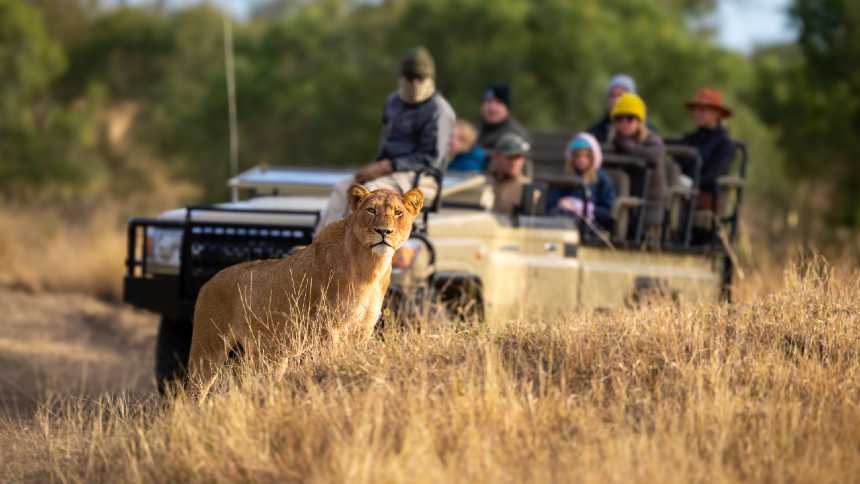
Between the late 19th and the first half of the 20th century, safaris were among the favorite pastimes of the European and American elites. In long and sophisticated expeditions, they traveled mainly through Africa in search of trophies. They hunted as if there were no tomorrow. But the future arrived, and the animals began to become scarce, while awareness grew of the harm that this "game" caused not only to ecosystems and local communities, but to the entire planet.
Over the past 40 years, however, the certainty has solidified that tourism can be used as a tool for conservation and development, even being more profitable than indiscriminate killing. Thus, the traditional safari has transformed into observation safaris—a business currently responsible for 7% of the average African GDP, according to World Bank data. The most recent surveys indicate that US$42.6 billion is injected into the continent annually, representing 41% of the region's international trade revenue.
Today, Africa is home to approximately 7,000 protected areas, primarily in Botswana,South Africa , Kenya, Uganda, and Gabon. Most are managed by 280 NGOs focused on restoring flora and fauna decimated and threatened by years of intensive exploitation. These reserves attract 5 million visitors annually.
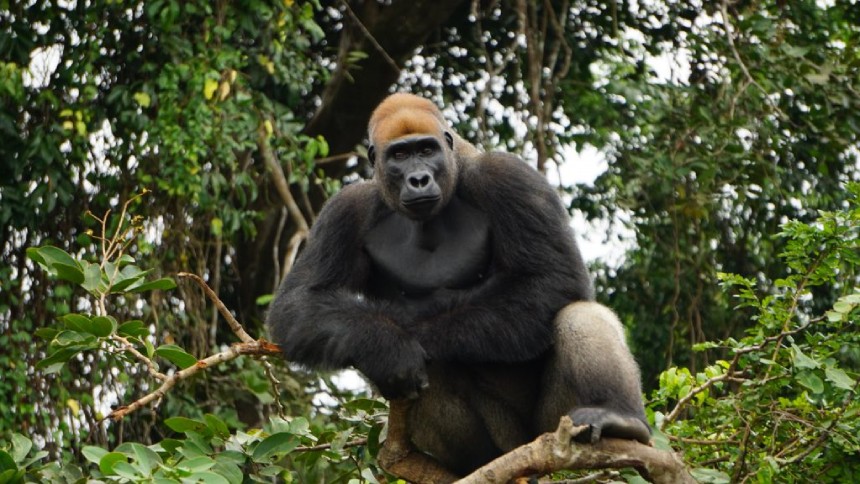
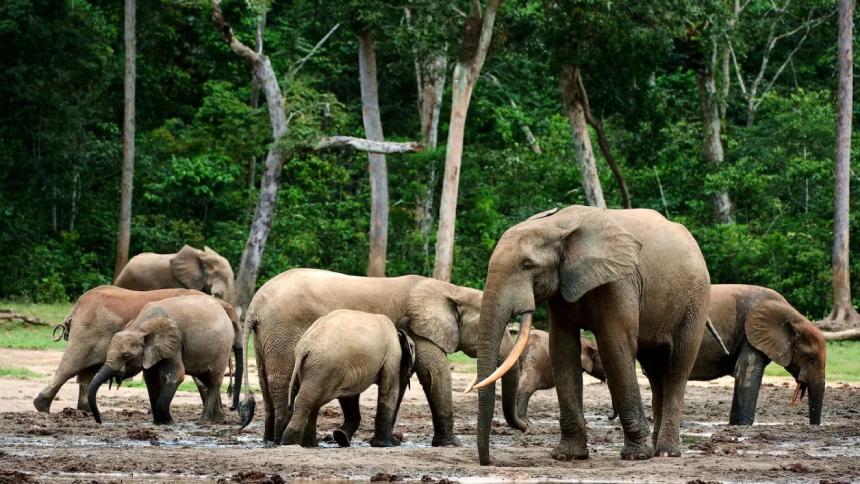
With an area smaller than the state of São Paulo and 90% of its territory covered by trees, Gabon is one of the greatest examples of successful wildlife tourism. Considered the last Eden of the continent, the region is home to about two-thirds of the remaining forest elephants in Africa, as well as large families of gorillas, hippos, and chimpanzees, in addition to a vast marine life.
It was there that the Fernan-Vaz Gorilla Project, dedicated to gorilla conservation, took root. Founded in 2001, it was born from a simple yet ambitious idea: to combine primate conservation with sustainable financing through responsible tourism.
Initially, the NGO focused on relocating a small group of gorillas to a protected natural environment. Gradually, the organization expanded its activities to include the rescue and rehabilitation of young gorillas affected by illegal hunting and the bushmeat trade.
“Today, the project operates both a permanent sanctuary for gorillas that cannot return to the wild and a forest rehabilitation program aimed at preparing rescued gorillas for greater independence in natural conditions,” says Virgile Manin, the Gabonese manager of the initiative, in an interview with NeoFeed . “It is in this sanctuary that we receive visits from tourists.”
With this initiative, the Fernan-Vaz Gorilla Project now cares for 12 animals. “Tourism was included from the beginning as a way to create a sustainable financial model, instead of relying exclusively on donations. It allows visitors to directly support conservation while also raising awareness about gorilla protection,” he says.
According to Manin, ecotourism has become one of the institution's main sources of funding so far, alongside subsidies and partnerships with zoos.
Manin, however, warns of the dangers of the practice. “Tourism should always be guided by rigorous animal welfare standards, visitor limits, health protocols, and transparent reinvestment in conservation. Tourism should support the mission—never replace it or compromise ethics,” he adds.
Beyond Africa
The models adopted by organizations like the Gabon project have transcended the boundaries of the African continent. Currently, nature-based tourism drives approximately 8 billion unique visits per year to protected areas that represent 17% of global territory and 8% of global marine areas. In 2025, the global ecotourism market was valued at US$298 billion, and could reach US$1.1 trillion by 2034, an increase of approximately 16% year-on-year.
Today, it is possible to observe polar bears in Canada , pandas in China , elephants in Thailand, birds in Colombia, among a huge range of possibilities, all in their natural habitats.
And Brazil is one of the countries investing in this practice, given its vast natural potential. Here, the Brazilian Institute of Environment and Renewable Natural Resources (IBAMA) established, in August 2025, the National Wildlife Observation Program, called Pathways of Biodiversity.
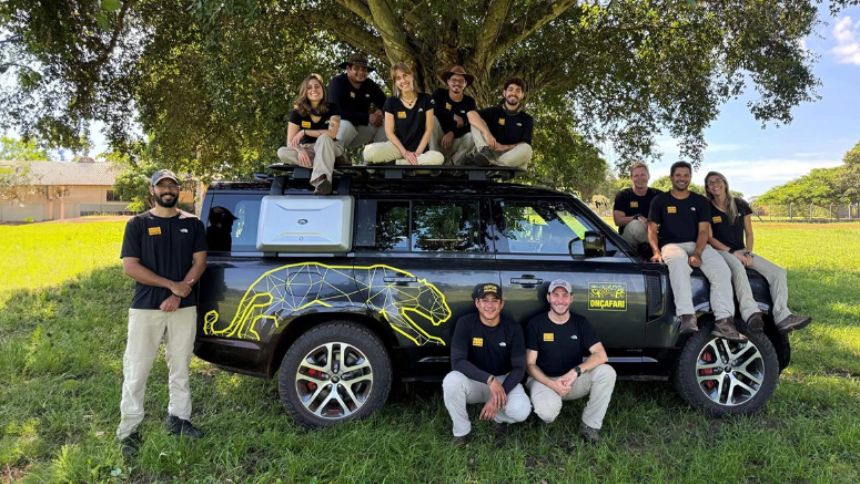
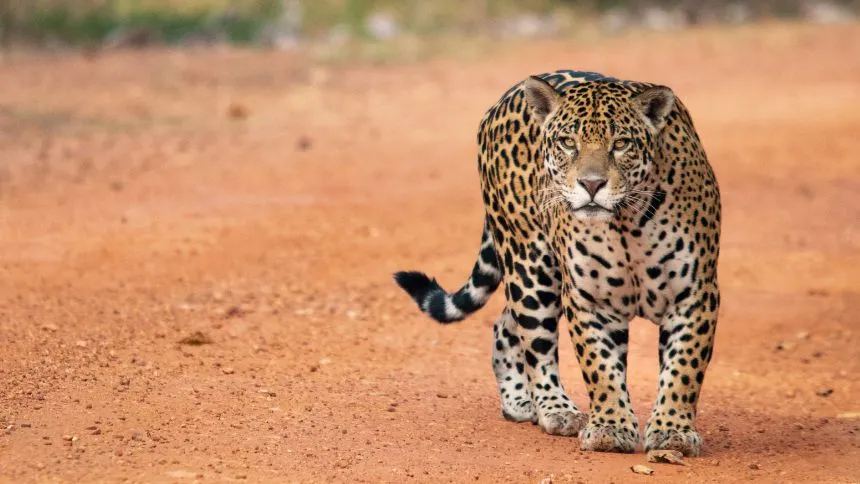
According to the institute, the program's goal is to stimulate ecotourism focused on observing wildlife in its natural habitat, promoting income generation for local communities. With this focus, states and municipalities will be encouraged to develop plans to promote wildlife observation, with support from research institutions.
This is one of the first governmental initiatives in Brazil focused on ecotourism. However, institutions such as Projeto Tamar, Onçafari , and Parque das Aves have been active in this sector for years.
“When we started Onçafari in 2011, ecotourism in Brazil was 30 years behind Africa, and that didn’t make sense to me. We are the country with the greatest biodiversity in the world, so I knew that needed to change,” says Mário Haberfeld, founder of the NGO, to NeoFeed .
Haberfeld still believes we are far behind in this regard. However, the initiatives of Onçafari, which began as a project for the preservation of the jaguar in the Pantanal, within the Caiman property of the São Paulo businessman and environmentalist Roberto Klabin, and is now present in 24 locations across Brazil, have been crucial for the development of the sector here.
“My vision was that we had to change people’s mindset. With the habituation of jaguars and the development of ecotourism, the communities around the project would stop killing the animals and start preserving them, since that was much more profitable and generated more jobs than livestock farming itself,” says Haberfeld. “I basically wanted to follow the model I had seen for many years in Africa.”
It worked. Since Onçafari started in the Pantanal, the number of tourists in the region has grown by about 550%. The revenue of the Caiman farm, which was focused on cattle, now comes mostly from tourism. And, in the first eight years of the institution, 100% of its income came from the sector.
According to Haberfeld, by 2025, 60% of the guests staying at the Caiman came from outside Brazil. "We've become the most famous place in the world for jaguar sightings, and that's incredible."
In the businessman's view, this type of domestic tourism is not yet a strong point for Brazilians, due to cultural reasons. However, he is fully confident that the segment will still develop here, even if gradually.
As he says, "Ecotourism is the best way to bring people to learn about the initiatives, engage with them, and support the communities that live in the region."