



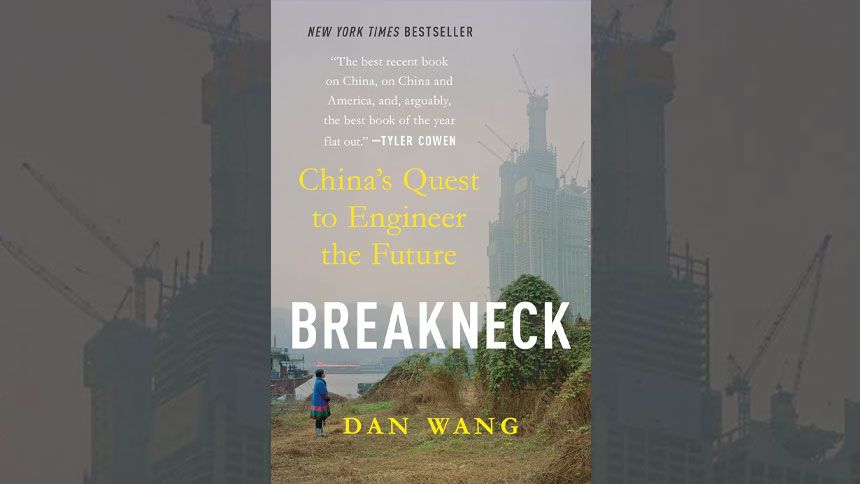
Few countries compare to China in ambition. In its quest to become the world's greatest power, the Asian nation combines state planning, scale, and speed of execution in a rare way. This is what researcher Dan Wang defines as "seismic progress" in his book Breakneck: China's Quest to Engineer the Future .
Still unpublished in Brazil, the work shows that the organizational capacity and prioritization of the Chinese have produced impressive infrastructure and industrial leadership — often, however, at the price of high social and environmental costs.
Not surprisingly, Wang argues that the dispute between China and the United States is less ideological and more structural. What is happening today is a clash between models of power and future-building that the Eastern power has prioritized strategically, in a less aggressive and noisy way than Trump's policy of intimidation through tariffs and armed interventions.
His conclusions are the result of nearly a decade of monitoring what he describes as China's "tumultuous and impressive growth." "The (Chinese) state built imposing bridges, gleaming railways, and vast industrial complexes to improve economic outcomes in record time," the author notes.
This accelerated change, on the other hand, has spread waves of pain throughout Chinese society, something to which the West has no access and cannot measure. According to him, China has grown so rapidly in the last two decades, in part, by surpassing America at its own game: capitalism and the mobilization of the tireless energy of entrepreneurship.
On the other hand, he situates the United States as a "lawyers' society," characterized by the preponderance of lawsuits, regulations, and legal discord. This dichotomy is not merely a metaphor, but an analytical framework to explain why the Chinese seem so effective at executing large projects while Americans frequently stumble over bureaucratic and legal obstacles.
This difference in institutional orientation, the author explains, has deep roots in the professional backgrounds of their political and economic elites. "While many Chinese leaders and policymakers have backgrounds in engineering or applied sciences, in the United States a significant proportion attended law school and shaped distinct governance styles."
It would be technocratic pragmatism versus legal caution. This contrast (which has different cultures in between) shapes everything from infrastructure decisions to how societies respond to impactful crises. To reinforce his argument, he examines recent concrete examples of Chinese enforcement capabilities.
One example is the significant expansion of China's high-speed rail lines, with a large-scale infrastructure planning and execution model, with sections built faster and for greater lengths than in many other countries with consolidated economies. Added to this is its reach, as in the case of the Beijing–Shanghai high-speed railway, perhaps the most modern in the world.
Mega-manufacturing campuses, such as Foxconn's in Shenzhen, are another case study by the author. They are part of a large-scale factory environment, with shifts, industrial discipline, dormitories, rigorously efficient logistics, and above-average productivity.
According to Wang, industrial clusters like these, occupying hundreds of hectares and employing hundreds of thousands of workers at peak times during the day, allow for a level of production and coordination that exemplifies the "execution capacity" of an efficient China.
The mass construction of cities and housing as part of urban megaprojects is cited as another "case" of how China "launches" cities, neighborhoods, and megaprojects involving bridges, viaducts, dams, and new cities at a pace and scale that explains the advantages and costs of this state-engineered model. While in the past such places emerged over decades and centuries, today they spring up "overnight," and that's no exaggeration.
These achievements are not merely the result of macroeconomic policies, but of a mentality that prioritizes "doing" over "debating." However, the author points out that his study promotes an optimistic and correct view of China.
His intention is to avoid an uncritical celebration of accelerated Chinese development. He proposes a discussion about the dark side of this "social engineering" applied to the population itself. He also points to environmental damage and human suffering.
The high social costs resulting from authoritarian government interventions are evident in engineered social policies, such as the one-child policy and the strict Zero-COVID restrictions, which caused significant human suffering, with traumatic impacts on families and restrictions on individual freedoms.
Rapid industrialization and growth were accompanied by environmental degradation, overcapacity and debt in state sectors, as well as challenges such as pollution and environmental impacts.
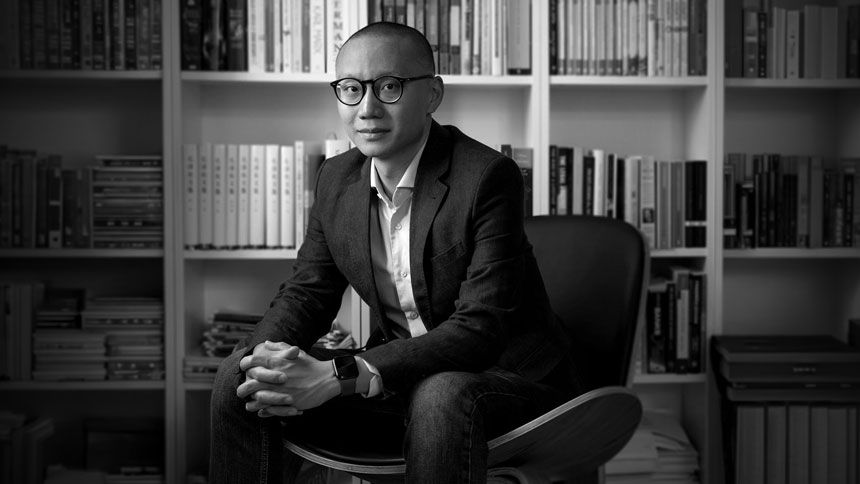
A research associate at the Hoover History Lab at Stanford University, Wang previously worked as a researcher at the Paul Tsai China Center at Yale Law School and as a technology analyst at Gavekal Dragonomics. He is a technology analyst who has worked in Hong Kong, Beijing, and Shanghai, where he observed and gathered information for his insightful analyses. He has also published essays in The New York Times , Foreign Affairs , Financial Times , New York Magazine , and The Atlantic .
Throughout the chapters, the writing alternates between analytical essay and description of Wang's lived experience. In some passages, he uses personal experiences from travels and observations in the Chinese countryside to illustrate contrasts with American life.
Thus, it creates a blend of field journalism and intellectual reflection, without sacrificing analytical depth, which has contributed to its wide critical reception in public policy and technology circles.
The author ultimately argues that both China and the United States have lessons to learn from each other. Americans could benefit from a renewed emphasis on engineering and execution. China would need to incorporate more mechanisms that protect individual rights and promote institutional pluralism.
It's a call for synthesis, he states. More than polarization, his book encourages the reader to rethink the future not only of two superpowers, but of the very idea of technological progress.