

Open your phone's photo app. What images are stored there that would never be published? A nude, perhaps. Or that spontaneous snapshot of a loved one, but which reveals a mess in the background, making it less " aesthetic " by social media standards.
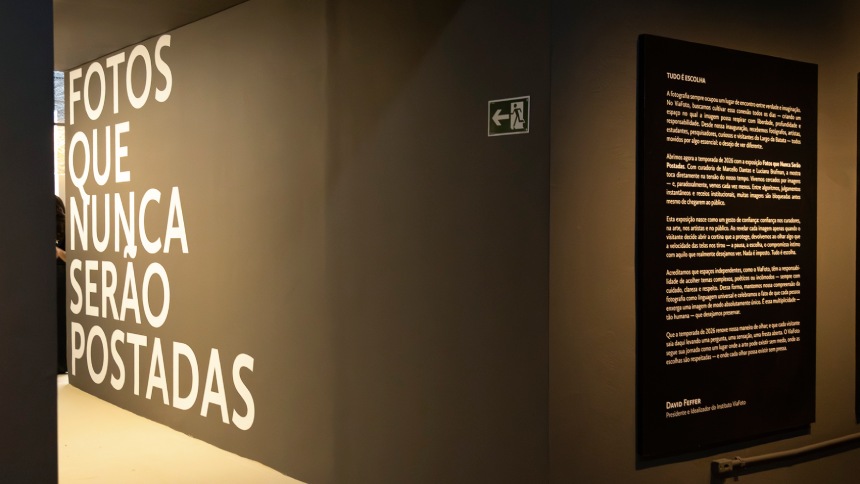
The exhibition "Photos That Will Never Be Posted ," currently on display at the Via Foto Institute in São Paulo, stems from this provocation posed by curators Marcello Dantas and Luciana Brafman: where are the images kept under lock and key? Those that cannot or should not become public?
“We wanted to give visibility to these images, which are very important because they all relate to some kind of intimacy, a process, a worldview that, by nature, tends to be excluded,” says Dantas, in an interview with NeoFeed .
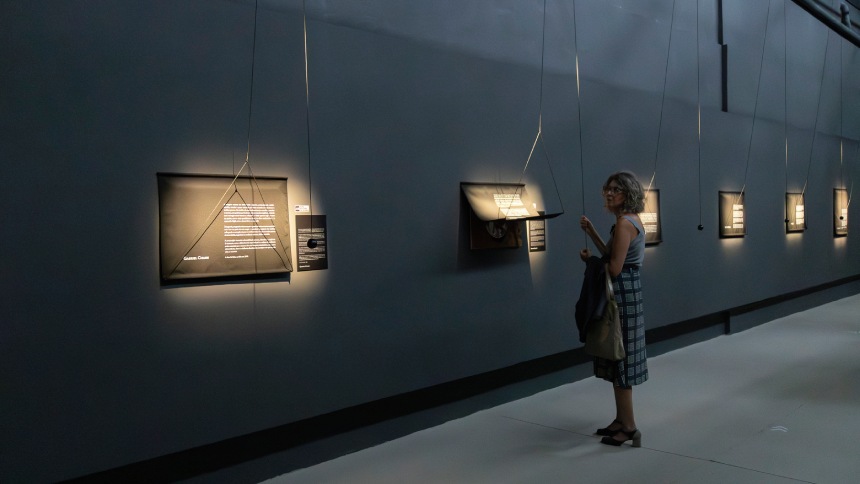
To ensure these photos remain unpublished, a radical solution was found: no one enters the exhibition with a cell phone. Before crossing the threshold, visitors must lock their devices in a locker. Once inside, the photographs are not immediately available for viewing.
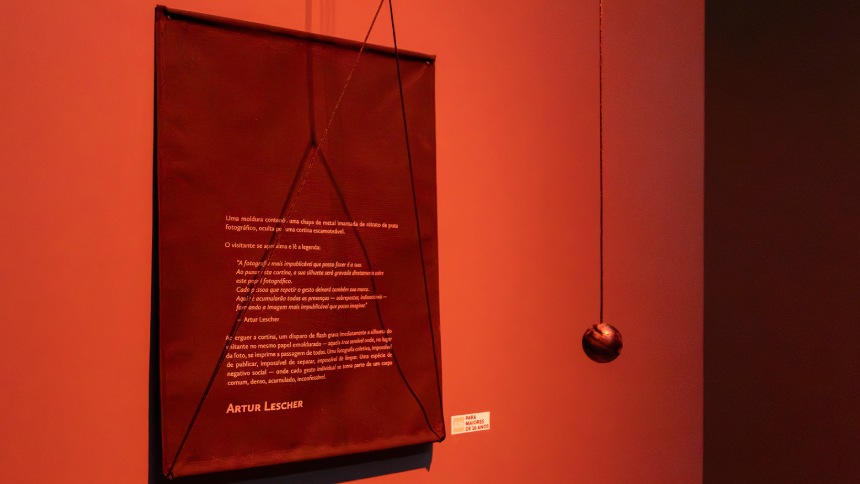
Each one remains covered by a curtain that bears only a textual description. It is up to the visitor to decide whether to pull the cord and reveal what is hidden or to preserve the mystery.
“If I’m giving the author the right to exhibit, I need to give the public the right to choose whether or not they want to see,” says the curator. “The curtain allows each person to see only what they want to see.”
Resisting the urge to pull back the curtain is difficult. The exhibition design solution, however, has a historical origin. It refers to Repression Again – Here's the Balance (1968), by Antonio Manuel, in which the artist brought together images of the police chasing students in downtown Rio de Janeiro.
When he re-presented the work in the 1980s, still under the echoes of the dictatorship, Manuel resorted to curtains to protect the photographs from censorship. The images, originally published in newspapers, took on a tone of protest against the regime in the artwork.
If before the curtains hid the images to protect them from the State, now they protect them to increase the desire to see them. It is no longer official censorship that is at stake, but our own self-censorship.
It was possible before, but not anymore.
What is considered publishable is not static. In the late 1990s, one only had to pass by a newsstand to find covers of nude photo shoots and tabloids displaying explicit violence—the famous "squeeze and blood will come out." On broadcast television, in Sunday programs hosted by Gugu Liberato or Fausto Silva, semi-nude female bodies were part of the afternoon entertainment.
“Suddenly we were instructed by a certain puritanical North American culture that imposed itself worldwide,” says Dantas, referring to digital platforms that began to dictate the limits of what is acceptable.
None of the 35 participants submitted explicit sex scenes. Instead, nude photos and images of nipples were submitted, which are frequently blocked by social media algorithms.
Claudio Edinger presents a photograph taken in 1989 at the Juquery Hospital: a group of male patients are shown lathered up during a communal shower. The scene, simultaneously intimate and institutional, oscillates between vulnerability and exposure.
Wagner Schwartz displays a recording of La Bête (2015), a performance presented in 2017 at the Museum of Modern Art in São Paulo. Inspired by Lygia Clark's Bichos series, the work invited the public to manipulate the artist's naked body as if it were an articulated sculpture.
The performance took on scandalous proportions when an image of a child present in the room began circulating on the internet, shifting the debate from the realm of art to that of public morality.

In addition to artists and photographers, the exhibition brings together celebrities such as Mariana Ximenes, Bárbara Paz, and Zeca Camargo. “Someone like Mariana Ximenes has billions of images circulating on the internet. But none of them are of her urinating,” observes Dantas, referring to the photograph chosen by the actress.
Also noteworthy is the image selected by Marcelo Tas: the presenter sleeps on the floor next to his dog. In the background, a pile of clothes on a chair creates an unfiltered domestic scene. While this image might have seemed banal at another time, today it contrasts sharply with the meticulously edited ideal of life that dominates social media.
Artists associated with a more conceptual approach challenge visibility through other means. Nuno Ramos presents a blurred image accompanied by an inscription in Braille—legible only to those who are blind and know how to decode it. The work inverts the logic of looking and the privilege of sight.
Arthur Lescher incorporates the visitor into his own work. A silver plate captures the silhouette of whoever pulls back the curtain, triggering a flash at the instant of revelation. The act of seeing also becomes the act of being seen.
AI biases
In search of a neutral description, the curators turned to artificial intelligence to write the texts that accompany the artworks. The experiment, however, revealed its limitations.
Technology proved incapable of fully decoding certain images. In Kazuo Okubo's photograph—which graphically and delicately depicts a woman's vulva—the AI identified a chalice. Human intervention was required.
“If I put a supposedly neutral eye to see this, it will only be able to see from its own neutrality,” says Dantas. “Perhaps what you are seeing is not necessarily what you know. Empirical knowledge and culture are distinct things.”
The absence of a cell phone reinforces this shift in perspective. Without the device, it's impossible to record the artwork to revisit it later, or to navigate the room with the hurried logic of scrolling .
Each work demands a gesture: pulling the cord, waiting for the curtain to gradually open, remaining before the image until it is fully revealed. The process takes one to two minutes per piece—approximately forty minutes of continuous attention to explore the entire exhibition.
“Without the cell phone, we give people back the experience of being present in front of the photograph,” says Luciana Brafman, co-curator of the exhibition, to NeoFeed . “If you’re just rushing through it, you miss the nuances. You need to stop to really see what’s there.”