


By attracting an audience of 67,000 people in just under three months, the exhibition "The Human Soul, You and the Universe of Jung" has already established itself as one of the most successful at the Museum of Image and Sound (MIS) in São Paulo.
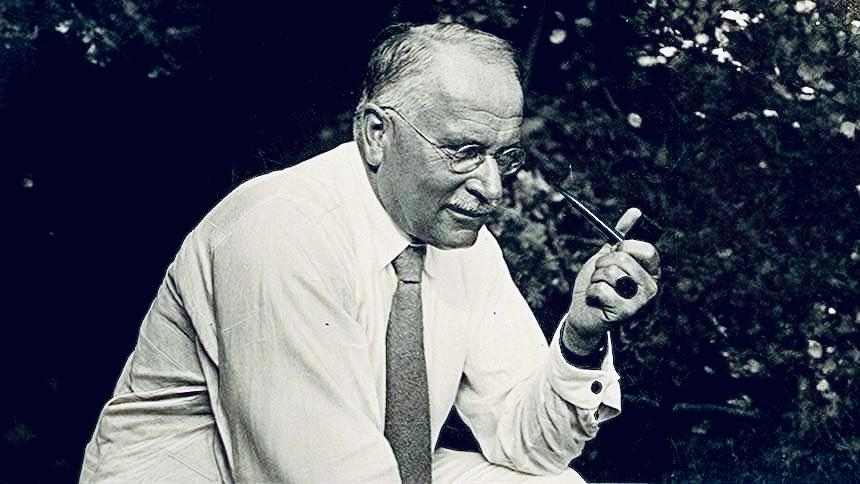
Unlike previous versions, which featured undisputed figures of pop culture such as John Lennon , David Bowie , Tina Turner , Raul Seixas , and Rita Lee , this version is about a complex and controversial thinker: the Swiss psychiatrist and psychotherapist Carl Jung , founder of analytical psychology.
How, then, can we explain this curiosity about a doctor who was interested in alchemy, mandalas, and Eastern religions at a time when psychological problems were increasingly medicalized?
“We live in a world of many diagnoses, many protocols, many medications, with a great influence from American culture and psychiatry,” Arthur Guerra, coordinator of the Psychiatry Center at Hospital Sírio Libanês, tells NeoFeed , adding that he believes the exhibition offers a counterpoint to this.
According to him, the exhibition shows that it's not just that. "It presents a human vision in a sensory way, which moves people by mixing art, a bit of science, and emotions. At the same time, it seeks to bring to the general public concepts that are not very common, such as archetypes and the collective unconscious."
The exhibition opened last November to celebrate the 150th anniversary of the birth of the psychiatrist, who has a following of both followers and critics worldwide. It's worth remembering that Jung and Freud, the father of psychoanalysis, had a very close, later turbulent, relationship, which ultimately ended due to profound theoretical differences regarding their views on the individual, sexuality, religion, and the unconscious.
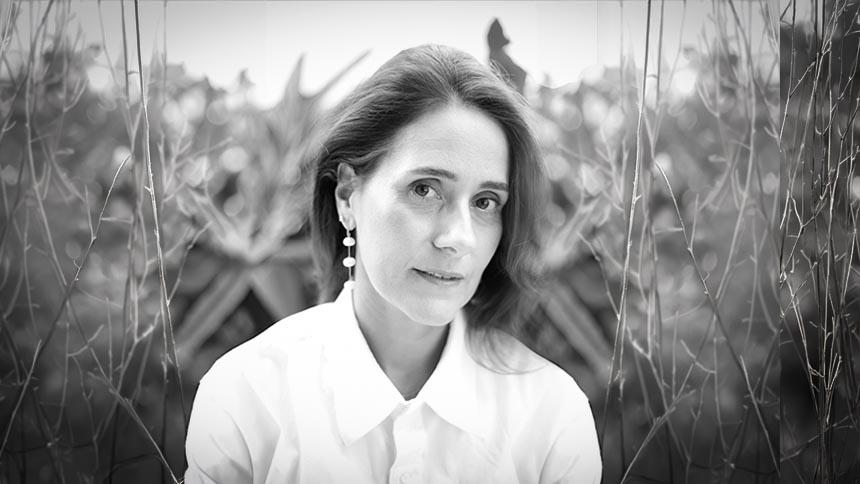
The exhibition occupies an area of 550 square meters, is divided into several environments and floors, and has the support of the Jungian Institute of Teaching and Research. The creator is Luciana Branco, creative director and Jungian analyst, who embarked on a journey of self-discovery through her work.
When Luciana presented the project to the director of the MIS (Museum of Image and Sound), André Sturm, he said he was enthusiastic about the idea of presenting a relevant character who wasn't a personality from music, film, or television, unlike the exhibitions he usually does.
“It would be the first time we did something on the MIS scale with a famous thinker and psychologist, but from another field. Someone who wasn't an actor, filmmaker, musician, or singer,” he says in an interview with NeoFeed. “From there, we started thinking. It had the advantage that Jung had spoken about dreams, about mandalas, which are very visual elements. It was a great challenge, and I'm very happy that the exhibition managed to reach so many people.”
Initially, some of the attendees were professionals who study or work in the field, but it quickly reached a wider audience. What surprised Luciana most was the difficulty in obtaining sponsorship.
"I keep wondering why this happened, even though the wellness and mental health industry is worth millions. I think it's because the path of self-discovery is less sexy, more lonely, and less enjoyable to travel. But it's an essential path to holistic health."

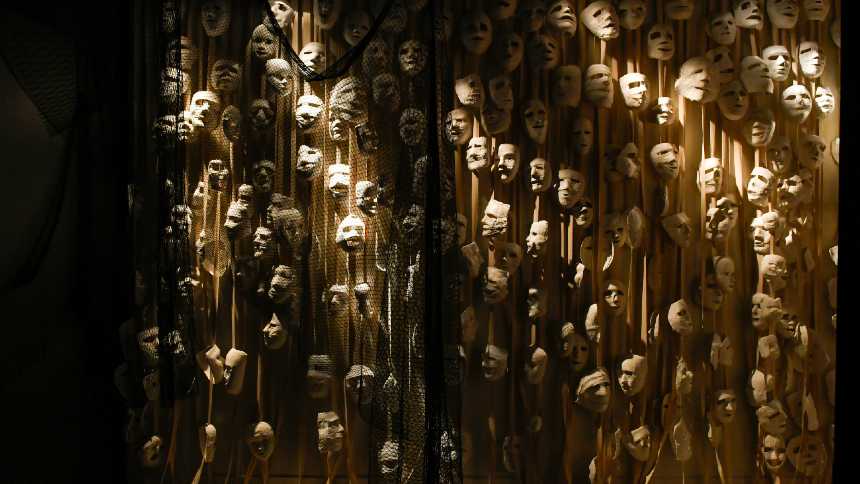
Then, the most difficult part, according to her, was translating Jung's psychology and thought into real life, not into something to put in a library. "The exhibition has an educational and sensory dimension."
Furthermore, there are works by contemporary artists that engage with the exhibition design, as well as others commissioned specifically for the event. "The visitor will not find a biography of Jung, but an invitation to self-discovery."
Throughout the tour, a neon sign created by the creative team stands out: "God is good and bad all the time." There are also several questions. The first and most photographed by the public is: "What are you trying to escape from when you're distracted?" Or: "What do you do when faced with a symptom?" And that's where a critique of excessive self-medication comes in.
In the end, it all comes down to an invitation to reflection, whether for those who are drawn to the Swiss psychiatrist's thinking or for those who distance themselves from it.