

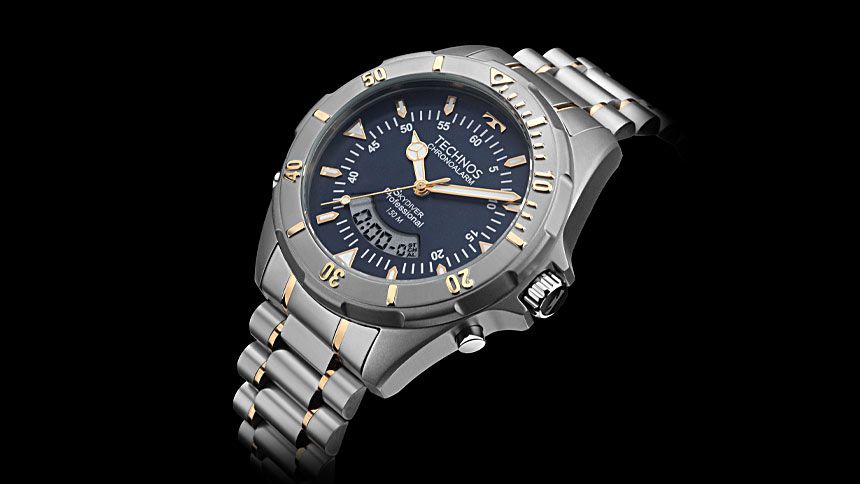
Contrary to expectations that cell phones would replace conventional watches, the Brazilian watchmaker Technos is closing 2025 with record sales and operating profit, as well as leadership in the traditional and smartwatch markets. The company went public in 2011 and, since the pandemic, has been among the companies on the stock exchange that have rewarded shareholders the most.
Between September 30, 2020, and December 9, 2025, the return to investors was 765%, including dividends. This is the fourth position in the ranking headed by Embraer, with 1,323.3%, according to data from the watchmaking company.
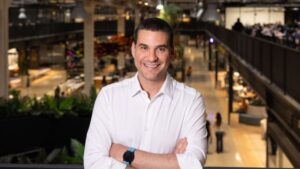
“This year we grew almost 30%, a significant number for a consumer category that many questioned until five or ten years ago,” says CEO Joaquim Ribeiro, in an interview with NeoFeed .
The company's leader since 2008, he says that watchmaking is one of the fastest-growing consumer categories in Brazil, surpassing the sectors of home appliances, clothing, footwear, and cosmetics.
According to IBGE (Brazilian Institute of Geography and Statistics) figures, the watchmaking sector grew by 28% in the accumulated period up to October 2025 compared to the previous year. The pharmaceutical and perfumery sector, for example, advanced 8.7% in the same period. The food sector grew by 7.6%; clothing and footwear by 6.3%; and household appliances by 5.8%. These figures are reinforced by reports from the Superintendency of the Manaus Free Trade Zone.
According to Joaquim, this increase is a result of factors such as the growth of national income, greater investment in industry and retail, product innovations, and the influence of marketers.
Six years ago, however, Technos' story was quite different: Technos was recovering from a strategic error, followed by the shock of the pandemic. In 2014, the executive left the company's day-to-day operations and moved to the board. At the time, the business plan aimed at diversification in response to the technological threat from Apple, which, in 2015, launched its first smartwatch.
“To avoid the ‘Kodak effect’ [referring to the market leader in photography that failed to embrace digital technologies] , Techos decided to transform a watch company into an accessories company,” explains the CEO. “We would include jewelry and accelerate retail.”
The fear was valid, but, as Joaquim reinforces, the decline of the traditional watch, due to the smartwatch, never occurred: "We thought the problem was much more macro than micro."
In 2014 and 2015, Brazil was experiencing a perfect storm: recession, unfavorable exchange rates, and political instability. Between 2017 and 2018, Technos focused on diversifying its products, replacing long-serving and highly experienced watchmaking professionals with those experienced in other sectors. The company even opened a jewelry factory in Manaus and accelerated its franchise retail operation.
All these changes caused the brand to distance itself from its " core business ," and although Joaquim did not lead Technos during that period, he is partially responsible for the company's decline.
Upon reassuming the CEO position in 2019, the executive immediately redirected the company back to its watchmaking roots, always focusing on the B and C socioeconomic classes. From that year on, he led a turnaround entitled " back to basics ," enabling solutions both internally and within the team itself.
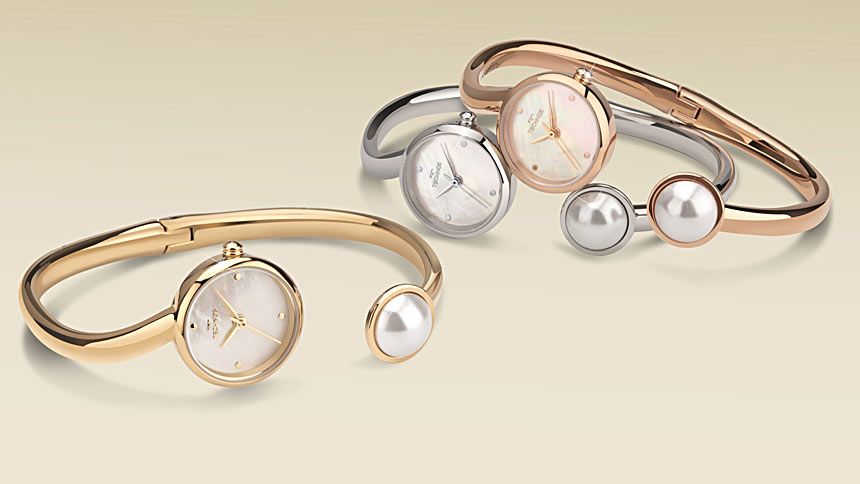
However, right at the beginning of the reorganization plan, the pandemic hit, worsening an already fragile financial situation: high debt, suppressed profits, low cash flow, as well as low morale.
“There was no other way out: we developed a management overhaul, accelerating the three-year strategic plan to six months and downsizing the workforce to avoid more drastic measures,” says the CEO. “We went through very difficult times between March and July 2020, laying off 50% of the staff in the office and the factory, which was closed for six months.”
Executives renegotiated debt with banks and focused on restructuring operations, downsizing teams and eliminating projects that were not core to the brand, including the jewelry business. Technos also reduced its franchises and its portfolio from 19 to six brands.
“When the economy started to turn around, the company was lean, very agile, and very efficient. In 2021, less than a year after the peak of the pandemic, the business was already showing much better results than in previous years,” he reveals.
For 21 consecutive quarters, Technos has experienced sequential growth, culminating in its recent record sales and profits. In 2020, Technos' stock was worth as little as R$0.90, and today it's worth almost R$8.
Since the pandemic, the company has generated eight times the return for shareholders through dividend distribution, share buybacks, and market appreciation.
Beyond the numbers, this is the fourth year that the company has received the Great Place to Work seal and certification as a B Corp for its ESG practices. "We already valued these three letters before they became fashionable," celebrates Joaquim.
Technos was founded in 1924 in the village of Welschenrohr, Switzerland, in the Jura Mountains, the cradle of world watchmaking, including contemporary brands such as Omega, Rolex, and Certina. In 1958, the entrepreneur from Rio Grande do Sul, Mário Goettems, licensed Technos in Brazil and operated the company with his family for 50 years.
In the 1990s, he bought the brand, making it Brazilian and creating an infrastructure that includes a factory in Manaus, now with 600 employees, and offices throughout Brazil.
Currently, Technos has 12 regional sales branches. Having no successors, in 2008, its owner, Mário, as he was known, decided to sell the company to three funds: the São Paulo-based Vitória Capital and the Rio de Janeiro-based Dynamo and Gávea, the latter belonging to economist Armínio Fraga. As part of this consortium, Joaquim joined as an investor and CEO.
“There was an entrepreneur there who, already in his 80s, didn’t want to reinvest time or capital in the business. It was a profitable and solid business, well ahead of the competition. At the same time, we observed that the watch was ceasing to be a timekeeper and becoming a fashion accessory, a collectible item, and a status symbol,” recalls Joaquim.
And he concludes: “We bet that, by joining Technos with a more ambitious business plan, we could raise the level of consumption. Today, looking at recent results and future projects, we know we are on the right track.”