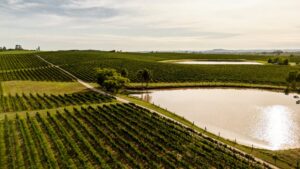


On a cold night in 2016, near the city of Adana in southern Turkey, Kurdish farmer İzzettin Akman saw a truck surreptitiously dump garbage at the edge of his orchards and set the waste on fire before driving away. He rushed to the scene to see what was happening and spent about an hour extinguishing the flames to prevent the fire from spreading to the orange groves.
Upon examining what remained of the debris, he found candy and cosmetic wrappers with labels in euros and pounds. He then realized that the trash didn't come from Turkey, but from Europe. For decades, the farmer had made a living exporting oranges and lemons to Europe, until he discovered that, ironically, the continent had begun returning trash to the edges of his orchards.
After one of these clandestine operations, their trees began to yellow, lose fruit, and soon stopped producing. The burning of the trash killed pollinators, and the plastic fragments turned into microplastics that contaminated the irrigation and the roots of the plants. Although the orchard recovered, the Adana region began to receive more and more waste.
Akman's story opens the book *The Garbage Wars: The Spoils of a Billion-Dollar Global Business *, by Alexander Clapp, one of the most important releases of 2025, arriving in Brazil at the end of February from Editora Zahar. The work is the result of meticulous journalistic investigation that lasted two years across five continents and reveals the world of gangsters behind the catastrophic reality of the global garbage trade.
The business is conducted clandestinely, with the purpose of shipping the leftovers from consumption in wealthy European and North American countries to distant continents, untouched landscapes, and economies in need. Clapp visited dumps and landfills around the world and exposed a criminal scheme that continues to grow.
A contributor to publications such as The New York Times , The Economist , London Review of Books , and The Guardian , the author reveals disputes over what to do with the millions of tons of waste generated every day, disputes that have given rise to veritable wars fought in almost every corner of the planet.
The rule is: pay up and we'll take care of your waste. What happens next ranges from border skirmishes between countries to actions that send trash traveling thousands of kilometers and across multiple oceans. For Clapp, regardless of the scale, there's something true about almost all of these actions: few people have any idea that they're happening.
In the process of investigating, he followed the trail of trash around the world, spoke with heads of criminal recycling organizations, cruise ship dismantlers in Turkey, plastic collectors in Tanzania, environmental activists in Guatemala, and young people who dismantle and burn Western cell phones and televisions for pennies an hour in Ghana.
The journalist concluded that much of the waste has a secret afterlife. While a portion is buried or dumped on the side of roads, another, much larger portion has nowhere else to go and needs to disappear from the sight of wealthy populations. The waste becomes a product and fuels a billion-dollar market, sold, resold, or smuggled from one country to another, with devastating consequences and all kinds of disputes, from conflicts over borders, markets, and territory to the fight for environmental preservation.
Clapp shows that much of what is being "recycled" is not actually reused. Instead, these materials are often illegally exported, end up in landfills in another country, or are processed dangerously by unprotected workers. The practice of recycling is presented as an ecological solution, but in reality, it often acts as a "Trojan horse" that shifts the problem of waste to other places.
With 440 pages, the book costs R$ 119.90.
This trade is compared to illicit markets, operating with little regulation and widespread corruption. The flow of waste follows historical patterns of global inequality: wealthy countries do produce far more waste, but they send this problem to poor countries that cannot cope with the environmental and health impacts. This dynamic causes vulnerable populations to suffer from pollution, disease, and economic losses they did not cause.
Although Clapp doesn't literally use the term "gangster" for these people, he describes how groups and individuals in Agbogbloshie (a district of Accra, Ghana) operate in a highly informal and even predatory waste economy. They collect large volumes of electronic waste imported from the West, dismantle devices to extract precious metals, and participate in schemes that sometimes involve criminal or fraudulent activities (for example, reusing personal data on recovered devices).
On the other hand, it shows how silence on the subject is political and serves to keep the largest producers and exporters of scrap metal hidden, both literally and morally, from a sinister globalization that has been going on for a long time. “In the world of scrap metal, all you really need is a smartphone,” Nathan Fruchter, a former Glencore steel scrap trader who worked in the post-Soviet republics, told him.
“The most important thing is knowing who to meet,” said Patty Moore, one of California’s largest plastics traders. “When you think about the waste trade, think about drug trafficking,” explained Teodor Niț, a Romanian prosecutor who tracks waste shipments from Western Europe. “Except the waste moves from rich places to poor places,” he added.
They owe their existence to globalization, says the author. “But, in many respects, they operate in defiance of it, driving wedges into legal loopholes in international trade clauses, exploiting the nebulous differences in definition that separate 'garbage' from 'scrap' and 'resources', and thriving on the fact that, of the forty thousand cargo containers that will be loaded or unloaded today in the ports of Shenzhen or Rotterdam, only a fraction are opened and even fewer are inspected.”
Despite the abundance of data, the global waste trade remains poorly understood. The European Union estimates that the illegal trafficking of waste is more lucrative than that of people, and the UN concluded that the global trade in plastics was 40% larger than previously thought, surpassing even markets such as weapons and timber. In 2017, an Interpol investigation revealed that almost no waste traders bother to conceal their activities, as countries view waste as a liability to be simply disposed of.
It was this gigantic and opaque business that the author decided to investigate in depth, country by country and type by type of waste. Brazil has not yet entered his radar.