


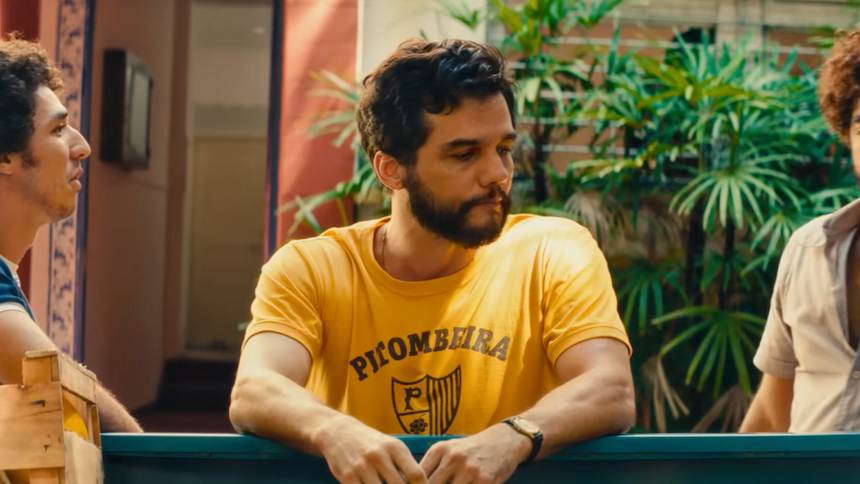
Olinda - Numerous costumes are seen throughout the nearly 2 hours and 40 minutes of The Secret Agent , but one piece in particular, a yellow t-shirt worn by Wagner Moura for a short time, became a coveted item and a sales success.
The item in question is a reproduction of the shirt launched in the late 1970s by the carnival group Pitombeira dos Quatro Cantos, from Olinda (PE).
For many people – after all, Kleber Mendonça Filho's film (the same director of Aquarius and Bacurau ) has already surpassed one million viewers in Brazil alone – the name Pitombeira might sound unfamiliar. But in Pernambuco, Pitombeira dos Quatro Cantos is a true institution of Carnival.
This is one of the oldest and most traditional carnival groups in Olinda, with almost 80 years of existence, and since 2023 it has been recognized by the government as a Living Heritage of the state.
Like many carnival groups, Pitombeira emerged in an unpretentious way. During the 1947 carnival, a group of friends were drinking in a bar in one of Olinda's most famous locations, Quatro Cantos, the intersection of Prudente de Morais, Bernardo Vieira de Melo and Ladeira da Misericórdia streets, which was already a stronghold of the local bohemian scene.
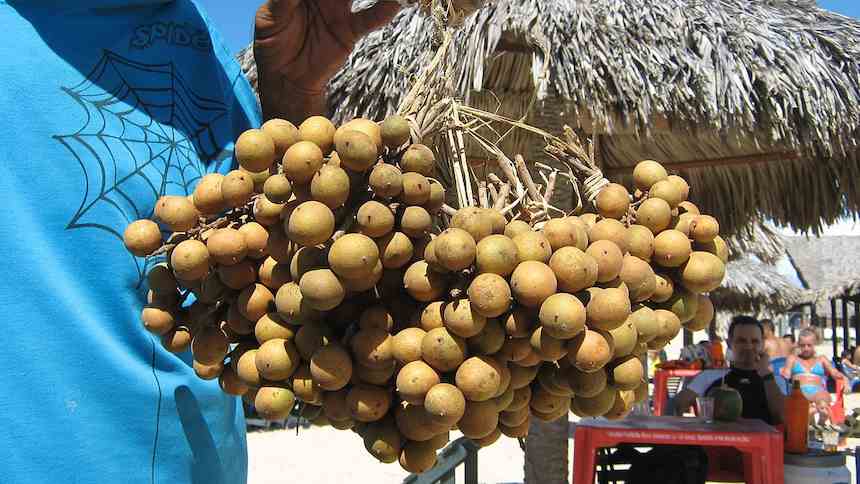
It was February 17th, and the friends decided to go out into the streets, shirtless, banging on cans and tambourines, while singing and carrying an unusual accessory: branches from a pitombeira tree that was nearby. That was the starting point of the Pitombeira dos Quatro Cantos Mixed Carnival Troupe.
It might have been just a momentary prank, but the following year the group organized itself as a carnival association and began attracting more and more people to the fun.
The anthem of the carnival group, today one of the best-known songs of the Olinda carnival, began to take shape as early as 1947, and reached its final version around 1950, authored by Alex Caldas, one of the founders:
We are from Pitombeira.
We don't play too badly.
If the group didn't leave
There was no carnival.
(Excerpt from the Pitombeira Anthem)
It was also from the early 1950s that the group took on the first signs of the boldness that would become a hallmark of its parades. That was when the members began to wear standardized costumes made especially for the occasion.
Also in that decade, Pitombeira began the tradition of themed parades, in a structure similar to what is still done today by the samba schools of Rio de Janeiro and São Paulo, with storyline, sections, highlights and floats. In the 1964 carnival, for example, the theme was Ancient Rome, and photos from that time even show a reveler dressed as a Roman soldier in a chariot pulled by a horse.
This lavish parade format continued into the following decade, but faded over the years and, from the 1980s onwards, became closer to the format we have today in street carnival groups, with parades accompanied by orchestras, frevo dancers, and costumes being something almost exclusively restricted to the flag bearers.
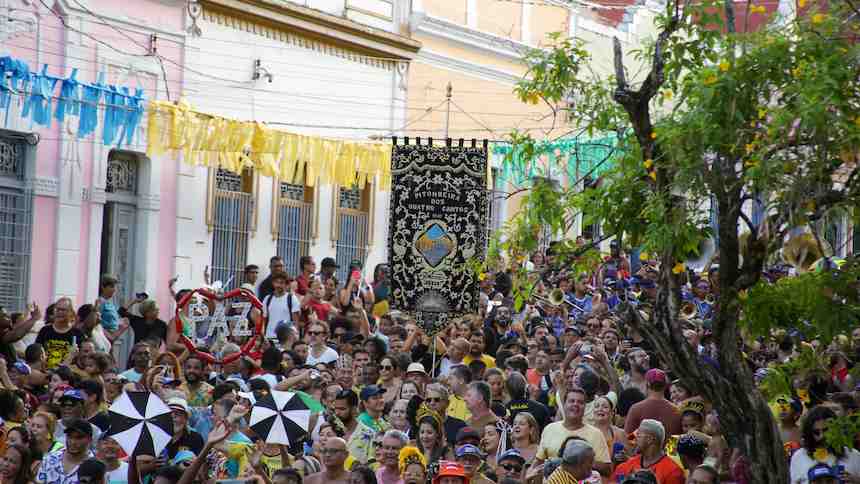
As is the case with the largest groups, Pitombeira now parades with more than one orchestra, since a single group cannot handle the crowds that follow the procession. So, during the carnival parades, there are two orchestras, with an average of 30 musicians each, that bring frevo to the revelers in the streets and alleys of Olinda.
It's important to mention that Pitombeira, like other groups in Olinda, has activities throughout the year, not just during Carnival. The headquarters functions as an event space and a place for music and frevo dance classes, and the group always takes to the streets well before the Carnival period.
Since 2001, Pitombeira dos Quatro Cantos has begun its rehearsals for Carnival with a procession that takes place on September 7th. Informally, it has become a kind of opening for the pre-Carnival festivities in Olinda, which begin to intensify from that month onwards.
And for those who want to see Pitombeira pass by up close, the next parades of the group will be soon, on February 16th and 17th, the latter being on the group's anniversary.
Riding the wave of success from The Secret Agent , and already fueling hopes for an Oscar nomination , this year's parade will be dedicated to the award-winning feature film, which has already won Best Director and Best Actor awards at the Cannes Film Festival, in addition to the recently won Golden Globes for Best Actor and Best Foreign Language Film.
T-shirt from 1978, movie set in 1977, and sales success.
The brief appearance of Pitombeira's vintage shirt in the hit movie led the fans to reissue the model, originally launched in 1978. In practice, this would be a minor historical inaccuracy, as the film is set in 1977.
Therefore, the replica used by Marcelo, Wagner Moura's character, has subtle differences compared to the original, which has the year 1978 printed on it just below the name of the group. Another significant difference is that the t-shirt that served as a reference for the film was white, not yellow.
The design adopted in the film may have been inspired by the first reissue of the historic 1978 t-shirt, which was released as a retro model in 2019, but in a yellow version, since today the group has established yellow and black as its colors.
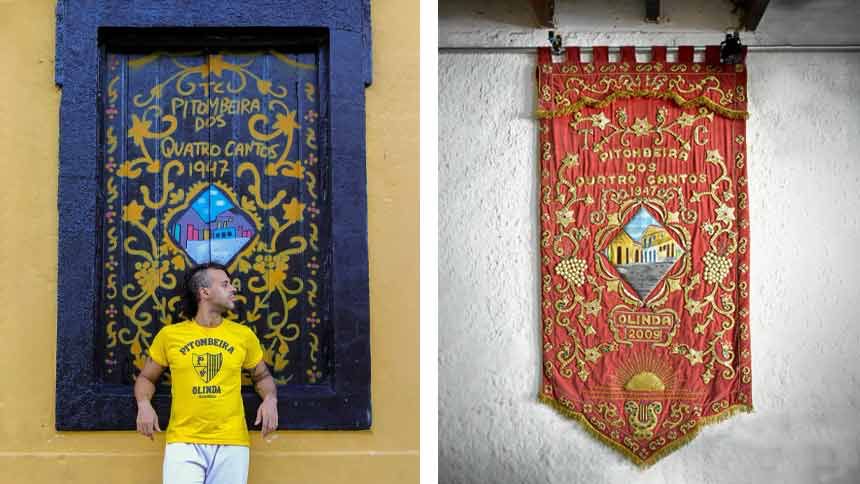
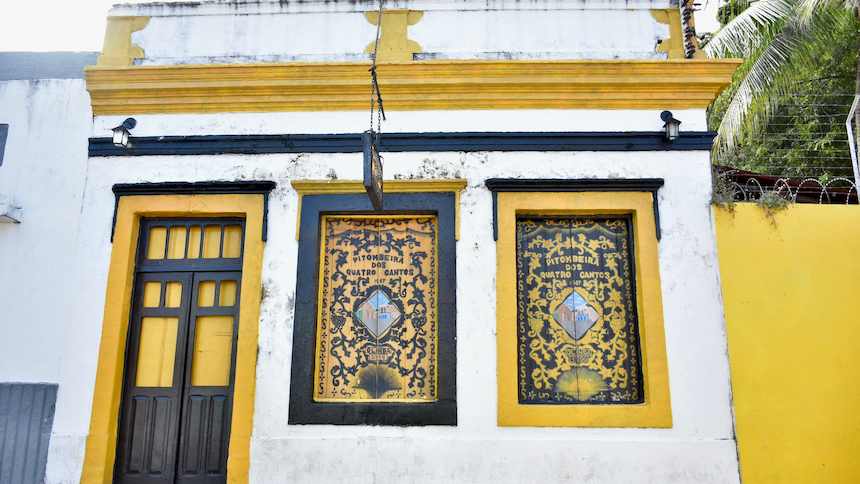

There's even a curious story about how yellow and black ended up becoming the colors of the joke. In the 1970s, the company responsible for printing a batch of Pitombeira t-shirts mixed up with another order, for t-shirts for a union, which were supposed to be yellow and black.
The colors ended up being switched: the union's order came in green and white, which would be the standard colors for Pitombeira's t-shirt, and the group received the shirts in that pattern, which ended up being well-received and later became established.
According to the president of the carnival group, Hermes Neto, the decision to reissue the item a few years ago took into account not only the iconic look of the design, but also a sentimental aspect: the memory of his father, who also presided over Pitombeira, wearing that shirt. Also in 1978, the group's first compact disc was released, featuring the same artwork as the shirt.
While the relaunch in 2019 was relatively successful, the appearance of Pitombeira's yellow t-shirt on the scene sparked interest in the retro design among many.
Since the premiere of The Secret Agent in early November 2025, Pitombeira has sold 2,300 t-shirts, which quickly sold out with each restock. A new print run of over two thousand units will be ready soon, and should temporarily quell the waiting list for the coveted garment, which has also been the target of piracy.
More than just items bearing the name and emblem of the carnival group, the t-shirts represent an important source of income for Pitombeira, which is also true for other groups that launch new designs every year in order to raise funds to make the parades possible.
According to estimates from the president of Pitombeira, approximately 40% of the club's resources come from the sale of items such as t-shirts, caps, cups, etc. It's a long-standing financing model.
Hermes explains that the 1978 t-shirts were sold by those who paraded with the bloco (carnival group), and the money raised was used to buy costumes. There was even competition among the vendors. "Whoever sold the most got the most eye-catching costumes," says Hermes Neto.
The differences between a troça, a clube, and a bloco.
Although it's common, even in Olinda, to refer to Pitombeira as a bloco (carnival group), it is actually a troça (a type of carnival group). In Pernambuco, frevo groups are essentially organized into three types: troça, clube (club), and bloco.
The "troças," like Pitombeira, have informal origins. The name itself, which comes from the verb "troçar" (to joke, to mock), gives clues about this type of group, which usually arises in an unpretentious way, like a group of friends or family who go out organized to enjoy Carnival.
One example is the John Travolta carnival group, created in 1979 by a group of the actor's fans. They usually parade during the day, accompanied by orchestras playing street frevo music. In some cases, the event can grow larger and attract a crowd.
The clubs tend to have older origins, dating mainly from the 19th century, and hold more lavish parades, usually at night, with elaborate costumes and an orchestra that also plays street frevo music. Having their own headquarters is another characteristic, as is the case with Clube das Pás in Recife, the oldest active club in the state, having been founded in 1888.
The term "bloco," while a generalization used for practically all carnival groups, refers to an organization that differs significantly from "troças" and "clubes."
These are groups that don't have the traditional banners, but rather fanciers, which have a similar function but a different, rigid structure. The music is also slower, the so-called frevo de bloco, accompanied by a female choir and percussion and string instruments. One of the greatest exponents is Bloco da Saudade, from Recife.