

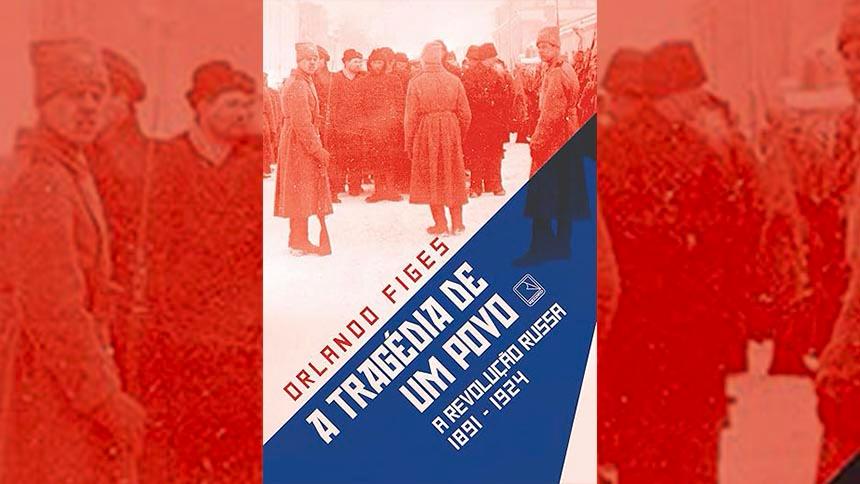
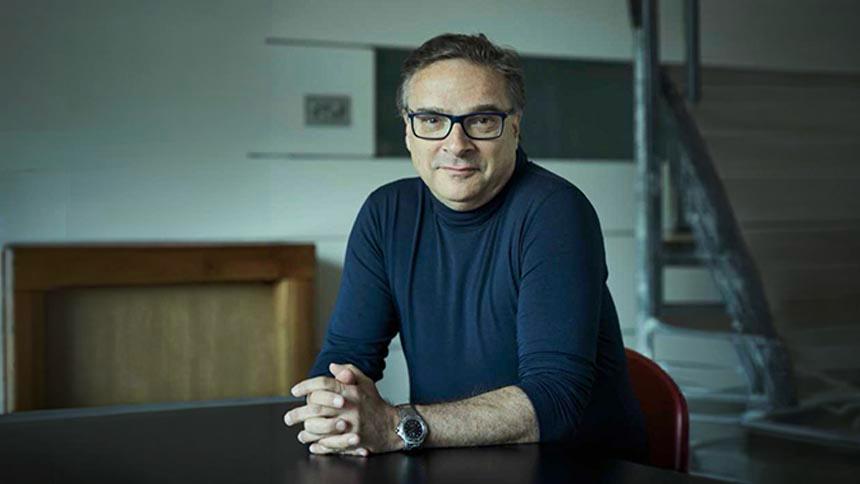
One of the most ambitious historical works of the last 50 years is the acclaimed *A People's Tragedy: The Russian Revolution (1891–1924)* , by Orlando Figes, a British historian and professor at Birkbeck College, University of London. At nearly a thousand pages, the edition is considered the most comprehensive and impactful interpretation written about the collapse of the Tsarist regime and the rise of Bolshevik power, which gave rise to the Soviet Union, between 1917 and 1924.
More than a traditional political history, his extensive research has solidified into a synthesis that combines academic rigor, literary narrative, and profound human sensitivity to give visibility to the countless victims, and not just the protagonists, of the Russian Revolution—"one of the greatest events in world history," responsible for shaping the 20th century.
Figes offers something beyond a chronology of events, constructing a dramatic portrait of the lived experience of millions of ordinary Russians. Out of print for over 25 years in Brazil, where a copy can cost more than R$ 1,000 in used bookstores, the narrative returns to Brazilian bookstores as essential reading for anyone who wants to understand the world today and the remnants of the authoritarian and distorted Soviet experience.
Figes goes back about two and a half decades before what he defines as the "compact eruption of 1917"—when, in 1891, famine put Russian society on a collision course with the Tsarist autocracy.
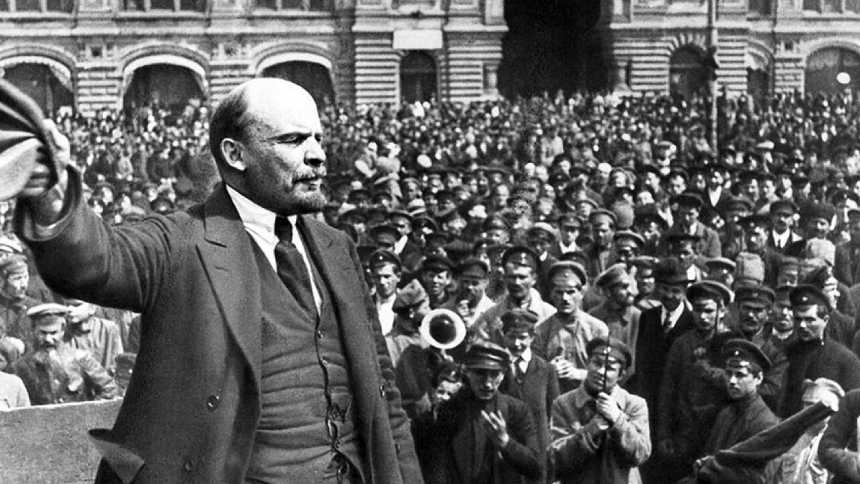
From then until the death of the Bolshevik leader Vladimir Lenin in 1924, Russia experienced "a whole complex of different revolutions," triggered by the First World War and followed by civil wars and ethnic conflicts.
According to the historian, it was not inevitable that everything would lead to a socialist dictatorship—although a reading restricted to the "fatal year" of 1917, as most books do, leads to that conclusion. There were moments when Russia could have followed "a more democratic course," the professor argues in the introduction.
The failure of this alternative is linked to the "deep cultural, political, and socio-historical roots" of the Russian people, he argues. These include, for example, the absence of institutional checks and balances on despotism, the fragility of liberal civil society, violence in the countryside, and the "strange fanaticism of the radical Russian intelligentsia."
These elements permeate the entire narrative and help explain why opportunities for democratic change did not prosper after the end of the Tsarist regime. Although politics is always present, Figes defines his work as "a social history" that changed the course of humanity, centered on "ordinary people."
He rejects both the "bottom-up" version and the "top-down" reading typical of the Cold War, which viewed the people as mere objects of "malevolent Bolshevik machinations."
The historian sought a more complex portrait of the relationship between the Soviet socialist party and society. Figes' conclusion stems from a provocation inspired by the writer Maxim Gorky: "I do not believe that in the 20th century there is any people who have been betrayed."
For him, the central idea is stark: the Russians were not only victims of Bolshevism, but also protagonists of their own tragedy.
The Soviet system, the author argues, did not fall from the sky nor was it imposed by external forces. It was "born and took root in Russian soil," nourished by centuries of serfdom and imperial autocracy.
According to him, the revolution overthrew the czar, but it did not create a culture of citizenship. In this context, "democratic weakness had been brewing for a long time."
Even after 1917, when there seemed to be a chance for change, the country failed to consolidate free institutions. In a short time, a new autocracy, now of a socialist nature, took shape, "in many respects similar to the old one."
The problem lay in how power was understood in Russia. Not as law or contract between citizens, but as force and domination. In short, it was a matter of knowing "who rules over whom," in the expression attributed to Lenin. Thus, the fall of the monarchy was seen by some as the "revenge of the serfs," which led to terror and civil war.
There were signs of modernization and growth in the public sphere. But the opportunities were stifled by violence and a lack of profound reforms. The socialist ideal promised to "remake the world," as the International said, but the experiment ended up producing widespread repression.
Figes argues that the failure of the Soviet project was due less to the "malice" of its leaders and more to the unviability of its principles. The gamble that Russia would be the spark of the world socialist revolution did not materialize in the following decades.
Isolated, "the regime that became a dictatorship, led by Stalin and which instituted the massacre of tens of millions, closed itself off and resorted to forced industrialization and repression."
Figes concludes that the collapse of the Soviet Union does not end history. On the contrary: “The specters continue to haunt us. Without solid democracy, the old authoritarian temptations can always return.”