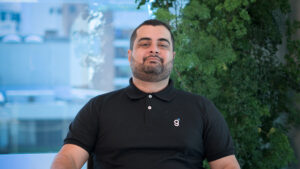


In a global scenario marked by still high interest rates and new geopolitical tensions, how can one balance risks and make the right investment choices abroad? According to Marcelo Carramaschi, offshore manager at Monte Bravo, portfolio construction needs to consider different scenarios.
"Investors need to understand how assets behave in each situation," says Carramaschi, in an interview with NeoFeed's Janela de Mercado program .
For him, failing to allocate capital abroad makes no sense, given that Brazil accounts for a small share of the global economy, while a large portion of the opportunities lie outside of Brazil. "It doesn't make sense to concentrate everything in a single country," he says.
In their view, ETFs are gaining ground as a tool for global access because they are a simple way to diversify across regions, sectors, and companies, without the need to choose specific stocks.
But this exposure needs to be built methodically. According to Carramaschi, a moderate portfolio should have between 15% and 30% of its investments abroad — a percentage that can be achieved gradually over time.
Within this international allocation, the majority should be in riskier assets, primarily focused on developed markets. According to him, the division tends to favor the United States and Europe, which concentrate more established companies with greater predictability, while a smaller portion may be directed to emerging markets, excluding Brazil, which is already present in the local portfolio.
Watch the video to find out which ETFs are preferred by the manager.