

A week after the electricity sector emerged scorched from the reserve capacity auction (LRCAP) – which, despite generating record investment of R$ 33 billion, offered a paltry premium of 5.2% and a series of problems that are likely to end up in court – it was the transmission line segment that brought some relief, at a time when energy companies are suffering from cuts in renewable generation, disinvestment, and narrow margins.
With an average premium of 50.7%, the highest in the last five years, the first auction of electricity transmission systems of the year, held on Friday, March 27, ended with all five lots being sold after strong competition.
Engie was one of the winners, acquiring two of the five lots auctioned – in one of them, it won all four sub-lots. Cymi, winner of two other blocks, also stood out. The remaining lot was acquired by the BR2LT Transmissora Consortium.
Even with a high risk profile, Engie's investment in transmission line auctions shows that the segment is a sure source of long-term return and revenue.
"Participation in this tender reinforces our interest in accelerating the expansion of the national electricity infrastructure, contributing to a more integrated, stable system prepared for the growth of renewable generation," declared Eduardo Sattamini, CEO of Engie Brasil.
In total, the auction offered the construction of 798 km of five new transmission lines and nine substations, totaling 2,150 megavolt-amperes (MVA, a unit for measuring the power of transmission lines), in addition to the installation of synchronous compensators.
The projected investment volume of R$ 3.3 billion seems insignificant compared to that recorded by LRCAP, which had a different purpose – contracting hydroelectric thermal power plants using gas, coal, oil, and biodiesel to provide sufficient firm power to meet demand during peak hours.
But the fierce competition in the bidding process reinforced the certainty that investment in transmission lines – gigantic structures that transmit electricity across states – is becoming a solution not only to reduce curtailment , the generation cuts imposed by the regulatory body on centralized solar and wind power plants operated by energy companies.
“This auction represents a milestone for the Brazilian electricity sector and was held at a strategic moment when the expansion of the transmission system becomes essential to mitigate the impacts of curtailment and ensure the efficient flow of energy,” said Sattamini.
Transmission lines represent the only segment of the electricity sector that does not receive subsidies and offers discounts in highly competitive auctions, where the winner receives a 30-year contract indexed to the IPCA (Brazilian inflation index) without any risk of default, thanks to the legal security offered by the bidding rules.
Furthermore, transmission line projects are helping industry giants to mitigate losses generated by energy market fluctuations, already impacted by curtailment – which drained R$ 6.5 billion in revenue from approximately 1,500 centralized renewable energy plants last year, causing the cancellation of solar plant projects.
“At a time of disinvestment in other segments, such as renewables and energy trading, transmission has become one of the few 'open doors' in the electricity sector,” says Donato Filho, executive director of the consulting firm Volt Robotics .
"In addition to traditional players, it is already possible to detect the arrival of new entrants, such as construction companies that have learned how to execute transmission projects and now wish to own the assets," he adds.
'Curtailment' in the crosshairs
The sector's boom began to take shape from 2017 onwards, following a regulatory reform that changed the bidding processes, attracting foreign investors. Until then, only one in three lots was auctioned off.
Between 2022 and 2025, for example, investments in new auctions, always with a premium in the range of 50%, totaled approximately R$ 86 billion. The medium-term scenario for this segment is one of a significant increase in new transmission lines crisscrossing the country.
In addition to the auction on Friday the 27th, another one scheduled for the second half of the year is expected to attract even more competition, with a forecast of generating R$ 20 billion in investments – in what would be one of the most significant transmission auctions in recent years.
The tender, already reviewed by Aneel and forwarded to the TCU, includes between six and eleven lots, encompassing approximately 1,958 km of new transmission lines and the installation or expansion of up to nine substations in different regions of the country.
The bidding process aims to alleviate structural bottlenecks in the National Interconnected System (SIN), especially in areas experiencing strong expansion in renewable energy generation, such as the Northeast and Midwest regions, as well as to reinforce service to the Southeast and South regions, where industrial demand remains high.
By 2027, the Ministry of Mines and Energy (MME) is planning to auction off the Northeast Bipole Express Corridor 2 project, a transmission line over 2,000 km long that will run from Angicos, in Rio Grande do Norte, to Itaporanga, in Paraná. Budgeted at R$ 17 billion, the project aims to become the largest initiative to reduce the waste of wind and solar power generation in the Northeast.
Brazil has approximately 190,000 km of transmission lines. Data from Aneel, the regulatory agency for the electricity sector, indicates 137 transmission projects under construction, of which 88% are on schedule or ahead of schedule – companies strive to anticipate the start of construction, because only after overcoming the bureaucratic aspects, which include environmental licensing, expropriations and other requirements, does the winning bidder begin to receive the contract revenue, which is paid until the end of the 30-year term.
“The ten-year expansion plan projects an increase of 40,000 km of lines by 2035, with an estimated investment of R$ 148 billion — an average of 4,000 km per year, aligned with the need to transport energy generated by renewable power plants in the Northeast, the region most affected by curtailment ,” says Talita Porto, CEO of Abrate , an association that brings together energy transmission companies.
Robson Campos, vice president of engineering at Axia Energia , states that the fact that the transmission line segment requires substantial and long-term investments demands that the company meticulously study costs, deadlines, and risks – especially licensing and implementation risks – before deciding to participate in an auction.
Among the giants in the sector, Axia is one of the most active in the power line business. The company is simultaneously carrying out works in seven lots – one acquired in the 2023 auction, four from the March 2024 auction, and two lots from September 2025, subdivided into four sub-lots. In total, four projects are in the Northeast, two in the Southeast, and one in the South.
“Energisations in the Northeast will begin at the end of this year, with connections throughout 2027 and early 2028,” says the Axia executive. “The expansion of transmission lines should mitigate, but not eliminate, curtailment , given the continued growth of generation and third-party projects,” he adds, reinforcing the perception that transmission lines end up being a stopgap measure for renewable energy cuts, whose construction processes advance faster (2 years, on average) than those of transmission lines (four to five years).
Complex logistics
According to Campos, the highlight of Axia's performance in the transmission line segment is the transmission works in the Northeast (two lots from the 2024 auction), with an investment of R$ 3.6 billion - which represents about 40% of Axia's recent portfolio -, including the "Nova Era Integração", a mega-belt of 1,116 km and 500 kilovolts (kV) that crosses Ceará, Paraíba, Pernambuco, Alagoas, Bahia and Piauí.
To give you an idea of the complexity of carrying out projects on multiple fronts, two blocks of the Nova Era Integração project have already been started, another is in the licensing process, and a fourth, already approved by Ibama (Brazilian Institute of Environment and Renewable Natural Resources), is scheduled to begin construction in July.
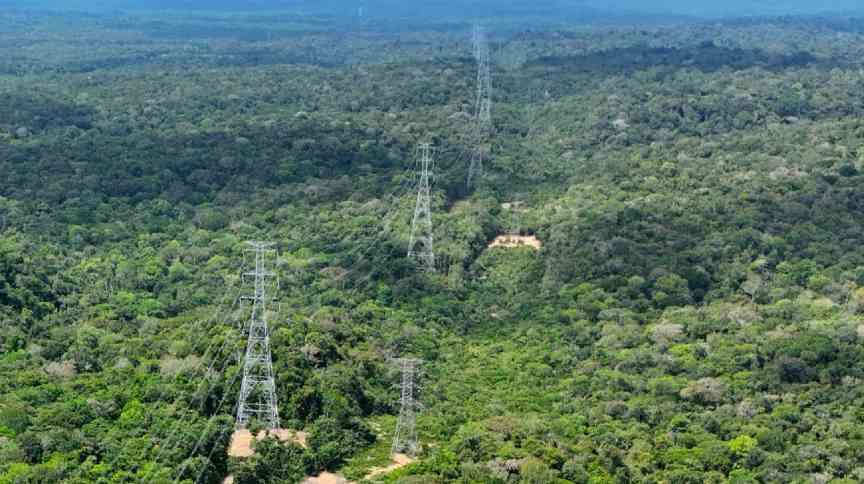
In practice, logistics is fundamental to the transmission line business. In sensitive areas, engineering solutions include fully overhead lines, with towers over 100 m high, weighing up to 25 tons and costing R$ 300,000 per unit, with cables being laid by helicopter or drone and minimal intervention on the ground to reduce deforestation and environmental impact, much of it in dense forest regions.
“Mountainous and remote terrain demands intensive logistics, with helicopter transport, sequential work fronts – suppression, foundations, pre-assembly, lifting, final assembly, launching and commissioning – and supporting infrastructure, 'small cities' to accommodate 1,000 to 2,000 workers,” says the executive.
According to Campos, environmental licensing is the main source of uncertainty in a transmission line project. He says that state licensing (when the transmission line is restricted to one state) usually takes 12 to 16 months. "When it's federal, under the responsibility of Ibama, the timeframe can reach 20 months – often with intervening entities such as IPHAN, Funai, Incra, quilombola areas, and protected areas," he says.
The country's largest power line project is dealing with this problem. Named Graça Aranha-Silvânia and undertaken by the Chinese company State Grid , the power line will be 2,960 km long, crossing Maranhão, Tocantins and Goiás, with a budget of R$ 18 billion and a forecast to start operating in 2030.
According to the latest quarterly report from the Ministry of Mines and Energy (MME), the project is awaiting licensing from four different agencies, two of them federal (Ibama and Incra). Ibama has requested studies on six possible route changes, impacting 380 km, which will require rework in surveying, soil testing, and detailed design.
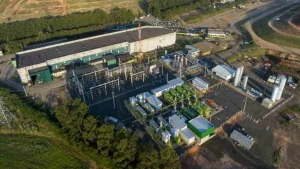
Engie faced a similar problem in the Asa Branca project, a 1,000 km power transmission system that runs through Bahia, Minas Gerais, and Espírito Santo, with R$ 2.67 billion in investments. The first section, 334 km long (Morro do Chapéu–Poções, in Bahia), began operating in November 2025, transporting renewable energy, with total completion scheduled for 2029.
In December, Engie received formal feedback from Ibama, which did not issue the installation license for another section, requesting additional information, which delayed the expected start of construction in January.
“The company has already submitted a report addressing the identified issues, and in February, we received authorization from Ibama itself to mobilize all construction sites and begin construction of the Medeiros Neto II Substation,” Engie said in a statement. “The expectation is that the remaining works will begin in the next quarter of 2026.”