

Approved with restrictions by the Administrative Council for Economic Defense ( Cade ) on Wednesday, December 10, after 16 months of back and forth and complaints about possible market concentration, the merger between the pet industry giants Petz and Cobasi will crush small pet shops that do not change their focus and adopt a service-based model, such as bathing and grooming, as a business priority.
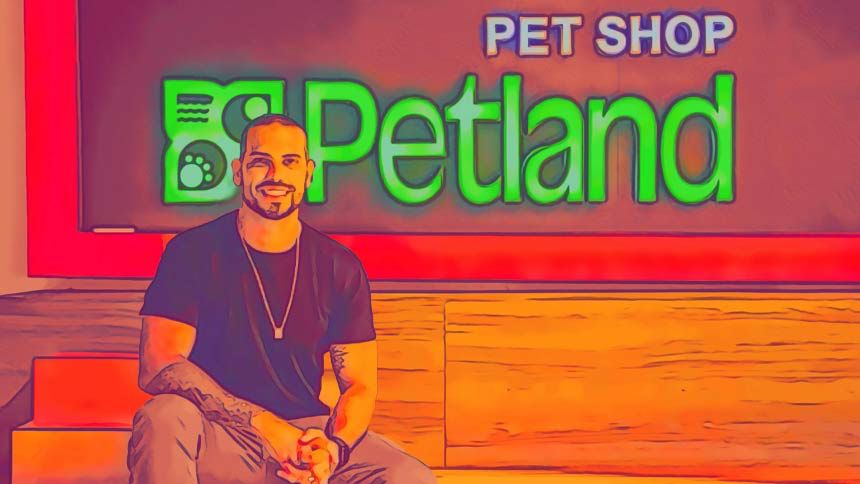
The assessment comes from Rodrigo Albuquerque, CEO and founder of the Petland chain in Brazil, which has the Jereissati family as a shareholder, holding a 28% stake. With 150 stores in the country, the chain is the third largest player in the national market in terms of units, behind only the two that have just merged and which together have more than 500 units.
Petcamp, a chain with a strong presence in the interior of São Paulo state, is the fourth largest in Brazil, with just over 100 stores. Petlove, which joined the proceedings at CADE (Brazil's antitrust agency) as an interested party, has a significant presence in the online market.
For the CEO of Petland, whose business relies heavily on services as one of its main drivers, in addition to the "neighborhood store" concept, the new configuration will represent a major shift for the sector going forward, which has already been facing competition from pharmaceutical chains and supermarkets.
“Neighborhood stores are suffering greatly from low profit margins on products and are still highly dependent on the pet food and medicine market. That's why the merger will crush the small shopkeeper if he doesn't change the focus of his business,” says Albuquerque, in an interview with NeoFeed .
"For that small business that doesn't know how to offer services, life is going to be difficult. That entrepreneur, who has been established for some time, needs to understand that good management is based on data and personalization. He needs to stop being a merchant and become a manager," he concludes.
According to the businessman, the concept of these small stores needs to be closely connected to the relationship with the customer, who, in theory, is closer, while megastores represent more of a purely transactional business model.
Data from the Brazilian Association of Pet Industry Companies (Abempet) shows that the pet market in Brazil is extremely fragmented.
The small and medium-sized pet shop segment accounts for about 50% of the sector in Brazil, which has a total revenue of R$ 77 billion per year. Megastores, such as Petz and Cobasi, do not reach 10%.
The country currently has around 200,000 establishments linked to pet retail, including units of all sizes and even veterinary hospitals. All of this is to meet the demand of a universe of 170 million pets in Brazil, comprising 66.3 million dogs (39%) and 32.3 million cats (19%).
That's why Petland plans to grow in 2026, focusing on this service segment. Of the 30 stores planned to open next year in Brazil, half will be studio -style stores, up to 50 square meters (m²), dedicated solely to services such as bathing and grooming.
“This store model will not have products. It will be smaller and very focused on the consumer experience. The journey will begin online, with the scheduling of the service. We will also create stores with only convenience products, with more accessories and snacks. In this way, we are also adapting to this new configuration of the sector,” says the CEO.
The first stores in this new format are expected to open in April 2026, primarily in São Paulo, Minas Gerais, and Rio Grande do Sul. According to the CEO, since the merger announcement itself, there has been an increase in demand from entrepreneurs to convert stores to the Petland network.
The company has adopted a service subscription package model, which guarantees greater profitability. According to Albuquerque, the service segment at Petland, which represented 25% of the network's revenue two years ago, now accounts for 45%. And, by 2027, it will reach 60%.
“If the retailer has a foundation to advance in these services, they will have a path to follow in the pet market from this new moment onward. We will continue walking on a different avenue than Petz and Cobasi,” says Albuquerque.
In the decision approving the merger, Cade (Brazil's antitrust agency) mandated the sale of 26 Petz and Cobasi stores in the state of São Paulo, most of them in the capital. However, Albuquerque claims he has no interest in the assets, precisely because of the size of these stores, which, according to him, have been losing ground in consumer attention.
According to the businessman, Petlove's interest in seeking the sale of stores from both chains in the process is legitimate, as the e-commerce business had already been suffering from declining margins. The company is expected to retain a good portion of these units. "In a way, the outcome satisfies the demands of both sides," he states.
According to him, Petz and Cobasi will focus, over the next two years, on capturing the synergy of the merger, in order to then begin a new cycle of store openings, but in a smaller format.
“They’ve already understood this and have been opening stores of 200 m². These 2,000 m² units no longer fit. It no longer makes sense, because e-commerce already fulfills the function of inventory. And the neighborhood has gained prominence in this segment,” adds Albuquerque.
According to information from both companies, the units to be sold represent 3.3% of the combined revenue of the new company in 12 months. Together, Petz and Cobasi currently have 515 stores (264 from Petz and 251 from Cobasi).
According to the agreement, Cobasi shareholders will own 47.4% of the new company, while Petz shareholders will hold 52.6%, in addition to receiving R$ 400 million. The combined annual revenue of the new "superpet" will be around R$ 7 billion.