

Will generative artificial intelligence kill software? This question had already been fueling heated discussions in the market. But this debate truly caught fire in January of this year, when the American company Anthropic , one of the protagonists of this wave, announced new features for its platform.
Among other issues, the launch reinforced arguments that generative AI creates a shortcut for any user to develop their own systems, which would break down barriers to entry and, consequently, jeopardize the survival of companies in the sector.
Beyond mere words, the effects translated into a brutal drop in the stock prices of software companies in the following weeks. This had repercussions, among other things, in the Brazilian capital market. In particular, for Totvs , the main local player in the sector, which saw its shares fall by more than 10%.
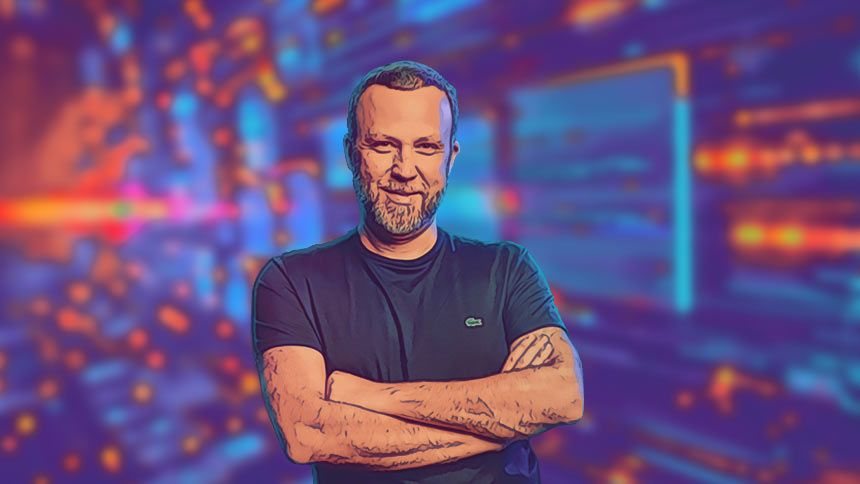
“That’s nonsense. I consider the market’s view at this moment completely wrong,” says Dennis Herszkowicz , CEO of Totvs, in an interview with NeoFeed , when questioned about the possibility of an end of the line for software.
"You can't talk about software in general. It's like talking about the healthcare market, where you have health insurance plans, hospitals, doctors, the pharmaceutical industry, all with completely different dynamics. And software is the same story."
In refuting the narrative that software companies are on life support, he cites the case of Totvs itself and its area of operation within this "square" – enterprise management software, better known as ERPs . As well as the advantages the company has internally.
“The protections that Totvs has always had remain absolutely intact,” he states, citing, for example, the fact that the company's customer base represents a quarter of Brazil's GDP. “How can anyone replicate that simply through Vibe Coding ?”
In the conversation, among other related topics, he gives more details on how Totvs, valued at R$ 21.6 billion, is viewing and preparing for this scenario. Check it out:
Will generative AI kill software?
No, that's nonsense. Obviously not. There's a very superficial view, especially in moments of heightened tension, that the software business is simply about creating code. That would be like saying the car business is about the steel in the vehicle. Code is an input. And, in practice, every time it has become cheaper and easier to develop, the companies that have benefited the most are precisely the software companies. So, for us, it won't be any different now.
How would you assess the recent drop in the sector's stocks based on this thesis, including Totvs' stock?
I consider the market's current view completely wrong, and I'll go further. We announced a share buyback program that is the largest in Totvs' history. So, at today's market price, we are investing approximately R$ 800 million in buybacks. In other words, it's not just talk; our bottom line is effectively supporting this view. And there's another important aspect.
Which?
It's impossible to talk about software in general terms. That's also a mistake. It's like talking about the healthcare market, where you have health insurance plans, hospitals, doctors, and the pharmaceutical industry, each with completely different dynamics. Software is the same story. It's a trillion-dollar market, gigantic, and with completely different characteristics, different product categories. And yes, some software is more susceptible to risk.
"There's a very superficial view, especially in times of heightened tension, that the software business is simply about creating code. That would be like saying the car business is just about the steel in the vehicle."
In which software areas do you think there could be the most impact?
The simpler and less critical it is—that is, the easier it is to implement, operate, and the less consequential an error would be—the greater the risk of something different emerging. But this isn't something that started with AI. It's been this way since the day software appeared. And this applies to everything. If what you do is very simple, it's easier to replace you.
And what about ERP, specifically? What are the risks inherent in this trend?
Frankly, I see few risks for the ERP market. The biggest risk we have, and I've been telling investors this, is the normal risk of a company being complacent or incompetent. But that's a risk I think is worth buying, because Totvs wasn't founded yesterday; it has 43 years of experience without complacency, much less incompetence. And I have no doubt that ERP, where Totvs operates, is the best product in this market.
Why?
Precisely because it has a breadth, a coverage within the client, that is unparalleled. There is no other application that has the scope of coverage that the ERP has, and at the same time, it's not just that scope, it's the criticality. Everything that is done within the ERP is critical; you can't make mistakes. So, this naturally gives the ERP a relevance that no other software on the market has.
One of the arguments of this thesis is that AI will break down barriers to entry. How does Totvs fit into this context?
The protections that Totvs has always had remain absolutely intact and will continue to do so. These are absolutely critical applications. Any error in the ERP costs the client money. And we have a client base that represents a quarter of Brazil's GDP, with an incredibly high level of relationship. If anyone tells me that this will be replaced, they need to explain how. I really can't see it happening.
What other barriers remain intact?
We're talking about all the data generated by exactly that quarter of the GDP flowing daily through Totvs over the last 43 years. This provides knowledge that isn't public. It's not available online for others to consume. It's knowledge of the processes not just of company A or B, but of the sector as a whole. And we have a distribution platform that covers the entire country. How can someone replicate this simply through Vibe Coding?
"An investor asked me what Totvs was doing to defend itself against AI. And my answer was: we're not doing anything to defend ourselves. We're doing it to take advantage of and attack with AI."
But you don't see any threat to Totvs from AI?
AI is not a threat. On the contrary. An investor asked me what Totvs was doing to defend itself against AI. And my answer was: we are not doing anything to defend ourselves. We are doing it to take advantage of and attack with AI. This is the greatest opportunity we have had in several years.
Why?
When someone contracts our ERP system, they need a certain number of people to operate the software. The money spent on this is brutally greater than the application itself. So, a company that bills R$1 billion will spend, at most, R$2 million per year on this software that controls everything within its operation. However, it spends 15 to 20 times more on users to perform the tasks. What AI brings to us – and this is the key advantage – is this ability, through the creation of agents. We are talking about an addressable market 15 to 20 times larger.
What role does the company want to play in this landscape of change brought about by generative AI?
We are not a company that will compete for AI computing capacity, LLM models, and AI chips. Those are roles for a handful of companies worldwide. It's a trillion-dollar battle that clearly isn't ours. Our battle is to become the largest provider of agents that perform tasks to improve our clients' performance. That's our vision for AI. And LYNN is a direct result of that vision.
LYNN came packaged in a specialized AI approach. What exactly is this concept?
When you're talking about the use of AI by individuals, to summarize a text, prepare an email, using a generalist model helps you. Now, in the corporate world, at the company level, if I'm creating an agent that will, for example, help to correctly collect the company's taxes, the opposite is true. If this model contains answers to how to fry an egg or what will happen in the Iran war, that's a problem.
And regarding the Software as a Service (SaaS) model, which has also raised questions in this context, how do you see the future of this format?
In our view, the SaaS model will remain absolutely valid for both the application and the cloud. Now, we are creating a new modality that we call TaaS, which stands for Task as a Service. But, for us, it complements SaaS.
And what about M&As, another area in which Totvs is known? Are they still within its scope?
Without a doubt. In fact, we recently acquired Linx, which is an example of an M&A that wasn't done because of AI, but which fully benefits from all the investment we're making, including in LYNN, because it has exactly the same competitive advantages as Totvs.
So what are the next steps in integrating Linx now that the company is in-house?
We know the company, we've always had some degree of proximity, but it's obvious that the operation was in Stone's hands for five years. So, there's a careful job of understanding exactly how things are and who the people are. That's the first job, the main focus. From this approach, a series of decisions and actions will begin to be taken. But it's certain that Linx will not be an independent company and that it will be fully integrated into our management business .