


The bursting of the electric vehicle industry bubble , especially in the United States market, has just claimed another "victim" in the automotive sector: the Japanese automaker Honda.
For the first time in five decades, the company will suffer a loss of US$15.7 billion, related to expenses and losses from the change in strategy for this segment. The company had projects of various models, which will now be terminated.
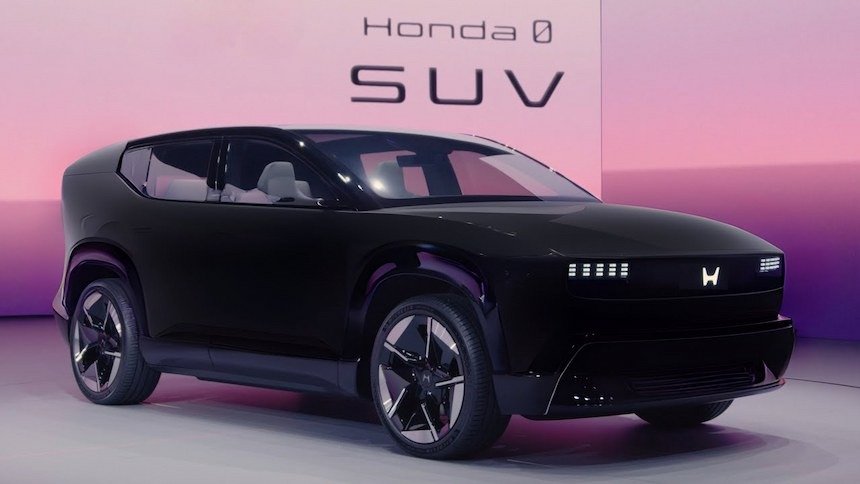
Among them is the Honda O Series SUV, which was unveiled at the end of 2025, with the prospect of global production starting between 2026 and 2027. There was even the prospect of the Brazilian market receiving the vehicle, which will now not proceed in this phase.
The Japanese automaker stated on Thursday, March 12, that expenses and losses directly related to its electric car segment could total up to 2.5 trillion yen in the fiscal year ending March 31, and in the coming years, after its main global competitors also presented negative outlooks for battery-powered car models.
As a result, Honda announced that it has decided to cancel the launch and development of several models in response to the slowdown in the electric vehicle market in the United States. The company also anticipates losses from investments already made in China, precisely to try to counter the then-progress of other automakers.
The Asian automaker now intends to strengthen its hybrid electric vehicle models to improve the profitability of its automotive business. The company also plans to capitalize on profits from its motorcycle and financial services businesses to maintain stable returns for its shareholders.
As a consequence of the negative result, the Japanese company also announced that most of its executives will forgo part of their salaries in the next fiscal year. CEO Toshihiro Mibe will receive 30% less of his earnings for three months.
According to data released by the company, the net loss will be between 420 billion yen (US$2.6 billion) and 690 billion yen (US$4.3 billion) for the fiscal year. This figure is very different from the previous forecast, which pointed to a net profit of 300 billion yen (US$1.9 billion).
This consolidated figure marks the first annual loss since the company began publishing its consolidated results in 1977. The annual revenue forecast, however, remained at 21.1 trillion yen (US$132 billion).
In February, the Japanese automaker had already reported losses in its car business for the last quarter, which ended in December, due to US tariffs and accounting write-downs related to electric vehicles, despite profit growth in its motorcycle business.
Honda's shift in strategy toward electric vehicles follows similar moves by rival automakers, who are also moving away from electric vehicles, which many Americans are still reluctant to buy. Like the Japanese company, many of them have also had to record write-downs on their balance sheets.
The biggest of these was Stellantis, owner of Jeep, Fiat and Peugeot , among others, which, in February, recorded an accounting loss of approximately US$26 billion. In December, Ford had already announced a loss of around US$19.5 billion.
In January, General Motors (GM) experienced a $6 billion loss related to the end of its electric car project. Honda's contribution to this total loss brings the industry's total to approximately $67 billion.
Although analysts had expected more losses related to electric vehicles at Honda, the magnitude of the write-down was considered a surprise, according to Julie Boote, an automotive industry analyst at Pelham Smithers Associates.
“The main surprise was the cancellation of the production program in the United States, rather than just its reduction. Honda had a very ambitious plan to expand its electric vehicle line, which was severely affected by the changes in the market,” he stated.
Honda's CEO stated that demand for electric vehicles has fallen drastically, making it "very difficult" to maintain profitability.
In addition to its main markets, Japan and the United States, Honda stated that it will strengthen its model lineup and cost competitiveness in India, where it sees room for expansion.
Under pressure from Chinese competitors, Japanese automakers have been increasingly focusing on India, a market where Chinese manufacturers are still largely excluded.
On the Tokyo Stock Exchange, Honda's shares have risen 1.26% in 12 months. By 2026, the decline is projected at 7%. The automaker is valued at US$41 billion.