


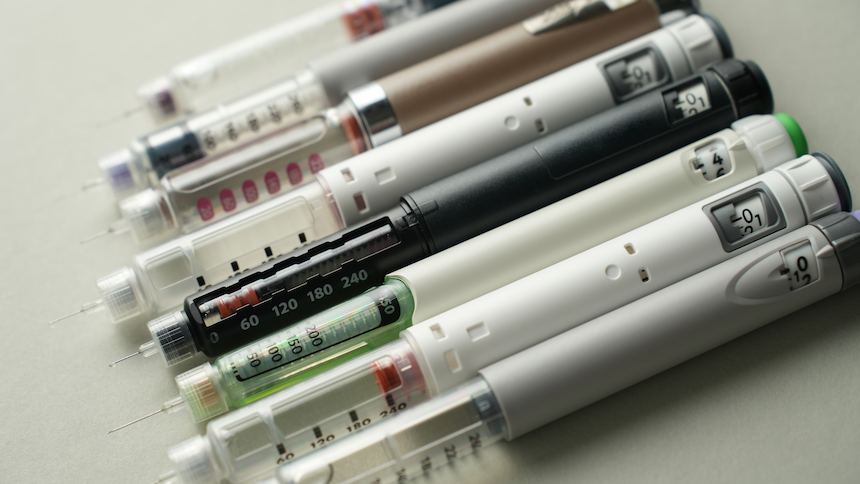
With fifty days remaining before the patent for semaglutide expires in Brazil on March 20th, currently marketed exclusively by the Danish company Novo Nordisk under the brand names Ozempic and Wegovy (the company also produces Poviztra and Extensior), the National Health Surveillance Agency (Anvisa) is currently analyzing three requests for the manufacture of similar pens .
The expectation is that the first authorizations for Novo Nordisk's competitors to place their products on the market will be issued by April, and that domestically produced pens will reach pharmacy shelves in the first half of the year.
The first company on the release list is the pharmaceutical company EMS , owned by the Sanchez family, which already has a platform ready for the production of semaglutide as soon as approval is granted. At the same manufacturing plant in Hortolândia (SP), the company has been producing Olire and Lirux pens, based on liraglutide, since August. Liraglutide's patent, also held by Novo Nordisk, expired in November 2024.
The pharmaceutical company already has pre-orders for raw materials, such as the pen itself, and for the active pharmaceutical ingredient (API), from suppliers in China, which will only be confirmed after the registration is approved.
“This will be our company’s main market launch in 2026. We are preparing to begin the production process as soon as our application is reviewed and approved by Anvisa,” says Marcus Sanchez, vice president of EMS, to NeoFeed .
The company's perspective is that EMS's version of Ozempic – although technically considered a reference drug, based on its own conception and studies – will generate revenue between R$ 350 million and R$ 400 million in the first 12 months after the effective start of sales. The plan is to sell around 700,000 pens in the same period.
The information regarding the updated number of applications under review was exclusively confirmed to NeoFeed by Anvisa, which still has more requests in the queue. Of the three proposals being analyzed, two are for synthetic drugs (considered a more current platform) and one is for a biological product, which is in the technical requirement phase, when new documents are requested.
According to the agency, including those still awaiting analysis, there are currently 13 registration requests (11 synthetic, one biological, and one for semaglutide combined with insulin containing icodeca).
There are also seven patent applications for liraglutide, one of which is currently under review. The patent for tirzepatide, the active ingredient in Mounjaro, from the American company Eli Lilly, which began being sold in Brazil in May 2025, expires in 2032.
Anvisa's action stems from the publication of a notice in August of last year, guaranteeing priority in the evaluation of registrations for liraglutide and semaglutide manufactured in Brazil. In practice, this caused these requests to "jump the queue" of other applications for other medications.
Since slimming pens became a global craze and started representing a significant portion of manufacturers' and retailers' revenue, many companies have shown interest in their production, such as Biomm, Cimed, Prati-Donaduzzi, Hypera, among others.
Eurofarma also made a formal request to Anvisa (the Brazilian health regulatory agency) to produce semaglutide, but withdrew it last year.
“The contract previously signed with a third-party company for a semaglutide-based product was terminated in 2025. As a result, the dossier that had been submitted to Anvisa was transferred, on September 18, 2025, to Ávita Care Importação e Distribuição de Produtos Ltda., which became responsible for the regulatory follow-up,” the company said in a statement to NeoFeed .
But, in a way, Eurofarma has already entered the market for slimming pens, although not through production. Last October, the company celebrated a partnership with Novo Nordisk to distribute two new brands of semaglutide in Brazil – Poviztra (for obesity) and Extensior (for diabetes treatment).
Under the agreement, the Danish company is responsible for manufacturing the products, which come from the company's factory in Denmark, while Eurofarma handles the distribution and marketing of the medicines in the country.
"The company further clarifies that it already offers Poviztra and Extensior, two semaglutide brands, to the market, resulting from a partnership with the pharmaceutical company that holds the patent for the molecule, reaffirming its commitment to expanding access to quality treatments," Eurofarma concludes.
In practice, the initiative was seen by the market as a preventive action by Novo Nordisk to capture users of the weight-loss drug who are looking for a cheaper option than Ozempic, even before the arrival of similar products.
The competition for shelf space is part of a potential market that reached R$ 10 billion in pen sales in Brazil by 2025, including semaglutide, liraglutide (patent already expired) and tirzepatide (patent of Mounjaro, produced by Eli Lilly, valid until 2036), according to a January report by Itaú, with the possibility of reaching R$ 20 billion in 2026.
“Our estimate is that the LPG-1 market will reach at least US$9 billion (R$50 billion) in Brazil by 2030, compared to approximately US$1.8 billion (R$10 billion) currently, representing a compound annual growth rate of 40% over five years,” says the document signed by the bank's consumer, health, and food analysts.
And precisely to absorb this likely increase in demand, the main pharmaceutical retail chains are already preparing to capture potential new customers for weight-loss medications.
According to Itaú, the growth of GLP-1 analog medications could represent a share of around 20% of the revenues of RD Saúde (owner of Raia and Drogasil), Pague Menos, and Panvel, compared to 8% to 9% in the current scenario. This takes into account the lower prices, which still guarantee higher margins.
Data from the consulting firm Close-Up International shows that, in November 2025 alone, the obesity medication market, including all pens available in Brazil, guaranteed the pharmaceutical retail sector revenue of R$ 1.5 billion, representing a 127% increase over the same month in 2024.
Concerns of the pharmaceutical retail sector
According to the Brazilian Association of Pharmacy and Drugstore Chains (Abrafarma), the arrival of semaglutide-like products should, in fact, be the main driver of growth for the leading companies in the sector.
“Pharmaceutical companies are ready for this new phase in the sector, starting with the arrival of new GLP-1 medications. I understand that this is the first major leap, since other formulations, such as tablets, and other active ingredients should arrive as early as 2026,” says Sérgio Mena Barreto, president of Abrafarma, to NeoFeed .
But, along with the arrival of more products on the shelves, the Abrafarma executive brings up a hidden problem that is already on the radar of retailers' balance sheets: the growing increase in thefts of pen batches.
According to the organization, in São Paulo alone, losses reached R$ 70 million, with the theft of nearly 60,000 pens.
“We recently met with the state's public security leadership to express our concern, especially regarding the increased quantity of these products on the shelves. It is necessary to guarantee the safety of people and the stock of pharmacies,” says Barreto.
Novo Nordisk has been attempting, through legal means, to extend the sales exclusivity period, alleging that the delay in approval from the National Institute of Industrial Property (INPI) has harmed the company.
However, in December 2025, the Superior Court of Justice (STJ) denied the pharmaceutical company's request to extend the exclusivity period until 2039. By law, the patent term in Brazil lasts 20 years.
The panel upheld the 2021 decision of the Supreme Federal Court (STF), which had already prohibited extending the term. According to the justices, the patent became valid in March 2006, when the application was filed with the INPI (National Institute of Industrial Property). Therefore, the exclusivity period ends in March of this year.
In a statement to NeoFeed , Novo Nordisk reported that it is "still evaluating the possibility of appealing the Superior Court of Justice's decision regarding the expiration of the semaglutide patent."
"Novo Nordisk applied for protection on March 20, 2006, the first patient to receive semaglutide in clinical trials was in 2013, and the patent was only granted on May 7, 2019," it says.
"Therefore, it is clear that the delay at INPI (National Institute of Industrial Property) not only harms companies or patent holders, but also the population, which is prevented from receiving innovative treatments quickly," the pharmacist added.