


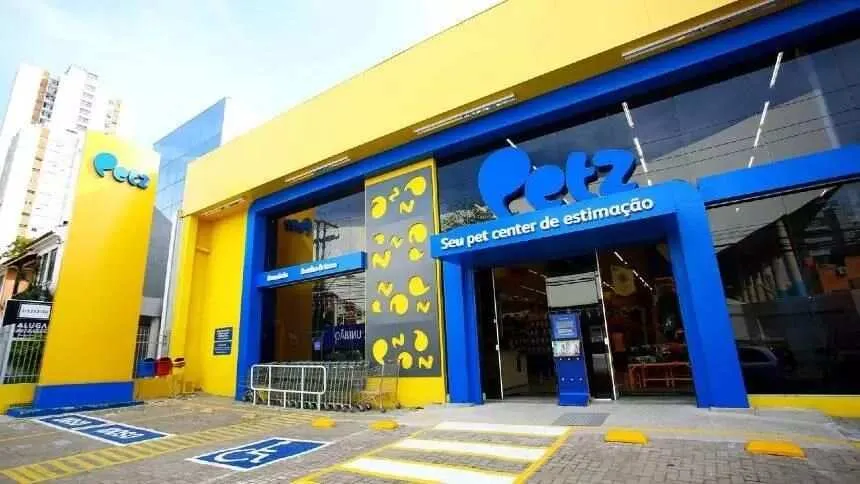
One of the most complex cases on the recent agenda of the Administrative Council for Economic Defense (Cade), the merger between Petz and Cobasi only received approval from the agency in December 2025, almost a year and a half after it was announced. And after facing strong resistance from rivals such as Petlove.
Now, with the green light to move forward, the group, renamed Petz Cobasi, is finally beginning to implement the steps of the two operations. And the ambitions in this process are consistent with the size of the company resulting from the combination of the two giants in the pet market.
“We know the challenges that a merger imposes and we are aware of and prepared to face them. But we want to build the best merger case in the history of Brazilian retail,” said Sergio Zimerman , co-founder of Petz and who, until then, served as CEO of the chain.
Following the statement made in a call with analysts this Friday, January 31st, Petz Cobasi formalized what had already been planned at the time of the merger announcement. Zimerman will now serve as chairman of the board of directors of the new operation.
The CEO will be Paulo Nassar, one of the founding members of Cobasi, who stated: “I am fully aware that most mergers fail not in valuation, but in execution. Therefore, we will work with total balance, common sense, and valuing what each chain does best.”
The search for this balance sets the tone for the composition of the new board of directors. Petz will be represented by Sergio and his sister, Tania Zimerman. The Nassar family, in addition to Paulo, will have two more seats reserved for his brothers João and Ricardo Nassar.
The board will also include Cristiano Lauretti, from Kinea, an asset manager that holds an 8% stake in the operation, and three independent directors: Eduardo Terra, Cláudio Roberto Ely, and German Pasquale Quiroga Vilardo.
Along the same lines, the new board of directors, composed of 9 executives, will include five names from Cobasi and four from Petz. Among them is Rafael Siqueira, who served as CFO of the former and will now hold the same position in the group.
One of the names on the "ex-Cobasi" team that has also been selected is Oderi Leite, who will be the integration director of the new company. Until now, he held the position of managing director of digital and omnichannel at the former company.
“We are not going to divert our attention and neglect day-to-day operations,” said Leite. “We are deploying a very strong team to handle the integration process, while another team will be responsible for the operational aspects and delivering results.”
Taking into account the last 12 months before the third quarter of 2025, the operation starts with combined gross revenue of R$ 7.7 billion and net income of R$ 1.7 billion. It launches with a network of 521 stores, distributed across 23 states, plus the Federal District, in addition to four distribution centers.
In this initial phase, now under the same roof, the group updated its projections for synergy capture for the operation. From the previous volume, estimated in the range of R$ 220 million to R$ 330 million, to the new estimate of R$ 200 million to R$ 260 million, within five years.
Leite attributed the downward revision to two factors. The first was the efficiency-gain initiatives implemented by the two companies separately in the period leading up to approval by Cade. And the second was the mandatory sale of 26 stores as part of the remedy imposed by the agency in this process.
“We have already anchored the remedies to this new range,” Leite stated. He did not rule out the possibility of closing other stores in addition to the sale mandated by Cade. However, he emphasized that, initially, the group will be focused on fulfilling its obligations to the agency.
Integration and levers
Regarding the integration, the starting point will be work developed with the consulting firm McKinsey in recent months. As part of this journey, the first 30 days are being dedicated to combining the teams of the two companies.
Next, the 100-day plan involves initiating the execution of synergy capture opportunities mapped in this process. Subsequently, some of the next steps include systems integration and the merging of CNPJs (Brazilian company tax IDs), expected to be completed within 24 to 30 months.
“Around 80% of these synergies are concentrated in three pillars – operating expenses, commercial optimization, and store operations footprint,” Leite emphasized. Nassar, in turn, highlighted what the drivers of Petz Cobasi's results will be. Among them, the coordinated expansion of the network.
“We will maintain the Petz and Cobasi brands, and it is worth noting that both companies continued opening stores in 2025 and that this pipeline will be maintained in 2026,” said the CEO. He also stressed that the group has a large “white space” to explore, even though it already has a large market reach.
“Petz is in just over 120 cities and Cobasi in 94, for a country that has more than 3,000 municipalities,” he stated. “But we will do this rationally, with our feet on the ground. And the strategy for which brand will occupy new spaces is still being defined.”
In addition to strategies like omnichannel – where 40% of the group's sales now originate from digital channels – and private label brands – totaling 15 across all operations – another key driver highlighted by Nassar will be expanding the penetration of services and loyalty programs through cross-selling across both networks.
At this point, the CEO cited some of the figures that make up the new company's ecosystem and that pave the way for advancements in this area. Among them, a network of more than 300 aesthetic service units, 15 hospitals, more than 180 clinics and offices, as well as a health plan for pets.
“Customers who use services spend three times more on products in stores,” Nassar said. “And we have a unique asset in our hands that needs to be, and will be, leveraged.”
While Petz Cobasi outlines and implements these plans, the group's shares, now traded under the ticker AUAU3, were up 1.75% around 3 pm on the B3 stock exchange. The company is valued at R$ 2.98 billion.