


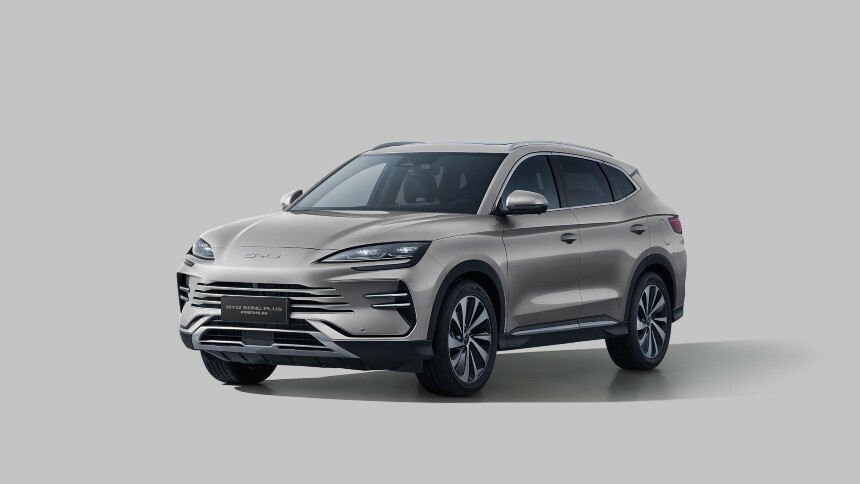
After overtaking Tesla 's revenue leadership in 2024, BYD surpassed its American rival, led by billionaire Elon Musk, in another indicator: sales volume. With this new achievement, the company definitively took the position of the world's largest manufacturer of electric cars .
The volume in question was in line with the annual target that BYD had announced in September. And it was more than enough to leave the American automaker in the dust in this area as well.
Confirmation of the change in the top spot came this Friday, when Tesla released its consolidated sales results for the fourth quarter of 2025. It reported a volume of 418,200 vehicles sold.
The number represented a 16% drop compared to the same period a year earlier, and also fell short of projections, which pointed to around 422,800 cars sold. For the year, the total volume was 1.63 million units, a 9% year-on-year decrease.
In addition to losing its leadership position, this level represented Tesla's second consecutive annual decline in this segment. In 2024, the company sold 1.79 million cars, a drop of 1.1%. During that same period, BYD came closer to its rival, registering 1.76 million vehicles sold.
Tesla's latest retreat comes after a turbulent year for the company, resulting from a combination of increased competition, expressed in the rise of BYD and other Chinese automakers.
Meanwhile, the American company also saw increased pressure on its operations as a reflection of Musk's involvement with the Trump administration and other controversies surrounding the billionaire in the political arena, as well as the end of federal subsidies for the purchase of electric cars in the US.
Despite charting a course to surpass its American competitor, BYD also faced a more complicated scenario this year. This was especially due to the impact of competition in its domestic market, which translated into an intense price war and consecutive declines in operating profits.
At the same time, the Chinese automaker faced some setbacks in its international expansion strategy, largely due to trade barriers or restrictive plans imposed on the company and its compatriots in markets other than China.
Even in this context, the company managed to register a volume of 1.05 million units sold abroad, slightly exceeding its initial estimate of 1 million cars sold in other markets.
This performance helped to partially offset BYD's performance in its domestic market. However, it impacted the company's consolidated figures, which recorded total sales of 4.6 million cars, a 7.7% increase, its slowest growth in five years.
However, some projections indicate a more favorable outlook for the company. In a note, Morgan Stanley, for example, highlights the expectation of a recovery for the company in its domestic market, after BYD launched several updates to its product line earlier this year.
On the other hand, analyst estimates compiled by Bloomberg indicate that the company could reach a total sales volume of approximately 5.3 million units this year. For Tesla, the projection is 1.8 million electric cars in the same period.
BYD shares closed Friday's trading session on the Hong Kong Stock Exchange up 3.57%, giving the automaker a market value of HK$900.3 billion (approximately US$115.6 billion).
Tesla's shares closed trading on Wednesday, the 31st, down 1%. The company is valued at US$1.49 trillion.
*This article was updated at 12 PM with Tesla sales data.