

After dethroning Tesla and becoming the world's largest seller of electric cars , BYD is recharging its batteries and accelerating – literally – to compete for the lead with brands in another race, in particular, within the category: the luxury market .
The flagship brand for this strategy is Denza, the Chinese automaker 's premium brand. And the next front where the company will focus its efforts is the European market, in a battle that includes names like the German manufacturers Porsche and BMW .
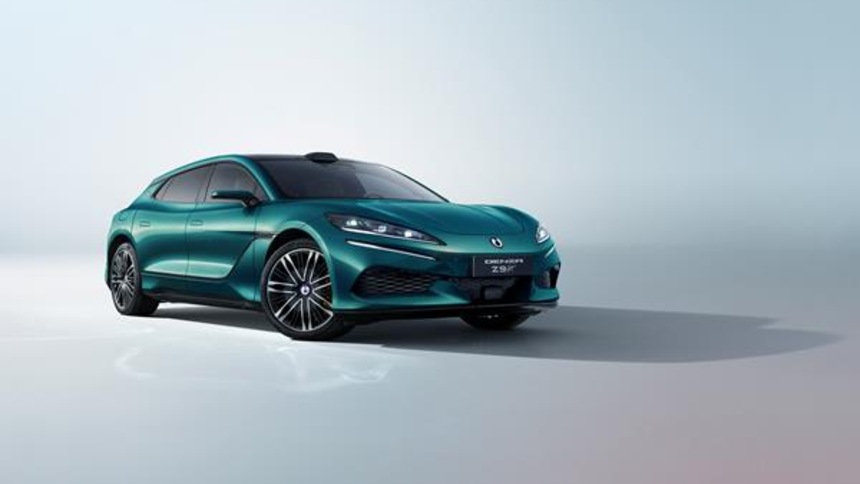
In this direction, BYD is investing in one of its main "weapons" to gain ground in the field of luxury electric vehicles: FLASH Charging, an ultra-fast charging technology that will make its debut in Europe on April 8th, featured in the Denza Z9GT sports model.
According to the automaker, this technology, capable of delivering up to 1,500 kilowatts of power, offers charging as fast as refueling, starting with the Blade 2.0, the company's latest battery.
Translating this statement into numbers, FLASH Charging allows for a 10% to 70% battery charge in just five minutes; a 10% to 97% recharge in nine minutes; and a 20% to 97% recharge in 12 minutes, even at temperatures as low as -30 degrees Celsius.
“This is the perfect choice to introduce to the world, initially 'ready in 5, fully charged in 9, add three minutes in low temperatures',” said Stella Li, executive vice president of BYD, in a statement.
BYD's top-of-the-line model in Europe, the Denza Z9GT, has a range of up to 800 kilometers and a 100% electric version that guarantees acceleration from 0 to 100 kilometers per hour in less than three seconds.
Born from a joint venture with Mercedes-Benz, Denza was created in 2010. In 2024, BYD took control of the brand and, since then, just as promised in its European debut, has accelerated the expansion of its models beyond China.
The initial focus was on Asian countries, such as Indonesia and Thailand. Europe was one of Denza's next – and main – destinations. The brand landed in the region in 2025. And, at the end of the same year, it announced its arrival in the Brazilian market.
This expansion, which finds many parallels with the expansion strategy of BYD's entire portfolio, contrasts, however, with the more bumpy road that the Chinese automaker has recently encountered in its domestic market.
Amid pressure from the Chinese government and a price war in the domestic market, BYD's sales fell 36% in the first two months of 2026 in China. In contrast, Tesla's sales grew by more than 35% in the country during the same period, to 127,728 units.
In Europe, on a broader scale, BYD's sales more than tripled by 2025, approaching the 190,000 vehicle mark. In January, according to the European Automobile Manufacturers' Association (ACEA), BYD reached a market share of 1.7% in the European Union.
To further expand its market share, the company also announced today that it will install hundreds of charging stations in Europe by the end of 2026. In China, BYD has more than 4,200 charging points and plans to reach 20,000 worldwide by the end of the year.
BYD shares closed Friday's trading session on the Hong Kong Stock Exchange down 1.48%, giving the automaker a market value of HK$882 billion (approximately US$112 billion).