

With electric cars gaining popularity among Brazilian consumers, BYD has been rapidly advancing its strategy to achieve the ambitious goal it set for itself, even after only a few years in Brazil: to become the market leader in automobiles by 2030.
The latest sign of optimism came with a new sales record. Between March 20th and 21st, BYD sold 4,300 cars, representing more than R$ 500 million.
The performance was achieved in the campaign dubbed "48 electrifying hours." Without the use of promotions or financial sales, the result represents a 64% increase compared to the July 2025 edition, when 2,600 orders were recorded. This was the best campaign since the start of the initiative in 2024.
On Saturday alone, there were 3,200 orders, the highest volume for the brand on a weekend day, with Alexandre Baldy , senior vice president of BYD Brazil and head of sales and marketing for BYD Auto, stating that the results demonstrated the strength the automaker has gained in the country.
“These numbers represent another very solid step in building confidence among people who still have some reservations about buying,” Baldy tells NeoFeed . “Each step, each stage we overcome, consolidates the achievement of gaining the trust of the more conservative, more hesitant consumer.”
The result generates expectations for another positive year in terms of sales. Last year, BYD sold 112,800 cars, a 47% increase compared to 2024. Since April 2022, when it delivered its first vehicle in Brazil, the automaker has sold more than 200,000 100% electric and plug-in hybrid vehicles, with the country being BYD's largest market outside of China .
According to Baldy, there is room for growth. Besides BYD having consolidated its brand, holding over 70% market share in the electric vehicle segment according to Fenabrave data, he understands that the market in general is still consolidating, with the public becoming increasingly receptive to the value proposition of these vehicles.
“We need to make a gigantic effort, a monumental effort here, to be able to reach people and tell them what this market is like today,” says the executive. “There are still many doubts about resale price, for example. The real information doesn't reach the end consumer in a robust way.”
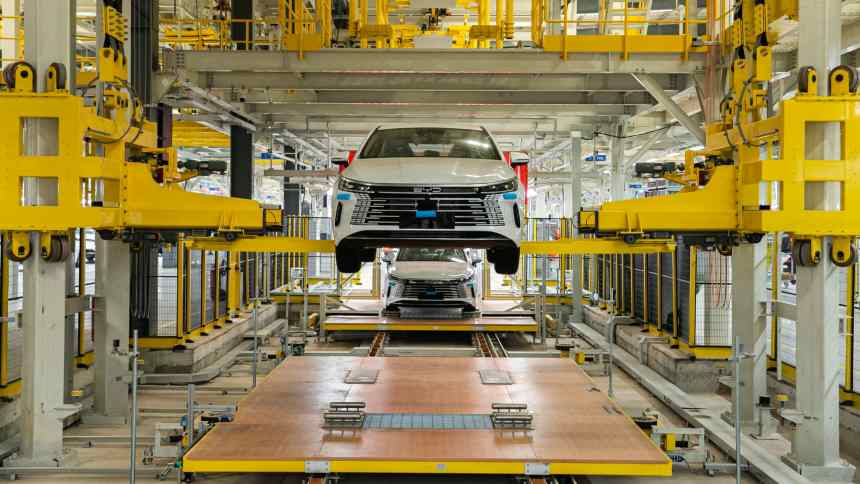
This scenario gives BYD confidence to proceed with its R$ 5.5 billion investment plan for automobile manufacturing in Camaçari (BA), which belonged to Ford and was taken over by the automaker in 2023.
Until now, the company imported semi-assembled cars from China, receiving the final finishing touches in Brazil. The plan is to produce more and more in the country – the automaker manufactures three of the 14 car models available to the local market in Brazil, including electric and hybrid vehicles.
"The factory is running at full capacity. We should close this month with 800 cars per day being manufactured in Camaçari, reaching 25,000 cars per month by the end of the year," says Baldy.
BYD also aims to initially source 50% of the components for its vehicles locally. “We will be prepared. For anything that doesn't exist [in Brazil], we will bring it in so it can be manufactured locally,” he states. “But we can achieve the 50% target with what is produced in Brazil.”
While BYD moves forward with local production, Baldy says that the end of the import tax exemption for semi-assembled vehicles, which the company used to establish itself in the country, was a combined and transparent decision. "It was completely well executed by the federal government," he states.
Regarding the tax incentives agreed upon with the government for car manufacturing in Camaçari, he sees no risk, emphasizing that it is a policy stipulated in the Federal Constitution.