

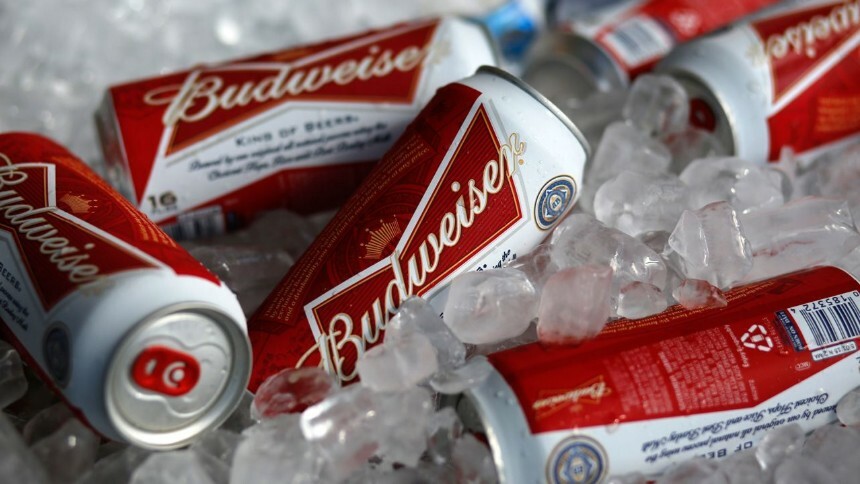
The world's largest brewer, AB InBev, is going shopping at the beginning of 2026. Or rather, buying back. The company announced on Tuesday, January 6th, that it is reacquiring a 49.9% stake in its packaging plants in the United States, in a deal valued at approximately US$3 billion.
The company had sold the stake in question to a group of investors led by the private equity firm Apollo Global Management in 2020, but retained control of the operation, which involves seven factories in six American states.
At the time, AB InBev closed the deal to raise funds to address its debts. The transaction included a long-term supply contract to meet its packaging demands and a repurchase option within five years, at a predetermined price.
"Our metal packaging plants in the United States are a strategic component of our business, ensuring quality, cost efficiency, speed of innovation, and security of supply for our brands," the company emphasized in a statement.
This is the first major inorganic deal announced by AB InBev, owner of brands such as Budweiser, Stella Artois and Corona, since it made debt reduction one of its priorities.
Expected to be completed in the first quarter of 2026 and to boost profits starting that year, the repurchase of the stake will be financed with the company's own resources. This is set against a backdrop of rising aluminum costs due to tariffs imposed by Donald Trump .
In June 2025, the President of the United States doubled import tariffs on aluminum to 50%, under the pretext of encouraging investment in local production of the material, used not only in the packaging sector but also in segments such as construction and energy.
This scenario has driven aluminum prices to record levels. The benchmark price for the material for delivery in three months on the London Metal Exchange reached US$3,130 per unit on Tuesday, the highest value since April 2022, according to Reuters .
In a recent interview with the agency, Michel Doukeris, CEO of AB InBev, stated that hedging strategies helped protect the group's operations from this impact. He stressed, however, that the effects could be more critical this year.
The impact of tariffs is not, however, the only challenge facing the company. Another issue impacting the company and other industry peers is the trend of lower alcohol consumption among younger generations of consumers.
In the most recent snapshot of this scenario, the company recorded a 3.7% drop in its sales volume in the third quarter of 2025, representing the tenth consecutive quarterly decline in this indicator. During this period, beer volume fell by 3.9%.
In other data from the third-quarter balance sheet, the group reported a net profit of US$1.05 billion, a 49.3% decrease compared to the same period in 2024. Revenue, in turn, saw a slight increase of 0.9%, to US$15.1 billion.
Listed on the Euronext stock exchange, AB InBev shares were up 0.37% at around 3:50 PM (local time) today. In twelve months, the shares have accumulated a 13.9% increase in value, giving the group a market capitalization of €105.3 billion.