

The ouster of Nicolás Maduro in Venezuela generated expectations that the United States would make the business environment more favorable to the private sector. But the initial experiences of the Italian company Eni and the Spanish company Repsol indicate that Washington tends to prioritize American companies.
Europe's two biggest energy companies are struggling to collect $6 billion in payments from the Venezuelan regime. Maduro's downfall has brought hope that the debt will finally be honored.
But sources speaking to the Financial Times (FT) say that, in initial talks, American officials were indifferent to the request, reinforcing the perception that President Donald Trump 's " America First " philosophy will also apply to Venezuela.
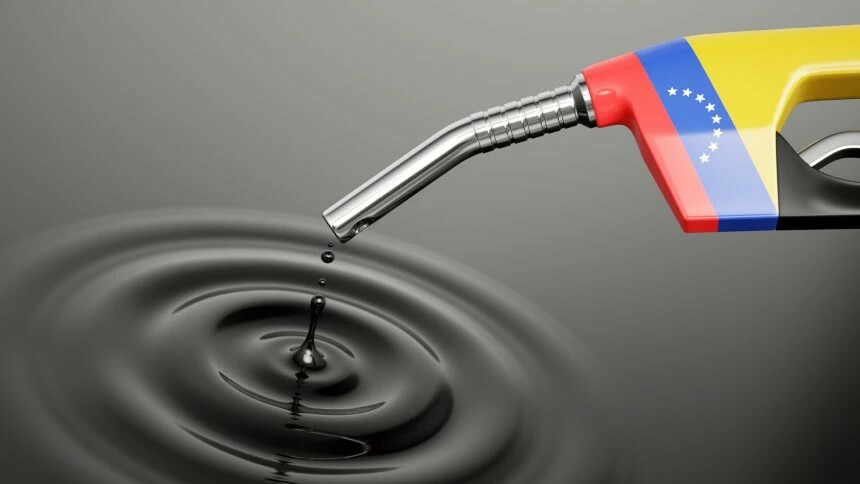
For years, Eni and Repsol have supplied gas and naphtha to the country. These products are necessary to dilute Venezuelan oil, which is characteristically heavier, making it easier to transport. The two companies also operate a gas field off the coast, whose production supplies the local electricity grid.
Until March, Eni and Repsol received payments in crude oil. But, with increasing pressure on Caracas, Washington forced a cut in these payments, revoking a special operating license for foreign companies, before exempting Chevron from the rule.
If they continued receiving payments from the regime, Repsol and Eni risked sanctions from the United States. Therefore, they continued supplying gas to the Venezuelan market, accumulating payment obligations.
Companies are already lobbying to reverse the situation, but their requests have not been heeded. In the third-quarter earnings conference call, before Maduro's ouster, Repsol CEO Josu Jon Imaz said the company was in contact with US authorities to try to resolve the impasse.
Venezuela is a significant market for Repsol. The company owns several assets there, and it was the second largest market in terms of production volume in 2024, behind only the United States and tied with Trinidad and Tobago. Production totaled 24 million barrels of oil equivalent, 85% of which was natural gas. The country represents 15% of the Spanish company's proven reserves.
Even with the United States signaling that it will decide Venezuela's future, especially in the oil and gas sector, the demands of Eni and Repsol do not appear to be among the priorities.
A source quoted by the Financial Times said that the White House is not showing any urgency in resolving the issue of payments, suggesting that foreign companies will be left out.
After the announcement of Maduro's capture, Trump stated that one of the United States' objectives was to open Venezuela's oil reserves – 17.5% of the world's proven reserves, equivalent to 303.8 billion barrels – to American companies.
“We are going to extract an enormous amount of wealth from the ground,” Trump said at a press conference in Mar-a-Lago on Saturday, January 3. “Our giant American oil companies, the largest in the world, are going to invest billions of dollars, fix the oil infrastructure, which is in terrible condition, and start generating profit for the country.”