

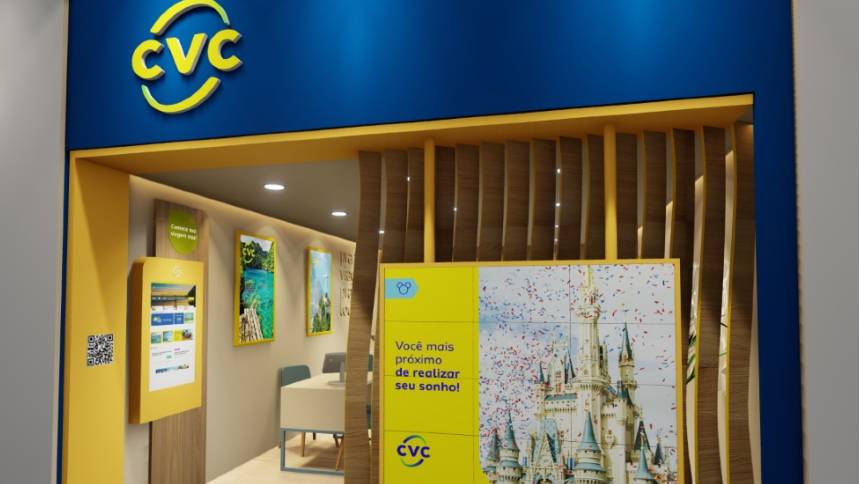
The former president of CVC Brasil Operadora e Agência de Viagens, Luiz Fernando Fogaça, has become a defendant in an administrative sanctioning process by the Securities and Exchange Commission (CVM), which is investigating possible accounting fraud and violation of fiduciary duties involving the company's financial statements between 2015 and 2019.
NeoFeed has obtained information from the lawsuit in which Fogaça is the sole defendant, investigating a possible breach of fiduciary duties or fraud attributed to company administrators, involving the company's financial statements and internal controls.
Fogaça was CFO of CVC between 2010 and 2018 and CEO from 2019 to 2020. Before that, he was an executive at Coca-Cola for about 18 years. Since leaving CVC, he has not held a new executive position.
In 2020, the same year Fogaça left CVC, the company's new management brought to light accounting inconsistencies in the balance sheets from previous years. According to internal investigations, the inconsistencies found totaled R$ 362 million .
In CVC's internal investigations, Luiz Fernando Fogaça was one of those accused of failing to comply with the company's legal and statutory duties. The new administration also accused Leopoldo Saboya, former CFO, Jacques Douglas Varaschim, former IT director, and Luiz Eduardo Falco, CEO between 2013 and 2018.
Internal studies and investigations indicated that some of the inconsistencies may be related to economic incentives tied to the company's operational performance, especially targets linked to EBITDA, an indicator used as a benchmark for paying variable compensation to executives.
The case involved the systematic manipulation of results through the improper recognition of revenues and the deferral of expenses, artificially inflating profits for years.
According to the independent commission's report and academic analyses of the case, improper adjustments to accounting records artificially inflated results between 2015 and 2019, allowing the company to appear to meet minimum EBITDA percentages required by bonus programs.
After subsequent adjustments, the EBITDA for some fiscal years fell significantly below the originally reported targets, reinforcing suspicions of earnings management during that period.
The findings of possible fraud, coupled with the additional challenges faced by the company during the Covid-19 pandemic, caused a sharp deterioration in the market's perception of CVC.
In 2020, the company's shares fell by about 50%. After this drop, the travel operator's stock never fully recovered and returned to the price levels seen before the disclosure of accounting inconsistencies. Today, they are trading at only 6% of what they were worth at the end of 2019, at R$ 2.23.
Although the CVM (Brazilian Securities and Exchange Commission) process has only now become public, with the formal accusation of the former president of CVC, the case has been under investigation by the board since 2022. However, the indictment was only signed in December 2025.
CVC Corp has stated that it will not comment "given that it has not received any updates or notification regarding the legal proceedings."
Contacted by NeoFeed , Luiz Fernando Fogaça did not respond to the request for comment before the publication of this report.