

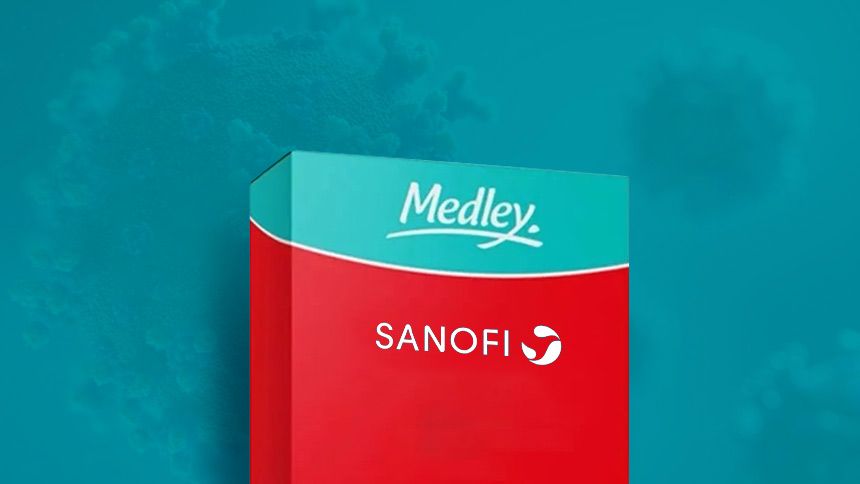
The sale process of Medley, the Brazilian generics unit of the French pharmaceutical company Sanofi , is in its final stage. The interested companies that advanced to the second phase of the bidding – Aché , Biolab , EMS , Hypera, Sun Pharma, and a Vinci Compass fund – will have to submit their final offers by March 13th, all on the same day.
NeoFeed has learned that, with the offers in hand, Sanofi executives are expected to conduct a sort of "mini-auction," without each company officially knowing the value of the other competitors' bids. This will be a final consultation should Medley's owner believe it can secure a higher price for the asset.
This suggests that the result could be known hours after the proposals are submitted. The expectation is that the French pharmaceutical company will announce the name of the new owner of Medley sometime in March.
Previously, participants had a deadline of early March. But Sanofi extended the period so that candidates could complete the due diligence process (detailed audit with operational and financial data), which began on January 5th.
The company also took a long time to make all of Medley's information and selection process documents available in a data room created so that competitors could access the next steps in the bidding process. Therefore, it felt it was fairer to allow a longer deadline for the final proposal.
The documentation provided by Sanofi includes a requirement for potential buyers: whoever acquires Medley must guarantee job security for one year for the entire company workforce, currently around 850 employees.
Maintaining the current leadership includes the company's executive board, such as CEO Lucia Rossato, currently Medley's most prominent figure. Therefore, the company's current leader will continue to manage the company even with a new owner.
“The market doesn’t see this as a problem, because the process at CADE [Administrative Council for Economic Defense] tends to take at least a year. And it’s important to have the technical expertise of these professionals,” a source in the pharmaceutical sector, involved in the Medley sale process, tells NeoFeed .
Rossato's arrival at the helm of the pharmaceutical company came in the wake of the process of consolidating Medley's independence from Sanofi in Brazil, in July 2025, precisely to finalize the sale of the generics unit. Today, the management reports directly to the headquarters of the French company.
Until Tuesday, February 10th, still within the second phase, all companies participating in the competition will have an in-person meeting with Medley's management at Sanofi Brazil's headquarters in São Paulo. The stage of meetings with executives began on Monday, February 2nd.
"The less the candidates for the purchase of the pharmaceutical company alter the requirements set by Sanofi, the more points the company gains. They want to sell Medley under the same conditions they established in the selection process," explains the source.
In the document provided, Sanofi informed the companies that, of the 300 million units of medicines produced annually by Medley, 60% are manufactured in-house, 20% come from Sanofi's manufacturing plant, and the other 20% are supplied by third parties.
However, there is no information yet on the cost of this outsourced manufacturing. In 2025, Medley recorded revenues of R$ 1.3 billion, with an EBITDA close to R$ 200 million. Sanofi bought the Brazilian pharmaceutical company in 2009 from the Negrão family for R$ 1.5 billion.
In practice, the French company will sell a new CNPJ (Brazilian tax ID), without any liabilities - Medley officially separated its operations in September 2025, according to data from the São Paulo Commercial Registry (Jucesp).
In the contract, Sanofi's parent company is the sole owner, with the CEO acting as the company's administrator. Medley's CFO, Álvaro Penteado de Castro, also signs on behalf of the company. Sanofi Brazil's CFO, Ricardo Barone, is responsible for the controlling shareholder.
Higher bar in the final phase
The French also warned interested parties that, due to high competition, the price will be higher than what has been offered so far. In the second phase, the ceiling was set at US$450 million. But the competitors already know that an offer below US$500 million is unlikely to secure the winning bid.
“Anyone who truly wants to buy Medley will have to increase their offer. The understanding is that there must be an increase of at least 10% over the previous offer. Right now, US$500 million is the base. From there, every dollar that goes up is a premium,” says an executive connected to the pharmaceutical industry.
The market sees the pharmaceutical company EMS, owned by the Sanchez family, as having a slight advantage over the competition, having made one of the highest offers among the candidates. Aché is also seen as having potential, followed by the Indian company Sun Pharma, which already operates in Brazil with the generic drug brand Ranbaxy.
The advantage for EMS, should it be declared the winner, lies in the synergy of the business, especially in relation to logistics, since Medley's factory in Campinas (SP) is less than 20 kilometers from the industrial park of the company led by Carlos Sanchez, in Hortolândia (SP).
If Aché wins, it should maintain both brands on the market, adjusting for any potential overlap in medication prices. EMS also plans to offer products from both companies in pharmacies.
In the case of Sun Pharma, the advantage, should they win, would be the possibility of moving part of their production to India, thus reducing the costs of importing raw materials.
Other pharmaceutical companies participated in the first stage but did not advance to the next phase: Althaia, Cimed, Eurofarma, Torrent, and União Química. Last November, Cimed's CEO , João Adibe Marques , even said that he would advance in the competition until the end, but he backed down and preferred to focus investments on the consumer sector.
“Today, Medley is a closed chapter for us. We didn’t enter the final round because I’m really focused on growth in the consumer area . Furthermore, getting approval from CADE (Brazil's antitrust agency) would be a major challenge, given the 35% similarity of the medications we already have,” Adibe told NeoFeed . “It doesn’t make sense to buy one brand and then have to remove another.”
Contacted by NeoFeed , EMS declined to comment on the Medley acquisition process, but confirmed "interest in the asset." Biolab stated it would not comment. The other pharmaceutical companies did not respond.
After the report was published, Sanofi sent the following statement to NeoFeed :
"In response to the article published today on NeoFeed, Sanofi clarifies that, in the context of its global transformation to become a biopharmaceutical company focused on R&D, AI, vaccines and innovative medicines, it is evaluating strategic options for the Medley generics business, with the aim of supporting its sustainable growth and long-term success."
Since announcing Medley's independence process in August 2025, the company has been analyzing opportunities with potential strategic partners aligned with this vision. Sanofi remains committed to the continuity of Medley's operations and its mission to expand access to healthcare in Brazil.