

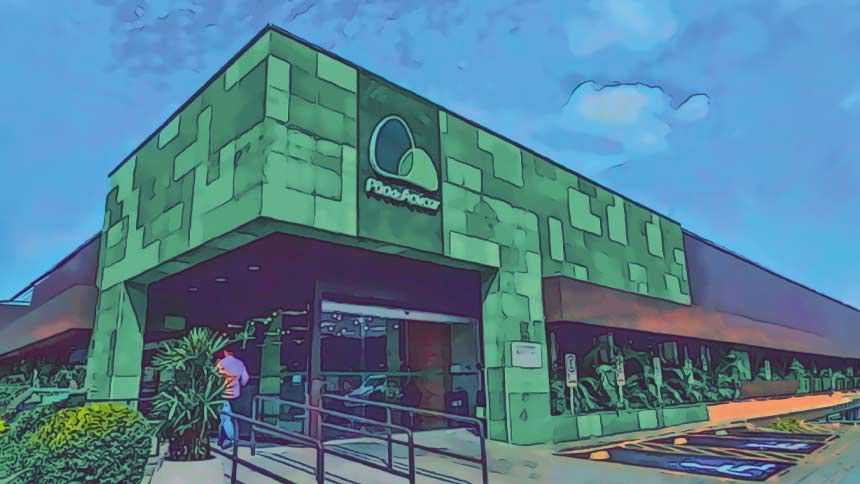
After signaling "significant doubts" about the continuity of its business in the disclosure of its fourth-quarter results, GPA filed for out-of-court restructuring.
The measure, filed in the early hours of Tuesday, March 10, aims to restructure non-operational debts of around R$ 4.5 billion, so that Alexandre Santoro , who took over the retailer's leadership 60 days ago, can begin to implement his operational restructuring proposal.
“Part of my mandate is to increase the company’s operational efficiency, which generates operating cash flow and has a lot of opportunity,” the GPA CEO tells NeoFeed . “The other part is to resolve structural issues. One of them is financial debt.”
The immediate effect of the out-of-court restructuring protocol is the immediate suspension, for 90 days, of any enforcement proceedings and a grace period for interest payments against the owners of Pão de Açúcar and Extra.
The CEO of GPA says that the request for extrajudicial recovery will not affect GPA's operations. In a letter sent to suppliers last week, the executive sought to calm suppliers' concerns regarding news about debt renegotiation.
“The request for out-of-court restructuring will not affect payments to suppliers. Nor does it involve store rent or employee salaries,” says Santoro. “Out-of-court restructuring is an alternative that clearly isolates day-to-day operations, in addition to speeding up the resolution of the problem.”
According to Santoro, the proposal to file for out-of-court restructuring included non-operational creditors who account for approximately 46% of the debt, a large portion of which are banks. NeoFeed has learned that Itaú, HSBC, Rabobank, and BTG Pactual are supporting the proposal.
He also says that the request was unanimously approved by the board of directors, with the support of GPA's three main shareholders: Grupo Coelho Diniz , with 24.6%; Casino, with 22.5%; and Silvio Tini, who together owns approximately 16.1%.
During the 90-day period, GPA will seek support from other creditors – the company needs more than 50% – negotiating the terms of the financial restructuring, which is still in its initial stages. To assist in this process, the company has hired the law firm Munhoz Advogados, which specializes in this area.
“Nothing is defined [regarding the terms of the restructuring], we are in the idea stage, with some discussions about what makes sense,” says Pedro Albuquerque , CFO and director of investor relations at GPA.
The request for out-of-court restructuring comes at a time when the company has significant maturities in the coming months and also in the medium term.
With cash flow under pressure, albeit still positive, GPA has approximately R$ 1.7 billion in debt maturing in the next 12 months, while operating cash flow, after working capital variations, reached R$ 1.3 billion at the end of 2025, increasing by 37.8%.
The financial squeeze led GPA to warn, in its fourth-quarter 2025 earnings report, of "the existence of significant uncertainty that may raise significant doubt about the company's operational continuity" due to certain conditions.
The company reported that, at the end of 2025, it had a net working capital deficit of approximately R$ 1.22 billion, closing the year with a loss of R$ 651 million, a 61% improvement compared to the previous year. Financial leverage increased from 1.6 times to 2.4 times.
GPA is still dealing with approximately R$ 17 billion in fiscal and labor contingencies. In addition to factors beyond the company's control, which only exacerbate the situation, such as the increase in the basic interest rate, which has severely impacted the cost of debts incurred by previous administrations.
The situation led Fitch Ratings to cut GPA's long-term national rating by four notches at the beginning of the month, from 'A(bra)' to 'CCC(bra)'. In its decision, the rating agency stated that the company faces high refinancing risks, while its liquidity position has weakened.
Fitch expects free cash flows to remain negative in the medium term "in the absence of a material reduction in its debt."
With the renegotiation of liabilities, Santoro expects the operational adjustments they have been promoting to begin to appear in GPA's results. The company wants to reduce operating expenses, mainly related to supporting store operations and administrative structure, by at least R$ 415 million.
GPA also intends to reduce its 2026 capital expenditure (capex) to a range of R$300 million to R$350 million, down from R$612 million recorded last year. "Operationally, there are opportunities to be captured, but it's not that there's a problem in the day-to-day running of our business," he says.
GPA shares closed the trading session down 5.21%, at R$ 2.73. Over 12 months, the shares have accumulated a 31% drop, bringing the market value to R$ 1.3 billion.