

Warren Buffett's successor hasn't even settled into the CEO's chair at Berkshire Hathaway yet and has already taken an important step that may indicate to investors the profile of his management style.
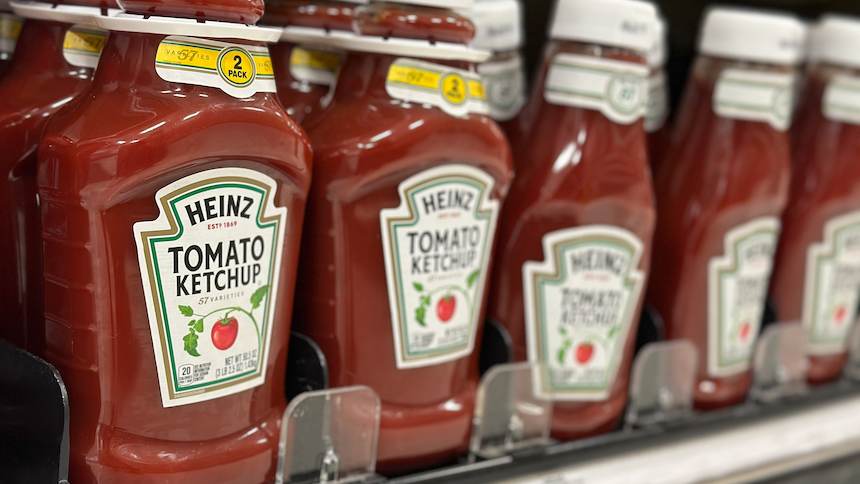
Greg Abel has decided to divest his entire stake in Kraft Heinz, one of the most problematic investments in the Oracle of Omaha's recent history.
In a regulatory filing released on Wednesday, January 21, Berkshire signaled that it may sell its entire stake in the food company, paving the way to close a chapter that has become a rare misstep in Buffett's legendary trajectory as an investor.
Currently, Berkshire owns approximately 325 million shares of Kraft Heinz, equivalent to a stake valued at around US$7.3 billion. The company is the largest individual shareholder in Kraft Heinz.
For the financial market, Abel's decision, made days after officially taking over the helm of Berkshire on January 1st of this year, is more related to cleaning up the investment portfolio than to a financial move – especially since the company has accumulated a cushion of US$358 billion over the past few years.
Kraft Heinz has become one of the worst-performing assets in Berkshire's portfolio. The merger of Kraft Foods with Heinz was orchestrated in 2015 by Buffett with the Brazilian asset manager 3G Capital, owned by Jorge Paulo Lemann, Marcel Telles, and Beto Sicupira, to create a global giant in the food market.
Since the peak in 2017, the company's shares have fallen by about 76%, underperforming the market and other historical investments of the group.
Last year, Berkshire was forced to record a $3.8 billion write-down related to the investment, a formal acknowledgment that the original investment thesis did not hold true.
Kraft's shares fell as much as 7% after the document was released. The company's market capitalization is US$26.4 billion.
Analysts estimate that Berkshire would have to accept a discount of approximately 10% to fully divest its stake in Kraft Heinz, resulting in an estimated loss of US$1.3 billion.
Both Buffett and Abel have expressed their frustration with Kraft Heinz's strategies, including the plan, announced last year, to split the company into two independent businesses.
On September 2nd of last year, the Board of Directors approved the split of operations. One company will bring together the group's sauces, pasta, and seasonings businesses, with brands such as Heinz, Philadelphia, and Kraft Mac & Cheese. The other company will bring together grocery products and will be focused on North America, with brands such as Oscar Mayer, Kraft Singles, and Lunchables.
Buffett's (few) mistakes
Although frequently cited as one of his biggest missteps, Kraft Heinz wasn't the only investment that disappointed Buffett over the decades.
If the mistake at Kraft was overestimating the power of traditional brands, Buffett classified the purchase of Dexter Shoe Company in the 1990s as his worst deal.
He bought the shoe manufacturer believing it possessed a lasting competitive advantage. A few years later, the massive influx of low-cost Asian products completely destroyed the American shoe industry. The company rapidly lost value and eventually went bankrupt.
To make matters worse, Buffett paid approximately $443 million for Berkshire stock – today that batch of shares would be worth around $18 billion.
Contrary to the Oracle of Omaha's theory, Berkshire Hathaway spent approximately US$37 billion on Precision Castparts, a manufacturer of aerospace parts.
The bet was on the continued growth of commercial aviation, but Buffett took over the company at the peak of the cycle. A few years later, the sector entered a sharp slowdown, exacerbated by the Covid-19 pandemic, which drastically reduced orders and the company's margins.
Still, Kraft stands out for bringing together all the elements of a rare mistake by Buffett's standards. And Abel is reviewing it to create a "new Berkshire".