

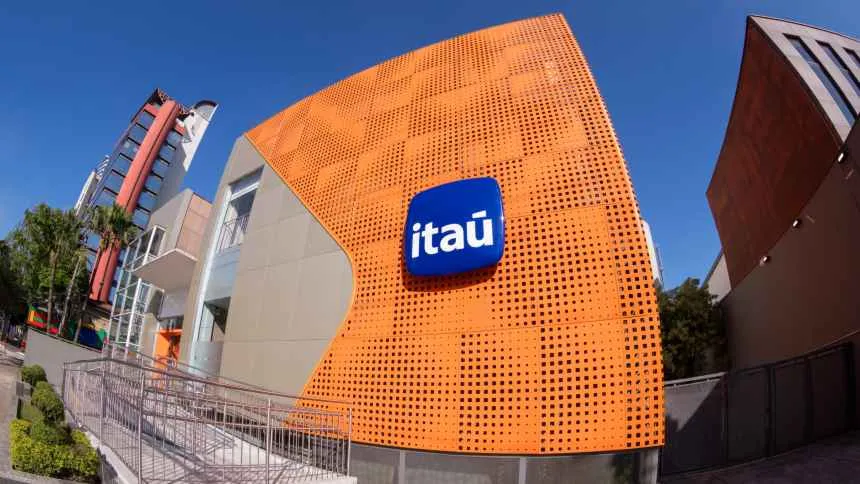
It's become routine. Every three months, Itaú Unibanco has gotten used to delivering record results and numbers above market estimates. And, in the case of the fourth quarter and 2025 year results , released on Wednesday night, February 4th, it was no different.
Conversely, while reaffirming a positive momentum that has already extended over several quarters, the bank also sees a question gaining traction: is it possible to continue and sustain this trajectory for how long?
"Past results do not necessarily guarantee future results. A lot of discipline and a lot of humility," said Milton Maluhy Filho , CEO of Itaú Unibanco, in a call with analysts on Thursday morning, the 5th.
“We are very confident about the bank’s future, despite the uncertainties. And this is clearly a year with even more uncertainties,” he highlighted earlier in a conversation with journalists. “We have never been so strong and prepared to face the challenges.”
Even while highlighting that the strong performance recorded in several consecutive balance sheets does not guarantee that this performance will be repeated, Maluhy and his colleagues cited some data showing the bank's evolution over the last five years to emphasize their belief in the operation.
During this period, the return on equity (ROE) increased from 19.3% to 23.4%, while net income rose from R$ 26.9 billion to the figure announced yesterday of R$ 46.8 billion – the highest result ever recorded by a Brazilian bank.
Another highlight of the report was the delivery of all the indicators projected by the bank for 2025.
"We entered with the guidance and, throughout the year, we were able to make some adjustments and ended up generating a higher-than-expected result of approximately R$ 2 billion," said the CEO.
The result was also included in the 2026 guidance, which, among other estimates, projects a loan portfolio with growth between 5.5% and 9.5% – the line grew 6% in 2025, to R$ 1.49 trillion.
“The mechanics will be the same as in 2025. As we gain more certainty about the scenarios, the guidance may eventually be changed,” Maluhy noted. “If we understand that there is an opportunity to accelerate portfolio growth, the market will be promptly notified.”
Aside from any impact from the macroeconomic scenario, much of the confidence and optimism highlighted by Maluhy lies in the areas where the bank has been evolving in recent years. These areas were also emphasized by the executive in this morning's conversations.
“Our portfolio is very healthy and we have record levels of engagement,” he stated. “In addition to our entire cultural and digital transformation agenda, which is already our new normal. And we still have a lot ahead of us – applications of new technologies, artificial intelligence, and customer centricity.”
In one of the moves that illustrate this trend, the bank highlighted the fact that it reached a milestone of 15 million customers migrated to its super app by 2025, with an NPS (an index that measures customer satisfaction) of 80 points.
“In general terms, I think they are succeeding in this strategy of reducing costs in this more outdated part and modernizing the bank,” a fund manager who has bought the stock told NeoFeed . He cites the super app as a good example, as it is much more objective and saves time in the interaction with the bank.
“The bank is worth R$ 500 billion,” the manager continues. “We’re talking about close to 10 times the profit. Given that there was a significant correction yesterday, today the stock should react from neutral to positive.”
After opening the day on the B3 with a slight increase, Itaú Unibanco's preferred shares were up 2.35% around 11:45 am, trading at R$ 45.67 and giving the bank a market value of R$ 503.5 billion.
With a buy recommendation and a target price of R$ 45.63 for the stock, Citi noted, among other points, that the guidance provided by the bank indicates that, in another year, revenues from fees and insurance could exceed expenses.
"It's an impressive feat considering the investments in technology and the new products offered by the bank. This leads us to believe that Itaú will continue striving to serve its customers more efficiently in the future," wrote Citi analysts.
BTG, which has a buy recommendation and a target price of R$ 50 for the stock, highlighted that it believes the bank can continue to exceed expectations in the medium term.
"Although the 2026 guidance may seem more conservative, we see this year as a transition and not a period of slowdown, especially considering the uncertainty related to the upcoming elections, which tends to reduce risk appetite," BTG pointed out. And added:
"The bank must accelerate its digital transformation, aiming to significantly reduce the cost of service. This will likely involve some incremental investments in the short term, but we see these initiatives as a good positioning of the bank for the next cycle."
Master Case
Aside from the bank's results and prospects, Maluhy was questioned about the impacts of the liquidation of Banco Master on the financial system and about the effects on areas such as the Credit Guarantee Fund ( FGC ), in the wake of the case.
“The impression is that self-interests came before the interests of the system,” said the CEO. “At the end of the day, this case left a bill of R$ 55 billion for the system, for a fund [the FGC] that today has assets of around R$ 120 billion. In other words, almost half of the reserves were drained.”
He stressed that this bill needs to be paid so that investors receive the message that the fund has assets and will be capitalized. And that a second point is how to achieve this capitalization in a way that doesn't impact the cost for end clients.
"A third point is to prevent an event of this magnitude from happening again," he stated, emphasizing that the case offers lessons in several aspects, and these must be thoroughly digested by all market participants.
"It is evident that the FGC model has been distorted by some platforms that have used the fund as a model to leverage their own businesses," he said, emphasizing the responsibility and care that everyone should have before distributing products on their shelves.
"The incentives were implemented incorrectly. So, these are the abuses and errors that we avoid every day. We have never distributed a CDB (Certificate of Deposit) from Banco Master. Out of conviction," he added.