

Motorola, the second-ranked smartphone company in Brazil with a 27.5% market share , has decided to enter the ultra-premium segment, an area in which it did not previously operate, in an attempt to close the gap with its South Korean rival Samsung , the market leader in the country with a 40% share.
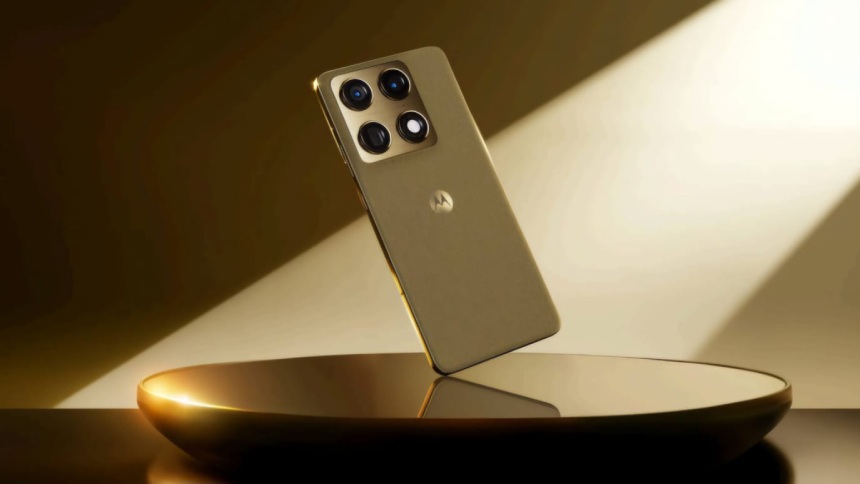
The company brought in the Signature model, the brand's top-of-the-line device, launched globally in January of this year, which costs R$ 9,000. Sales began on Monday, March 9th. The device will now be on the same shelf as Samsung's Galaxy S26 Ultra, which is on pre-sale in Brazil for around R$ 11,000.
But the Brazilian unit of the American mobile phone company, now controlled by the Chinese giant Lenovo , sees much more than just competing with its Asian rival. The fight is also against the illegal market, through smuggling, which today represents 20% of the total volume of mobile phones in circulation in Brazil.
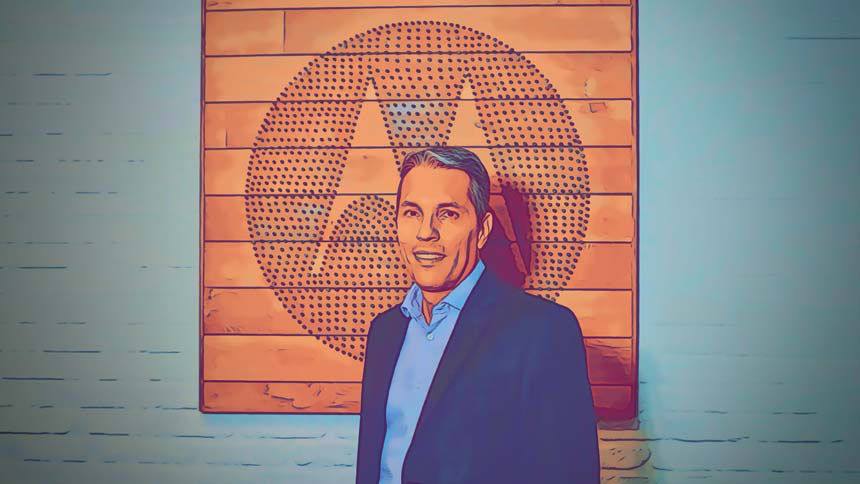
“Brazil is a country with many problems, and smuggling is the biggest one right now. While there are laws protecting national industry, with investments, the country allows products like cell phones to enter through smuggling, without paying any taxes,” says Rodrigo Vidigal, CEO of Motorola Brazil, in an interview with NeoFeed .
According to the executive, this lack of oversight hinders the progress of initiatives such as the implementation of manufacturing units. Motorola has two factories in the country, in Manaus (AM) and Jaguariúna (SP).
Despite these challenges, according to Vidigal, the company has invested R$ 3 billion in research and development in the country over the last decade. Motorola currently has four innovation centers worldwide. One of them is in Brazil, employing 1,200 engineers (the others are in the United States, India, and China).
According to Vidigal, it is necessary to confront this problem clearly, as it has been growing significantly. "In the past, you had to go to a distant place, a small shop, and buy from a smuggler. Today it's possible to buy from home, from a marketplace. This also needs to be addressed."
Another point that touches on the problem of the illegal entry of devices, mainly from Paraguay and Bolivia, is the tax issue. At least 40% of the value of a cell phone in Brazil corresponds to the cost of taxes.
This high tax burden prevents, among other things, Motorola's Brazilian unit from exporting its devices to the United States and, especially, to countries in Latin America.
Top of the pyramid
With the launch of the Signature model, Motorola aims to capture a 10% to 12% share of the high-end, more expensive, and feature-rich device market. In this ultra-premium segment, it also lags behind Apple with the iPhone.
During the Mobile World Congress (MWC) in Barcelona, Spain, Samsung's senior vice president for Latin America, Antonio Quintas , told NeoFeed that the company was surprised that more than 80% of orders in Brazil were for the most expensive device in the S26 line.
According to Vidigal from Motorola, there is indeed a significant segment of the market in the country that sees the added value as the main benefit of the purchase, despite the high price of the device.
"Brazil has a pyramid structure, and the most expensive products are aimed at the top of this pyramid. This group seeks the most advanced performance available. That's why we brought the most complete product that Motorola offers."
While the South Korean company highlighted its privacy screen as its main selling point, which, depending on the angle, prevents anyone from seeing the device's contents, Motorola's bet is on camera quality. "Everyone uses their own weapons. And in the end, it's the consumer who decides."
Globally, Brazil is Motorola's third largest market, behind India and the United States. The company does not disclose the percentage by country.
In its third-quarter 2025 earnings report, Lenovo, owner of Motorola, reported revenue of US$22.5 billion. Of this amount, US$15.8 billion came from its smart devices unit, which includes Motorola.
On the Hong Kong stock exchange, Lenovo's shares have fallen by 23.8% in 12 months. The company has a market capitalization of US$15 billion.