

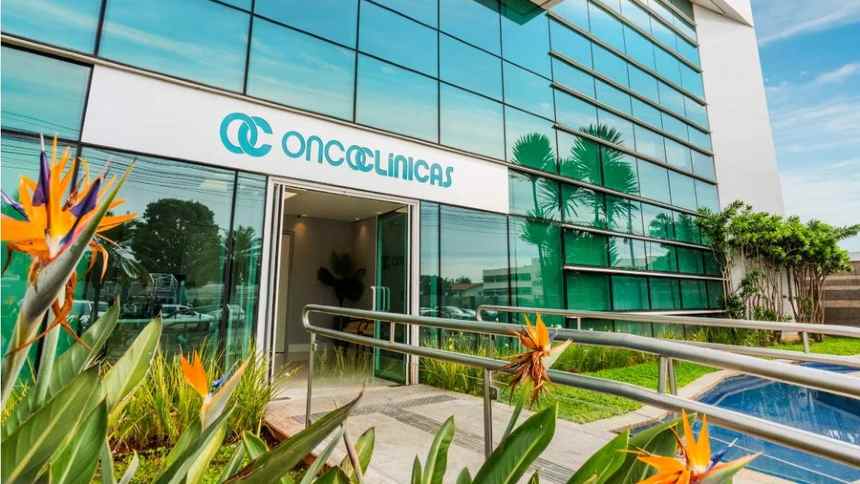
In a strategy to lessen the impact of the dissenting votes of two members of its board of directors, Oncoclínicas published, on the eve of the Easter holiday – Thursday, April 2nd, between 5:25 PM and 5:30 PM – the documents that reveal the positions of Marcos Grodetzky and Raul Rosenthal Ladeira de Matos regarding the non-binding agreement with Porto and the departure of CFO Camille Faria .
The content of the documents, relating to the meetings of March 13 and 15, reveals harsh criticism of the Oncoclínicas board and the company's management. It also reinforces the warnings made by Mak Capital in its recent offensive against the largest group specializing in cancer treatment in Latin America.
The hedge fund addressed, in one of its letters, as revealed by NeoFeed , the lack of transparency and the omission of information relevant to investors understanding the reasons for negotiating an M&A at the worst moment in the company's history.
Now, the votes signed by independent directors Grodetzky and Ladeira de Matos, which were not public, reveal a split in the board and raise questions about the company's financial structure and operational continuity.
The main point of contention is the non-binding proposal presented by Porto, which foresees the transfer of control of Oncoclínicas' main line of business.
The board members voted against signing the proposal and advocated for the resumption of negotiations. Among their arguments, Grodetzky and Ladeira de Matos highlighted that the terms presented do not meet the company's needs and could compromise its future operational capacity.
According to them, the operation would create a structure in which the main line of business would be controlled by Porto, while Oncoclínicas would retain only a minority stake - but with significant debt.
The resulting structure, they argue, could "leave the company without cash flow to service its interest and principal obligations," making the operation unviable under current conditions.
In another passage, the advisors are even more direct in pointing out that the company would depend on uncertain future cash flows to survive, which, in their view, is not sustainable.
The votes also raise questions about the decision-making process. According to Grodetzky and Ladeira de Matos, the negotiation with Porto was not conducted by the executive board (as would be expected), but by the company's shareholders – which, in their view, compromises the credibility of the process.
"The negotiation of the transaction was carried out by the company's shareholders, not by its board of directors," they wrote. "Management and the board of directors cannot delegate this function to shareholders."
The change in procedure "raises serious concerns that the Council is unable to defend important aspects of the conduct and terms of the operation," they added.
They emphasize that this type of operation should be led by management, with direct participation from the CEO and the finance department, under the supervision of the board.
Therefore, they opposed the departure of Camille Faria, who held the positions of CFO and investor relations officer. Her resignation was formalized at a board meeting on March 15th, amidst discussions about the company's restructuring.
“We also oppose the proposal by the Chairman of the Board to replace the Investor Relations Director simply because some shareholders and the majority of the Board did not accept the relevant fact statement she presented,” they wrote.
“It’s absurd to replace an Investor Relations Director during a debt renegotiation, at a critical moment for the Company, because of a disagreement over a draft of a relevant fact. But that was the proposal of the chairman [of the board, Marcelo Gasparino],” they added.
As NeoFeed revealed, Faria was "invited" to resign because she demanded transparency and full details regarding the M&A information that would be published on the CVM (Brazilian Securities and Exchange Commission).
Absence of recording
The document also directly criticizes the way the process was handled within the company. Right at the beginning, they state that, since January 15th of this year, when the new board took office, 10 meetings and numerous ad hoc interactions have been held, but only two minutes have been distributed.
The board members expressed "dissatisfaction" with the decision not to record the board meeting – a practice that had been previously approved – and stated that the change, precisely at the moment of discussion of a relevant operation, raises "serious concerns."
One of the most sensitive parts of the votes goes beyond the financial discussion and enters the operational field. The board members criticize decisions related to cash management and state that the company should prioritize the continuity of operations.
"The company needs to allocate any and all available resources to purchase medications that are in short supply and critical to the continuity of operations and the treatment of patients."
The mention reinforces recent signs of operational deterioration amid the liquidity crisis faced by the company.
The votes also question decisions related to the treatment of creditors, citing payments made to a specific financial institution while other creditors remain in negotiations.
According to the advisors, this type of measure could violate existing agreements and harm the restructuring process as a whole, by undermining trust in the negotiations.
The publication of the votes comes days after Mak escalated its rhetoric against the company . In a letter sent to the board, Mak had stated that shareholders have the right to know about financing proposals and internal disagreements during a time of financial stress.
On one hand, the management company is pushing for changes to the board and conditioning a potential investment of up to R$ 500 million on a restructuring of its governance. On the other hand, the company had been making progress in negotiations with Porto as an alternative to strengthen its financial structure.
The Extraordinary General Meeting (EGM), as requested by Mak, has been officially convened for April 30th.
The agenda for the Extraordinary General Meeting includes, among other topics, discussions on the economic and financial situation and the measures adopted or underway to renegotiate maturities and protect operations; the removal of members of the board of directors; setting the number of members, qualifying candidates and electing independent directors, as well as appointing the chairman and vice-chairman of the board.
The company's current board consists of Gasparino, Bruno Ferrari, Eduardo Soares do Couto Filho, Marcel Cecchi Vieira (who took over as CFO after Faria's departure), and the independent members Marcelo Curti, Grodetzky, and Ladeira de Matos.