

After navigating one of the most difficult periods since the founding of the Madero Group , marked by rapid expansion, a pandemic, debt, and adjustments, Junior Durski begins 2026 betting on a menu that goes beyond hamburgers.
Madero, which ended 2025 with a net profit of R$ 103.2 million, gross revenue of R$ 2.3 billion (a company record) and adjusted EBITDA of R$ 596 million, with a margin close to 29%, is preparing a business package that includes empanadas, a delicatessen, combination restaurants, dark kitchens embedded in its operations, and even an international debut in Paraguay.
“A very good opportunity has arisen in Ciudad del Este. We're going to test it, learn, and see what performance delivers before thinking about something bigger,” Durski stated in an interview with NeoFeed .
The first international Madero restaurant will open in the first week of February through a partnership with the China Importados shopping mall, a shopping center with 20 sectors spread across 33,000 square meters.
The company's balance sheet, published after the market closed on Thursday, January 29th, shows a company that did its homework and managed to deleverage – which puts an end to the adjustment cycle and reopens the growth strategy with new operating formats.
The group ended 2025 with net debt of R$ 749 million, for a leverage of 1.28 times EBITDA - even after distributing R$ 260.5 million in dividends and interest on equity.
Throughout last year, R$ 246.6 million was invested in capex, mainly in the opening of restaurants, format conversions, and operational improvements.
Today, the chain has 355 units in operation, including Madero Steak House, Madero Burger, Jeronimo, and other concepts.
In pursuit of efficiency
The main driving force behind this new phase is the so-called hybrid model, which combines the operations of Madero Burger and Jeronimo in the same commercial location, sharing the kitchen, staff, and infrastructure.
In 2025, this format showed an 11.7% growth in sales when compared to the performance of the same units before the conversion. According to Durski, the gain comes from the possibility of increasing revenue without raising fixed costs.
"You don't increase staff, you don't increase rent, you don't change expenses. You only increase sales," says the founder and CEO of Madero.
The strategy unfolded in the form of combined restaurants, a format that gained traction in the group's expansion plan.
Unlike the hybrid model, where Madero and Jeronimo are in the same space, the combined model is characterized by the operation of both brands side-by-side, with centralized production.
This allows for reduced investment per store and increased operating margin. "A Madero restaurant costs R$ 5 million and a Jeronimo, R$ 4 million to build," says Durski.
"What used to cost almost R$ 9 million to build separately, now costs around R$ 6 million when we do it together," he adds.
Efficiency is also evident in delivery, which has ceased to be a complementary business channel. In 2025, 20.7% of the group's revenue came from deliveries, while digital channels accounted for 56.3% of restaurant revenue.
Growth was fueled by the expansion of dark kitchens installed within the units themselves, avoiding dedicated delivery facilities.
“It doesn’t make sense to have a delivery-only operation. The team is the same, the cost is the same. When you use the restaurant that already exists, delivery becomes incremental sales,” says Durski.
But among all the offerings, none gained as much prominence as the artisanal empanadas. The product became part of the menu of the group's brands and proved suitable for consumption outside the restaurant.
According to Durski, the projection is that the volume of empanadas will exceed 12 million units this year and 18 million in 2027, especially in delivery.
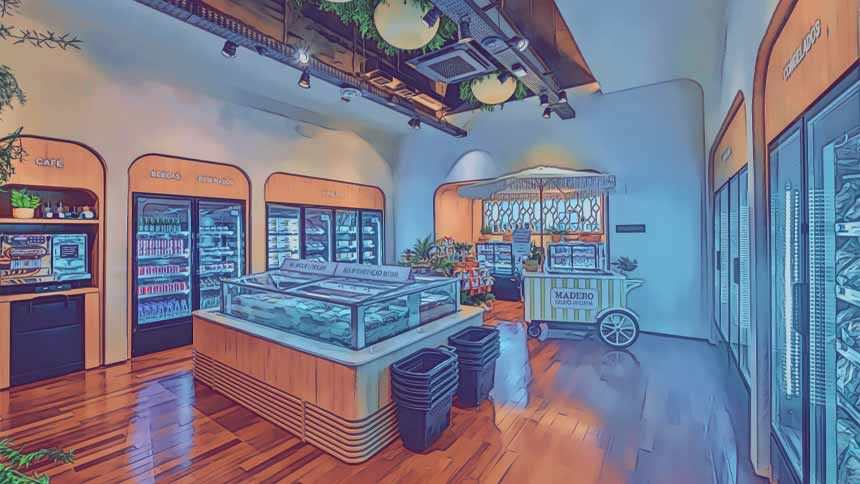
The projection takes into account the creation of Empório Madero & Empanadas, which opened in December in Curitiba, a new format that should reach nine units this year in the capital of Paraná.
The idea is to bring together ready-made dishes, portioned meats, sauces, frozen products, and empanadas—all bearing the Madero signature—with a focus on convenience.
"The store has a very good profit margin and enormous potential for expansion. It's a business that allows us to grow without inflating costs," says the businessman.
The initial strategy envisions the model maturing throughout 2026 before a more accelerated expansion starting in 2027.