

Novo Nordisk shares plunged as much as 20% on Wednesday (4), in Copenhagen, after the pharmaceutical company indicated that 2026 should mark a turning point in the business that has made it the global symbol of the new generation of obesity drugs.
The company reported that it expects sales and adjusted operating profit to fall between 5% and 13%, a reversal in a business that had been relying on volume, high prices, and rapid expansion.
The shock was twofold because it came with an uncomfortable message for investors: the engine of growth still exists, but capturing value has become the battleground.
In a call with journalists about the results, CEO Mike Doustdar described 2026 as a year of "unprecedented price pressure," arguing that the financial impact would be "painful," but an investment for the future.
According to calculations compiled by the company itself, analysts projected, on average, a drop of only 2% — not a potential double-digit decline. The much higher-than-expected guidance caused the market to respond strongly: the fall in the stock price in Europe wiped out more than 40 billion euros in market value in a single trading session.
In one year, the shares have fallen by more than 39%. The company went from a market value of over US$600 billion in 2024 (when it was the most valuable listed company in Europe) to around US$215 billion now, with the plunge in shares.
The American market has become a problem and competition has increased.
According to analysts, the company's problems stem from more patients paying out of pocket and greater demands for discounts from health insurance companies. The CFO stated that sales in the US could fall "in the low double digits," suggesting an even heavier impact than the consolidated guidance .
That's why price cuts have gone from being a one-off tactic to a defensive strategy. The company started selling smaller doses of its daily pill for $149/month (rising to $199 in April) and reduced the price of the injectable version of Wegovy to $349/month for uninsured consumers, among other initiatives.
Furthermore, in November, the Donald Trump administration announced significant discounts on Ozempic and Wegovy sold to Medicare — prices that will only take effect in 2027.
This timeline matters because it helps explain the paradox: price compression has already begun due to competitive dynamics and negotiation with payers, while the major "regulatory milestone" (the price of Medicare) is just ahead. The market, looking at the whole picture, has already started pricing in the actions.
On the competitive side, the message also became more explicit. Novo Nordisk admits that there are "many more companies" trying to enter the market and that it cannot promise a return to the recent "extraordinary growth." Pfizer recently announced its entry.
And there are two fronts that are changing consumer behavior: the direct competition with Eli Lilly , with its obesity portfolio gaining ground in prescriptions and access; and the proliferation of compounded versions of GLP-1. According to Reuters, there are up to 1.5 million Americans using unapproved versions instead of brand-name products.
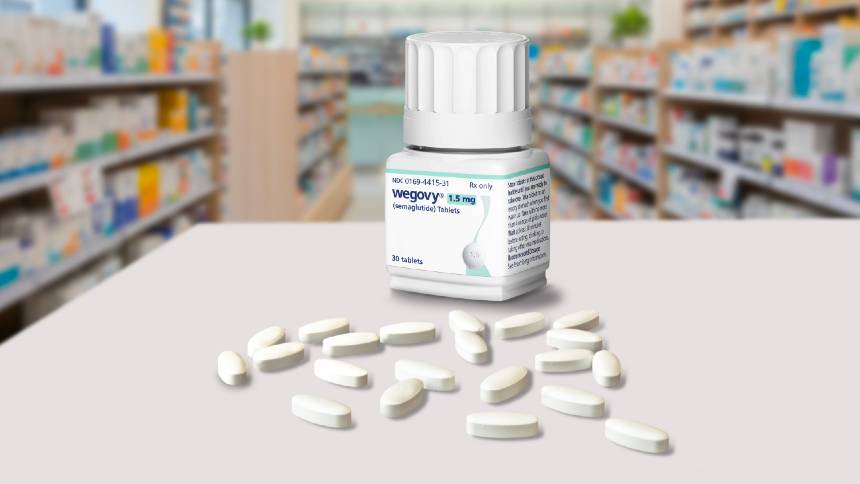
Wegovy's pill is the main attempt to turn the tide. If the guidance has pulled the brakes, Wegovy's pill appears as the bet to widen the funnel - especially among consumers who pay out of pocket and seek convenience.
Weekly prescriptions for the oral medication reached approximately 50,000 by January 23rd, well above trackers that do not capture channels such as telehealth and the company's own cash pay channel.
Furthermore, more than 170,000 patients have already started on the tablet since its launch, described by the CFO as "the strongest launch this market has ever seen." And a crucial point to dispel fears of cannibalization: more than 80% are new to GLP-1, with "very limited switching" from other compounds, at least in the initial data.
For investors, this detail is more than just a curiosity: it suggests that Novo Nordisk may try to recover growth through market expansion (new patients) — even if it needs to accept a lower price per patient in the short term.
Even with the "shock" of the guidance, Novo Nordisk announced a new share buyback program of up to 15 billion Danish kroner (about US$2.4 billion), in an attempt to signal discipline and confidence while the market recalibrates valuations .